24 April 2026
The Healing Tree Collective • Tempe, Arizona
What Does Trauma-Aware Mean in a Wellness Space?
A lot of people have heard phrases like trauma-aware or trauma-informed and wondered what they actually mean in real life.
Especially when it comes to a wellness space.
What makes a class, studio, or healing environment feel supportive for someone carrying stress, grief, anxiety, trauma, or emotional overwhelm?
In simple terms, a trauma-aware wellness space is a space that understands people may be arriving with tender histories, activated nervous systems, complicated emotions, or bodies that do not automatically feel safe in rest, stillness, or vulnerability.
It means the space is designed to be more thoughtful, more invitational, and more respectful of the human being in front of it.

Trauma-aware does not mean trauma-treatment
This is an important distinction.
A trauma-aware wellness space is not the same thing as trauma therapy.
It does not mean the space is diagnosing, treating, or providing clinical mental health care.
It does not mean facilitators are acting as therapists unless they are specifically licensed to do so in that role.
What it does mean is that the space recognizes trauma exists, stress lives in the body, and people need support that is thoughtful, paced, and respectful.
It means the space tries to reduce unnecessary pressure, intensity, or coercion.
Trauma-aware care is not about pretending to do therapy. It is about creating an environment where people feel more choice, more support, and more respect for their nervous system.
Why this matters in a wellness setting
A lot of people walk into wellness spaces carrying much more than what is visible on the surface.
They may be carrying grief, anxiety, chronic stress, burnout, panic, past trauma, medical trauma, relational hurt, or simply a nervous system that has been overloaded for a long time.
If a space is not thoughtful, wellness can start to feel like another place where people are supposed to perform, push past themselves, or pretend they are more comfortable than they really are.
That can create more shutdown, more tension, or more disconnection.
A trauma-aware wellness space tries to do the opposite.
It creates more room for pacing, for consent, for choice, and for being human.


What trauma-aware support can look like
Trauma-aware support often shows up in the little things.
The tone of the facilitator.
The pacing of the class.
The way invitations are offered instead of demands.
The understanding that not everyone feels safe closing their eyes, sharing openly, being touched, or moving in the same way.
It means making room for different comfort levels and helping people feel like they still belong even if their body needs something different from the person next to them.
A trauma-aware wellness space may include:
- Clear invitations instead of pressure or force
- Consent-centered facilitation
- Pacing that allows people to settle gradually
- Respect for boundaries and different comfort levels
- Options for rest, modification, or stepping out if needed
- Language that is grounded, respectful, and non-shaming
- Practices that support nervous system awareness and regulation
What trauma-aware does not look like
Sometimes it is just as helpful to name what trauma-aware care is not.
It is not forcing vulnerability.
It is not pressuring someone to share.
It is not assuming that intensity equals healing.
It is not using language that makes people feel broken, behind, or like they have to earn support.
It is not treating everyone as though they should respond the same way.
Trauma-aware support understands that healing does not happen by pushing people past their capacity.
It happens more sustainably when people feel enough safety, enough choice, and enough steadiness to stay connected to themselves.
Trauma-aware support honors the reality that healing cannot be forced. It can be invited, supported, and made more possible through safety and care.
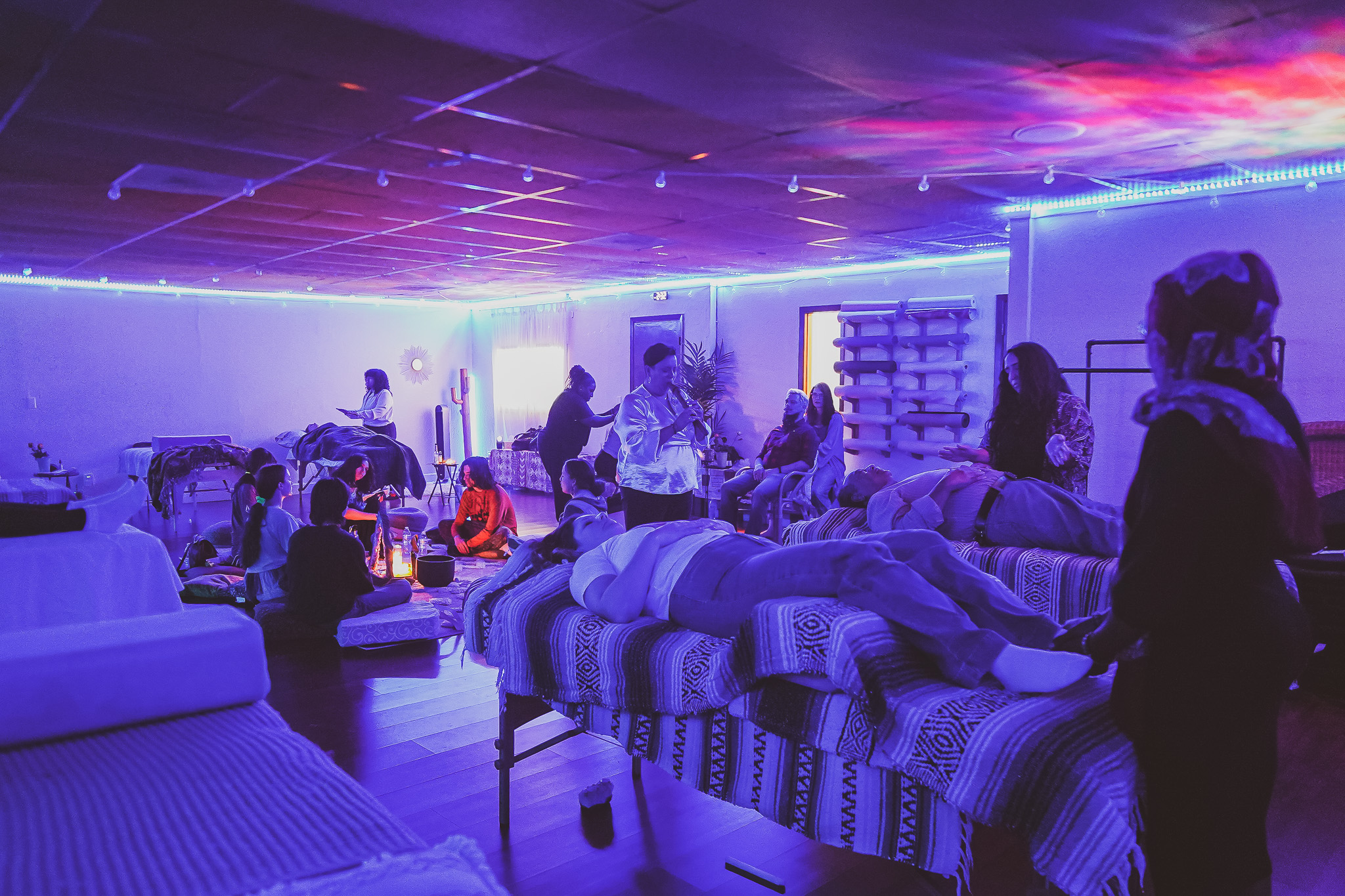
Why choice matters so much
One of the biggest parts of trauma-aware support is choice.
Choice helps people stay connected to themselves.
It reminds them they have agency.
It helps reduce the feeling of being trapped, pressured, or overridden.
In a trauma-aware space, people may be reminded that they can:
- Keep their eyes open or closed
- Move or rest
- Participate fully or gently modify
- Receive touch only with clear consent, if at all
- Pause, breathe, or step out if needed
That kind of choice matters.
Not because everyone will use every option, but because knowing those options exist can help the body feel more supported.
Why this matters to therapists and mental health professionals
Therapists, counselors, psychotherapists, and social workers need referral partners they can trust.
If they are referring a client into a wellness setting, they need to know that the environment is thoughtful, respectful, and clear about scope.
They need to know the space is not trying to replace therapy.
They need to know clients will be met with care, not bypassing.
They need to know the practices being offered can support nervous system awareness and regulation without pretending to be clinical treatment.
That is one of the reasons trauma-aware language and trauma-aware facilitation matter so much to us.
It is part of how we build trust with both the people coming in and the clinicians referring them.
How trauma-aware care shapes what we offer
At The Healing Tree Collective, trauma-aware support shapes the way we think about classes, facilitation, pacing, and environment.
It influences how we hold breathwork, sound healing, meditation, movement, rest, and community-based experiences.
Our intention is not to create a place where people are pushed into healing experiences they are not ready for.
Our intention is to create a place where people can arrive exactly as they are and feel supported enough to begin where they are.
That means honoring different nervous systems.
Different histories.
Different levels of openness.
Different capacities on different days.
A trauma-aware space does not ask people to be less human. It works to make more room for the fullness of their humanity.
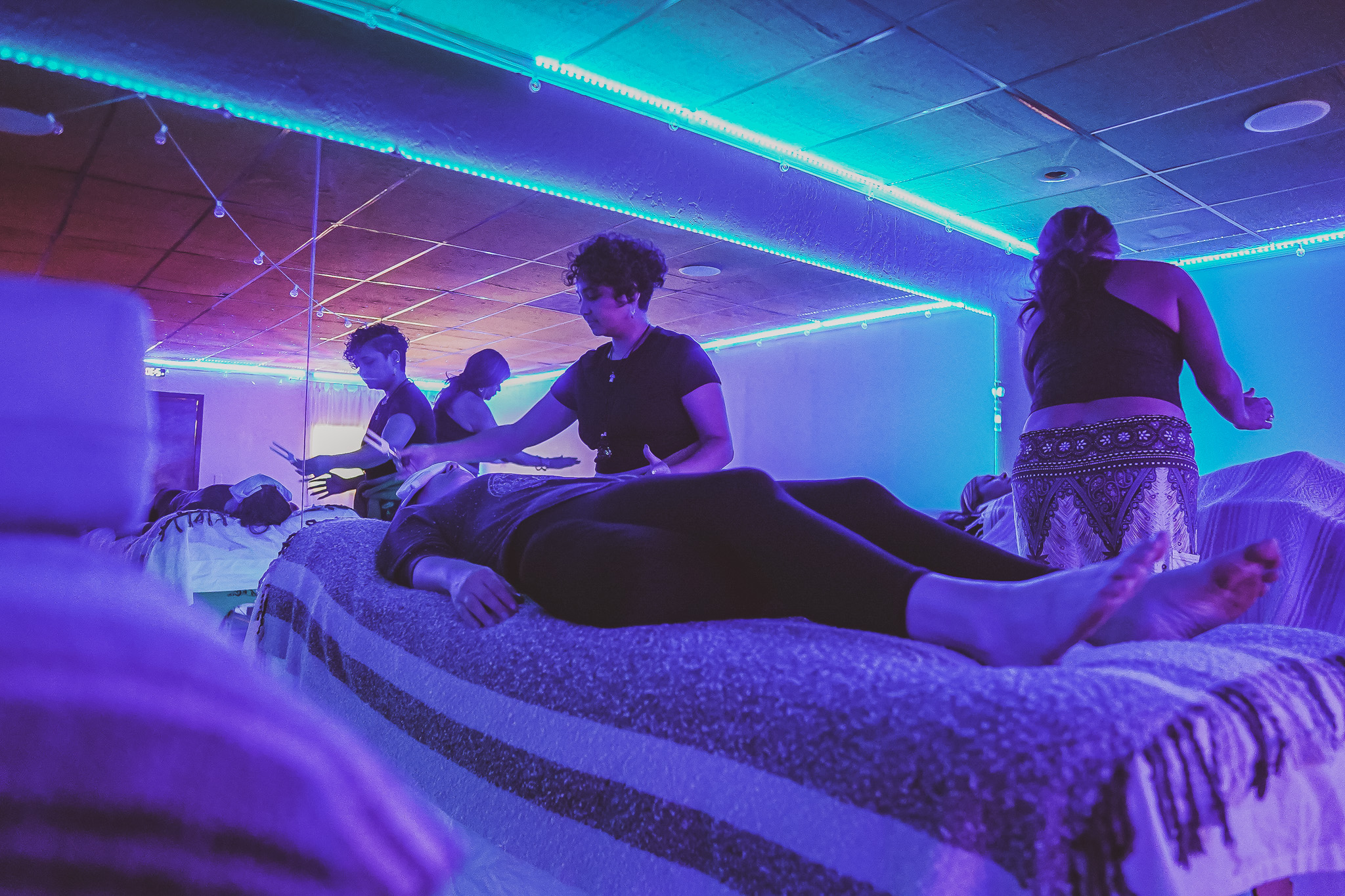
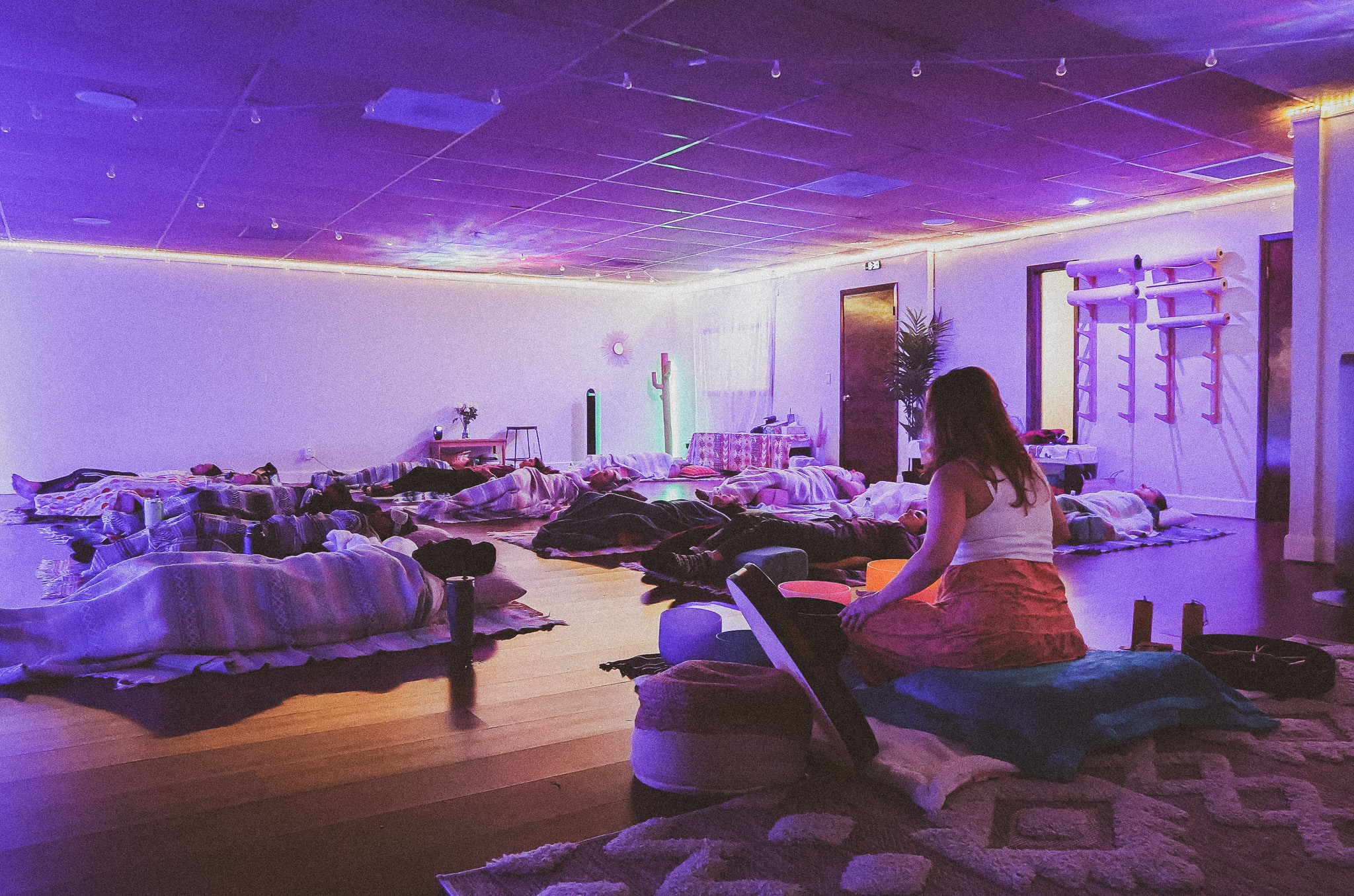
What this means for someone walking into the space
If you are someone seeking support, trauma-aware care means you do not have to show up already regulated, already trusting, already ready for everything.
You do not have to perform healing.
You do not have to force vulnerability.
You do not have to move faster than your body is ready to move.
You get to be where you are.
You get to take your time.
You get to notice what feels supportive.
You get to learn what safety and support feel like in your own body, at your own pace.
That is part of what makes a trauma-aware wellness space meaningful.
It is not just about the modality.
It is about the way the space helps you stay connected to yourself while you receive it.
Looking for a trauma-aware wellness space in Tempe?
Explore the classes and mental health partnership offerings at The Healing Tree Collective in Tempe, Arizona. Whether you are seeking supportive nervous system care for yourself or you are a clinician looking for a trusted referral partner, we would love to connect.