26 April 2026
The Healing Tree Collective • Tempe, Arizona
How Stress Gets Stored in the Body
A lot of people think of stress as something that only lives in the mind.
Racing thoughts. Worry. Mental fatigue. Overthinking.
But stress does not only affect your thoughts.
It affects your whole body.
It can show up in your shoulders, your jaw, your chest, your stomach, your breath, your sleep, your energy, your patience, and your ability to feel present.
That is why so many people can say “I’m fine” while their body is telling a completely different story.

Stress is not just mental… it is physical too
Stress is your body’s response to pressure, challenge, uncertainty, overwhelm, or perceived threat.
Sometimes that stress comes from one major event.
Sometimes it comes from daily life: work pressure, parenting, finances, relationship strain, burnout, grief, overstimulation, or simply never feeling like you can fully exhale.
When stress happens, your body responds.
Muscles tighten.
Breathing shifts.
Sleep can change.
Digestion can feel off.
The nervous system becomes more alert.
You may feel braced without even realizing it.
Stress does not only live in your thoughts. It lives in your posture, your breath, your tension, your energy, and the way your body learns to hold itself.
What does it mean for stress to be “stored” in the body?
When people say stress gets stored in the body, they usually mean that the body continues carrying the effects of stress even after the moment has passed.
The pressure may be over, but the tension remains.
The conversation ended, but your chest still feels tight.
The hard season shifted, but your body still feels like it is waiting for the next thing.
This can happen when stress is chronic, when there is not enough time or space to recover, or when a person gets used to pushing through without ever fully processing what they are carrying.
Over time, the body learns patterns.
Tighten.
Brace.
Hold.
Endure.
Keep going.
And those patterns can start to feel normal, even when they are exhausting.
Stress stored in the body may feel like:
- Tight shoulders or jaw
- Shallow breathing
- Digestive discomfort
- Restlessness or inability to relax
- Chronic fatigue
- Feeling emotionally flooded or emotionally numb
- Trouble sleeping or resting deeply
Where stress commonly shows up in the body
Stress can show up almost anywhere, but there are some places people tend to feel it the most.
- Shoulders and neck: tension, tightness, heaviness
- Jaw: clenching, grinding, pressure
- Chest: tightness, shallow breathing, heaviness
- Stomach: knots, nausea, digestive shifts
- Back and hips: holding, stiffness, discomfort
- Breath: short, shallow, restricted breathing
- Whole body: fatigue, bracing, restlessness, shutdown
Not everyone experiences stress the same way, but many people can relate to at least one of these patterns.
The body often tells the truth before the mind fully catches up.

Why the body keeps holding on
The body is trying to protect you.
That is important to remember.
It is not holding stress because it is broken.
It is holding stress because it learned that staying tense, alert, or braced helped you get through something.
The problem is that when life keeps moving fast and the body never gets enough space to feel safe again, those protective patterns can become ongoing.
What was once a response to a moment becomes a way of living.
That is often when people start saying things like:
“I can’t relax.”
“I’m tired all the time.”
“I don’t know why I feel like this.”
“Even when nothing is wrong, my body still feels on edge.”
The body does not always need more pressure to “let go.” Often it needs enough support to realize it no longer has to hold on so tightly.

Why body-based support matters
If stress affects the body, it makes sense that support cannot be only mental.
Insight matters.
Understanding matters.
Talking matters.
And at the same time, many people also need practices that help the body feel what support actually is.
That is where body-based support can make such a difference.
Breathwork can help bring awareness to the breath and nervous system.
Sound healing can help create a restful environment where the mind softens and the body can settle.
Meditation and Yoga Nidra can help support stillness and deep rest.
Movement and somatic practices can help people reconnect with areas of the body that have felt tense, shut down, or distant.
These practices do not “fix” people.
They help create the conditions for the body to stop bracing so hard.
Signs your body may be carrying chronic stress
Sometimes people are so used to functioning in stress that they do not realize how much their body is carrying until they finally slow down.
A few common signs of chronic stress in the body can include:
- Feeling tired but unable to fully rest
- Always feeling “on” or alert
- Frequent headaches or body tension
- Emotional reactivity or numbness
- Trouble falling asleep or staying asleep
- Feeling disconnected from your body
- Difficulty slowing down even when you want to
None of these automatically mean something is wrong with you.
They may simply be signs that your system needs more support than it has been getting.
What can help stress move through the body?
There is not one single answer for everyone, but in general, stress tends to move more sustainably when the body has opportunities to feel support, rhythm, safety, and release.
That can look like:
- Breathing more consciously
- Creating moments of stillness
- Getting into supportive movement
- Receiving sound healing or deep rest practices
- Journaling or reflecting after stressful experiences
- Being in safe, grounded community
- Reducing the pressure to “just push through”
The goal is not to force the body into calm.
It is to support it enough that calm becomes more possible.


How The Healing Tree Collective supports stress in the body
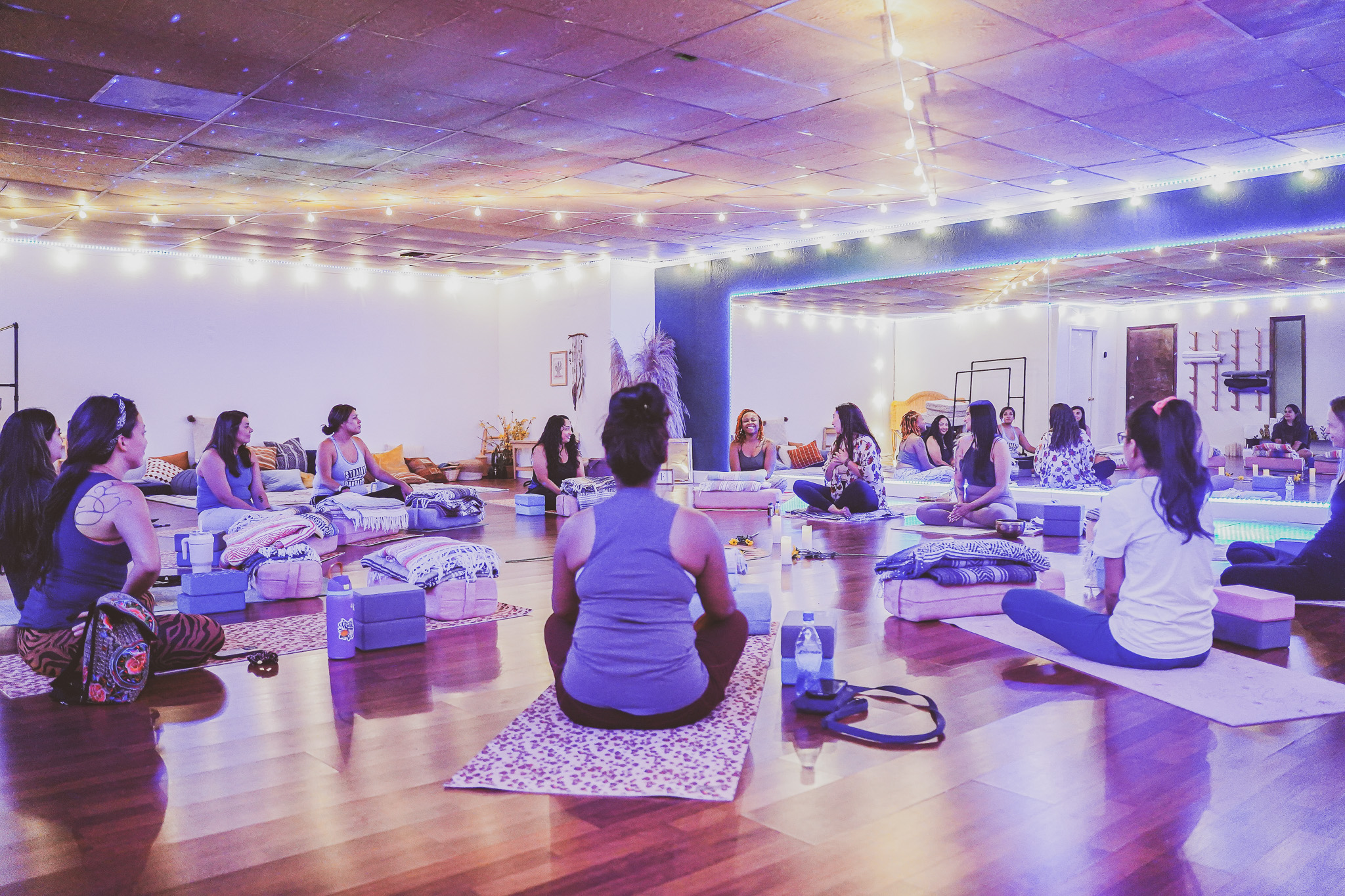
At The Healing Tree Collective, many of the practices we offer are designed to support people who are carrying stress, anxiety, burnout, overwhelm, or emotional heaviness in the body.
We are not asking people to arrive already calm.
We are offering spaces where they can begin where they are.
Through sound healing, breathwork, meditation, Yoga Nidra, movement, and community support, people have opportunities to slow down, reconnect with themselves, and practice what support feels like in real time.
That matters because stress is not only something to understand.
It is also something the body needs help releasing, unwinding, and recovering from.
When the body has been holding stress for a long time, support is not a luxury. It is part of coming back to yourself.
Feeling stress in your body?
Explore classes and healing experiences at The Healing Tree Collective in Tempe, Arizona. If you are carrying tension, overwhelm, burnout, or emotional heaviness, we offer gentle, body-aware practices that can help you slow down and reconnect.