11 April 2026
The Healing Tree Collective • Tempe, Arizona
Tuning Fork Therapy: What to Expect at Your First Session
If you have been curious about tuning fork therapy but are not exactly sure what happens in a session, you are not alone. A lot of people hear the name and immediately wonder what it actually is, what it feels like, and whether they need to know anything before they book.
The good news is this: tuning fork therapy is one of those gentle practices that can feel surprisingly approachable once you understand what it is. You do not need prior experience. You do not need to know the right words. You do not need to be spiritual in any certain way. You do not need to show up already relaxed.
You simply need a willingness to slow down and let yourself experience something different.
You do not have to understand everything before your first session in order to receive something meaningful from it.
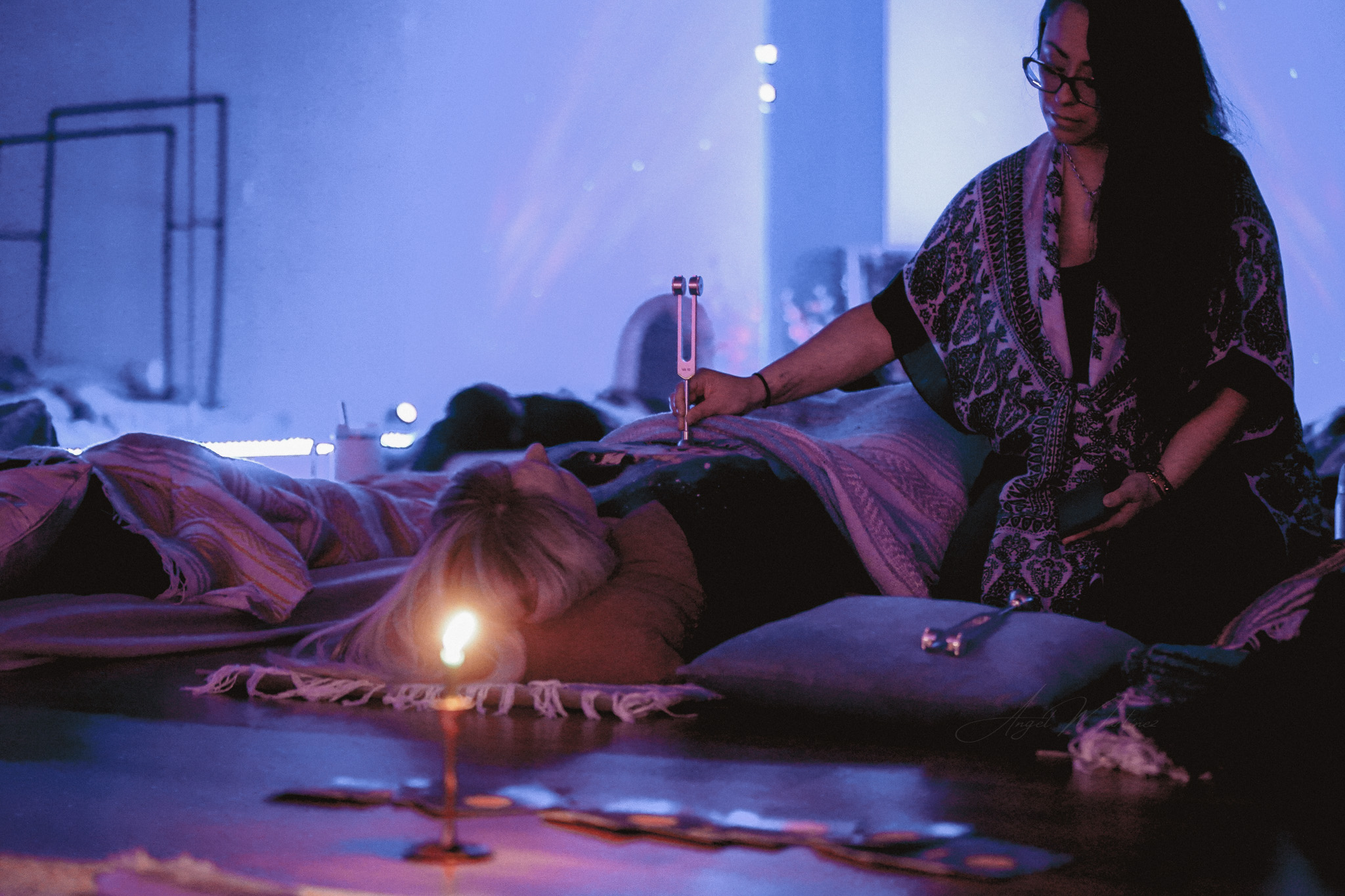
What to expect in a first session
Most people can expect:
- A calm, quiet, welcoming environment
- Gentle guidance at the beginning
- Sound and vibration applied in a focused, supportive way
- A slower pace than everyday life
- A chance to rest, receive, and tune in
What is tuning fork therapy?
Tuning fork therapy is a gentle sound and vibration-based practice that uses specially tuned forks to support relaxation, awareness, and balance. The forks are activated and then applied around or on certain areas of the body, depending on the session and the practitioner’s approach.
What makes this practice unique is that it is not only about hearing sound. It is also about feeling vibration. That can make the experience feel very focused, very subtle, and very grounding all at once.
For many people, tuning fork therapy offers a quiet way to slow down and reconnect with themselves. It can feel especially supportive for people who are carrying stress, tension, emotional overwhelm, or simply the fatigue of constantly being “on.”
Tuning fork therapy is not about forcing an experience. It is often about creating enough stillness for the body to soften and the person to listen inward again.
What happens during a tuning fork therapy session?
At the beginning of a session, you will usually be invited to get comfortable and settle into the space. The practitioner may share a few grounding words, ask how you are arriving, or explain the flow of the session so you know what to expect.
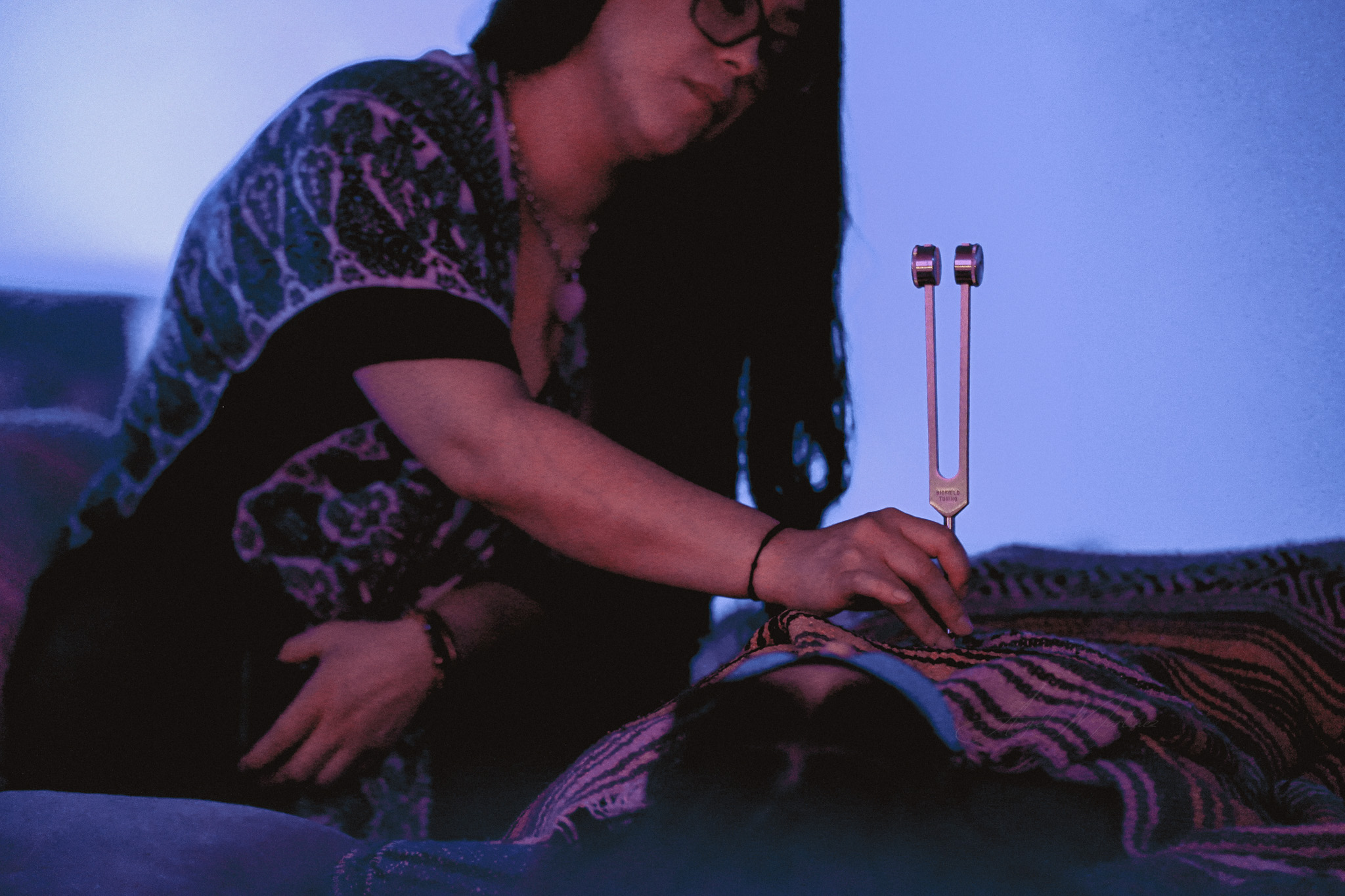
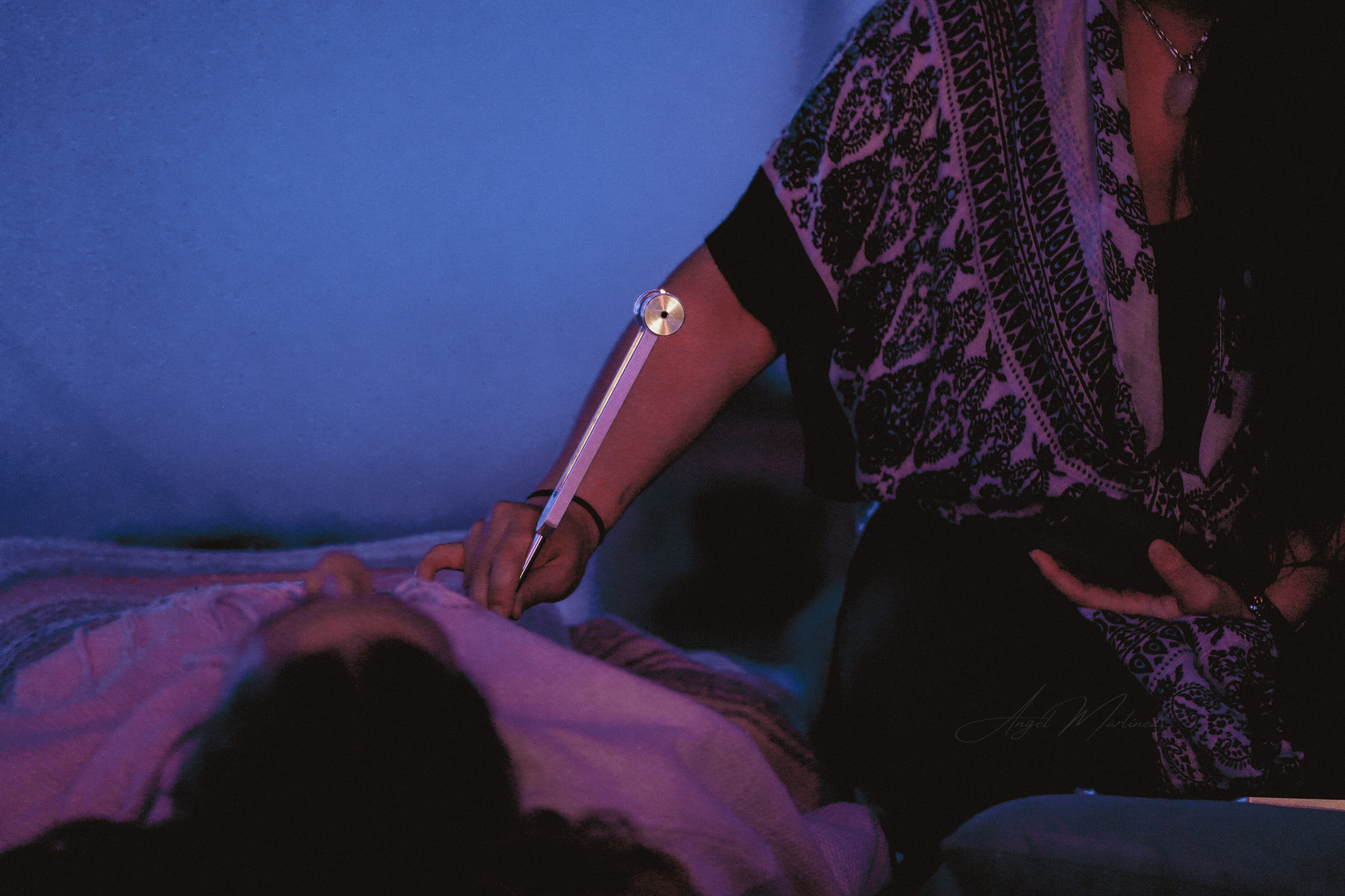
From there, tuning forks are gently activated and used throughout the session. Depending on the style of the practitioner, the forks may be placed near the body or gently applied to specific areas. Some sessions are very quiet and minimal. Others may include supportive elements like breath cues, grounding guidance, or a calm environment that helps you settle more deeply.
You are not expected to do much. You do not need to perform. You do not need to understand all the technical details. Your role is simply to be there, breathe, receive, and notice what the experience feels like for you.
Your first session does not require expertise. It only asks for your presence.
What does tuning fork therapy feel like?
Every person’s experience can be a little different. Some people notice the sound first. Others notice the vibration more. Some feel deeply relaxed. Some feel grounded. Some feel emotional. Some feel lighter afterward. Some simply appreciate the stillness and the focused care of the experience.
You might notice warmth, tingling, calm, spaciousness, or the feeling that your body is finally getting a chance to settle. And sometimes the session does not feel dramatic at all. Sometimes it simply feels gentle. That counts too.
There is no single “correct” experience to have. You do not need to chase a specific outcome. You are allowed to let the session be what it is for you on that particular day.
Sometimes the most powerful thing about tuning fork therapy is not that it feels intense. It is that it feels subtle enough for the nervous system to actually receive.

Why tuning fork therapy can feel especially supportive for beginners
Some healing practices feel intimidating because people think they need to know what they are doing first. Tuning fork therapy can be a softer entry point because it often does not ask much from you other than your willingness to be there.
If you are tired, stressed, emotionally full, or just looking for something gentle, this kind of session can feel approachable. It offers support without demanding performance. It creates a focused space without asking you to be “good” at it. It invites stillness without requiring you to understand every part of the process first.
That is part of why so many people are drawn to subtle practices like this. Sometimes what people need most is not intensity. Sometimes they need quiet support.
What should you wear or bring?
Comfortable clothing is usually the best choice. Think easy, breathable, and supportive for resting. You do not need special gear or a certain look to come in for a session.
Depending on the setting, you may want to bring water or anything else that helps you feel physically comfortable. But overall, this kind of session is usually simple. The point is not to come prepared in some perfect way. The point is to let yourself arrive with less pressure.
Comfort matters far more than presentation.
You do not need the perfect setup to receive something meaningful. You just need enough ease to let yourself settle.
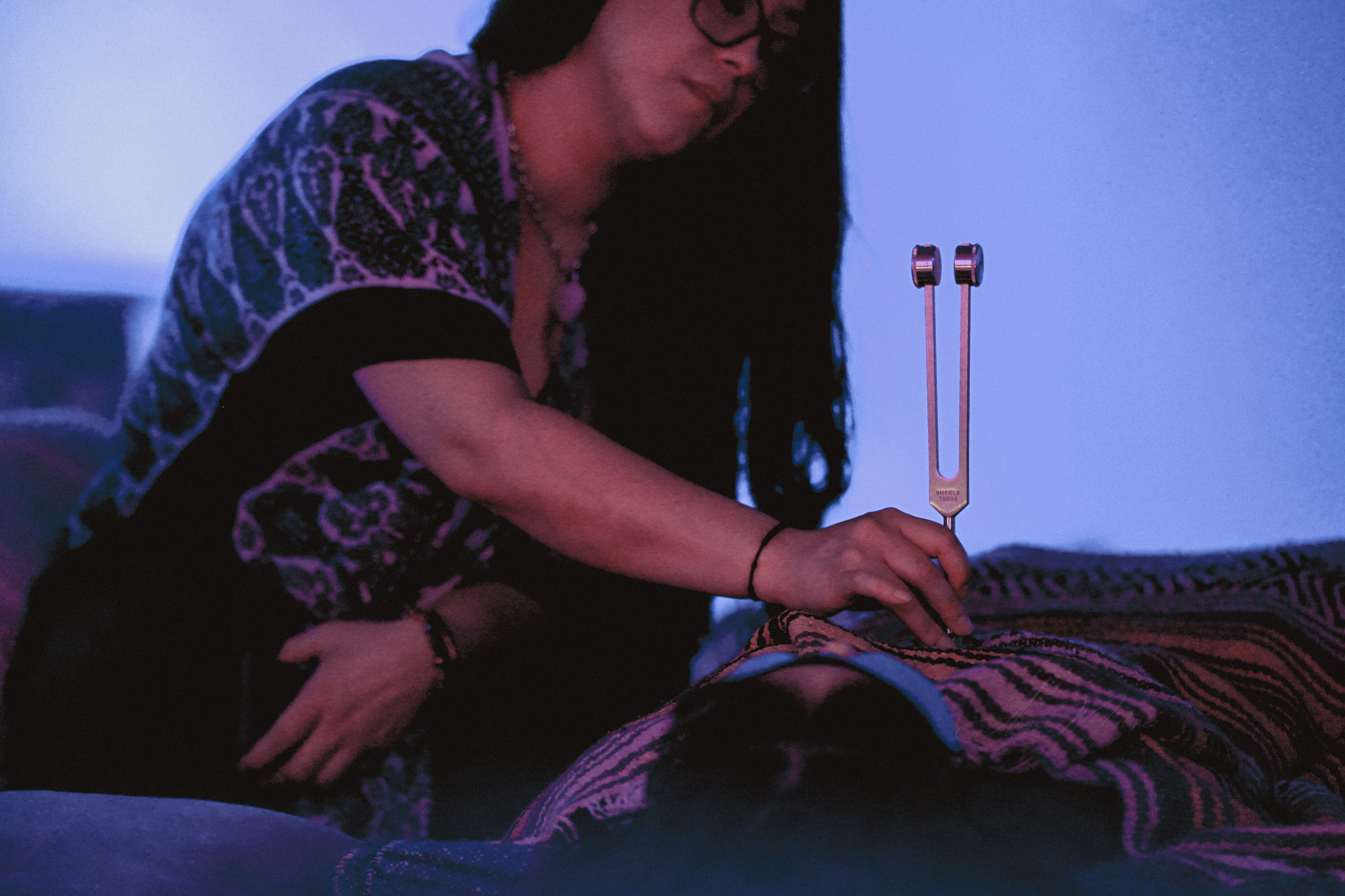
What if you feel emotional during a session?
Sometimes when people finally slow down, they notice what has been living under the surface all along. Stress, grief, fatigue, tenderness, relief, or simply the feeling of being cared for in a quiet way can bring emotion up.
If that happens, it does not mean you are doing anything wrong. It may simply mean your system finally had enough space to soften. And sometimes nothing emotional happens at all. That is okay too.
There is no required experience. No required response. You are allowed to have your own session exactly as it unfolds.
Gentle practices can still open meaningful doors. Not because they force something, but because they create enough safety for something true to be felt.
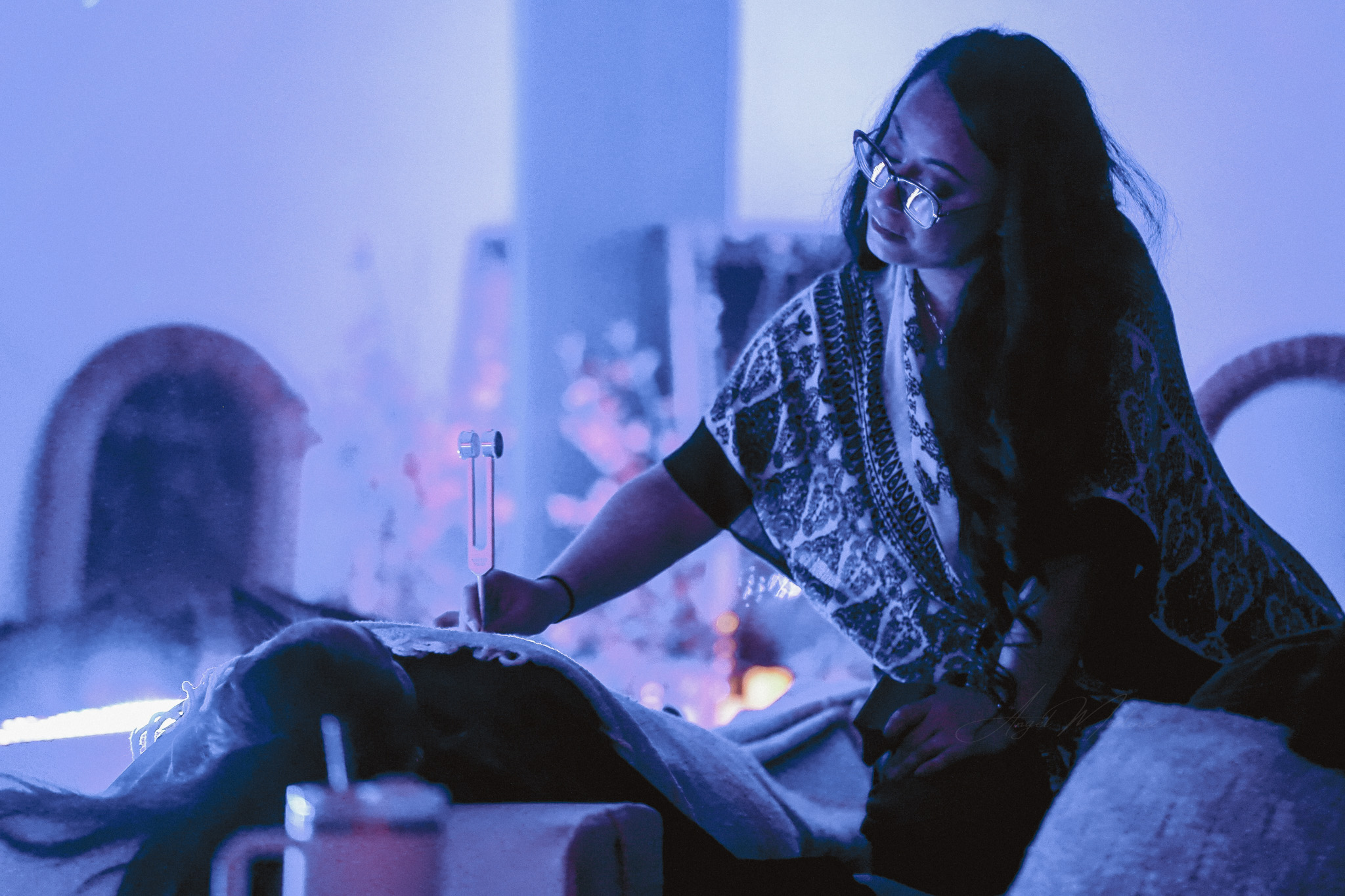
How is tuning fork therapy different from a sound bath?
This is a really common question. Both tuning fork therapy and sound baths work with sound, but they tend to feel different in the way the experience is offered.
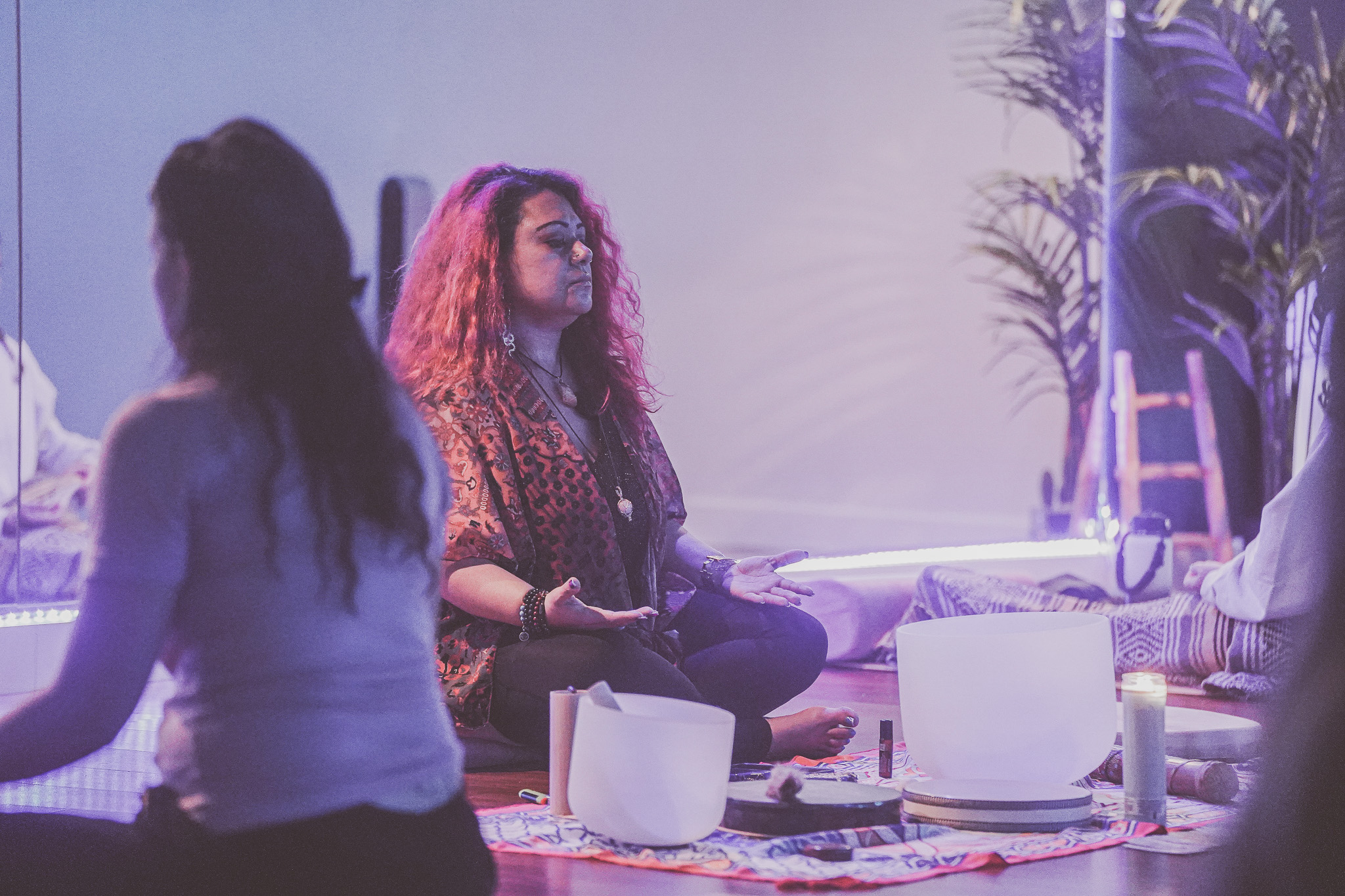
A sound bath is often more immersive and group-oriented, where you rest in a room and receive a larger field of live sound from instruments like crystal bowls, chimes, drums, or gongs. Tuning fork therapy is often more focused and individualized, using the forks in a more intentional and targeted way during a one-on-one session.
Both can feel supportive. Both can be beautiful entry points. They simply offer different kinds of experiences.
Tuning Fork Therapy
Often feels more focused, one-on-one, and intentionally applied through sound and vibration.
Sound Bath
Often feels more immersive, spacious, and group-centered with layers of live sound filling the room.
Shared Thread
Both can support rest, stillness, and a softer relationship with your nervous system.
Best Place to Start
The right choice is often the one that feels most approachable to your body and season of life right now.
Why people are drawn to tuning fork therapy in the first place
A lot of people are craving practices that help them slow down without overwhelming them. They are tired of feeling rushed, overstimulated, disconnected, or stuck in their heads. They want something that supports rest, awareness, and calm in a way that feels approachable.
That is where tuning fork therapy can feel so supportive. It offers a different rhythm. A quieter one. A more intentional one. One that does not ask you to prove anything before you receive support.
For many people, that alone can feel deeply meaningful.
Sometimes the body does not need more pressure. Sometimes it needs a gentler way back to itself.
So what should you expect at your first tuning fork therapy session?
Expect a gentle pace. Expect a calm environment. Expect focused sound and vibration. Expect that you do not need to know exactly what you are doing in order to belong there.
You may feel relaxed. You may feel grounded. You may feel emotional. You may simply feel quieter inside afterward. And if all you feel is that you got an hour where you were able to slow down and receive care, that matters too.
Your first session does not have to be dramatic to be meaningful.
Sometimes the first step is not understanding every detail. It is letting yourself try something gentle and seeing what it opens in you.
Curious about trying tuning fork therapy?
At The Healing Tree Collective in Tempe, Arizona, we offer beginner-friendly healing experiences designed to help people slow down, soften, and reconnect in supportive ways. Tuning fork therapy can be a beautiful place to begin if you are looking for something gentle, grounding, and low-pressure.
You do not need prior experience. You do not need to know the right language. You are welcome to come exactly as you are.
You do not need to know everything before your first session. You just need to give yourself permission to receive.
Ready to explore tuning fork therapy?
Explore classes, sessions, and healing experiences at The Healing Tree Collective in Tempe, Arizona. Whether you are curious, brand new, or simply looking for a gentler place to begin, we would love to welcome you in.