11 September 2026
The Healing Tree Collective • Belonging, Community and All Walks of Life
Everybody Belongs Here: What It Really Takes to Create a Welcoming Community
From the beginning, one of the things that mattered most to us was creating a space where people from all walks of life could walk through the door and feel like there was room for them here.
That sounds simple when you put it into one sentence. “Everyone is welcome.” Businesses say things like that all the time. Community organizations say it. Wellness spaces say it. We have said it ourselves for years.
But saying that everyone belongs and creating an environment where people actually experience belonging are two very different things.
Belonging is not created by putting an inclusive statement on a website. It is created through hundreds of small interactions that communicate something much more personal: you do not have to understand everything before you arrive, you do not have to already know someone in the room, you do not have to look or act like everyone else, and you do not need to perform some version of wellness in order to participate.
That has always been our intention at The Healing Tree Collective. We wanted people to be able to walk in and take off whatever masks they felt like they had been wearing elsewhere. Not because anyone is required to share everything about themselves, but because we wanted the environment to communicate that you do not have to become somebody else before you are allowed to belong.
And lately, one of the most emotional things for me has been realizing that this intention no longer belongs only to us.
Our community has started carrying it too.
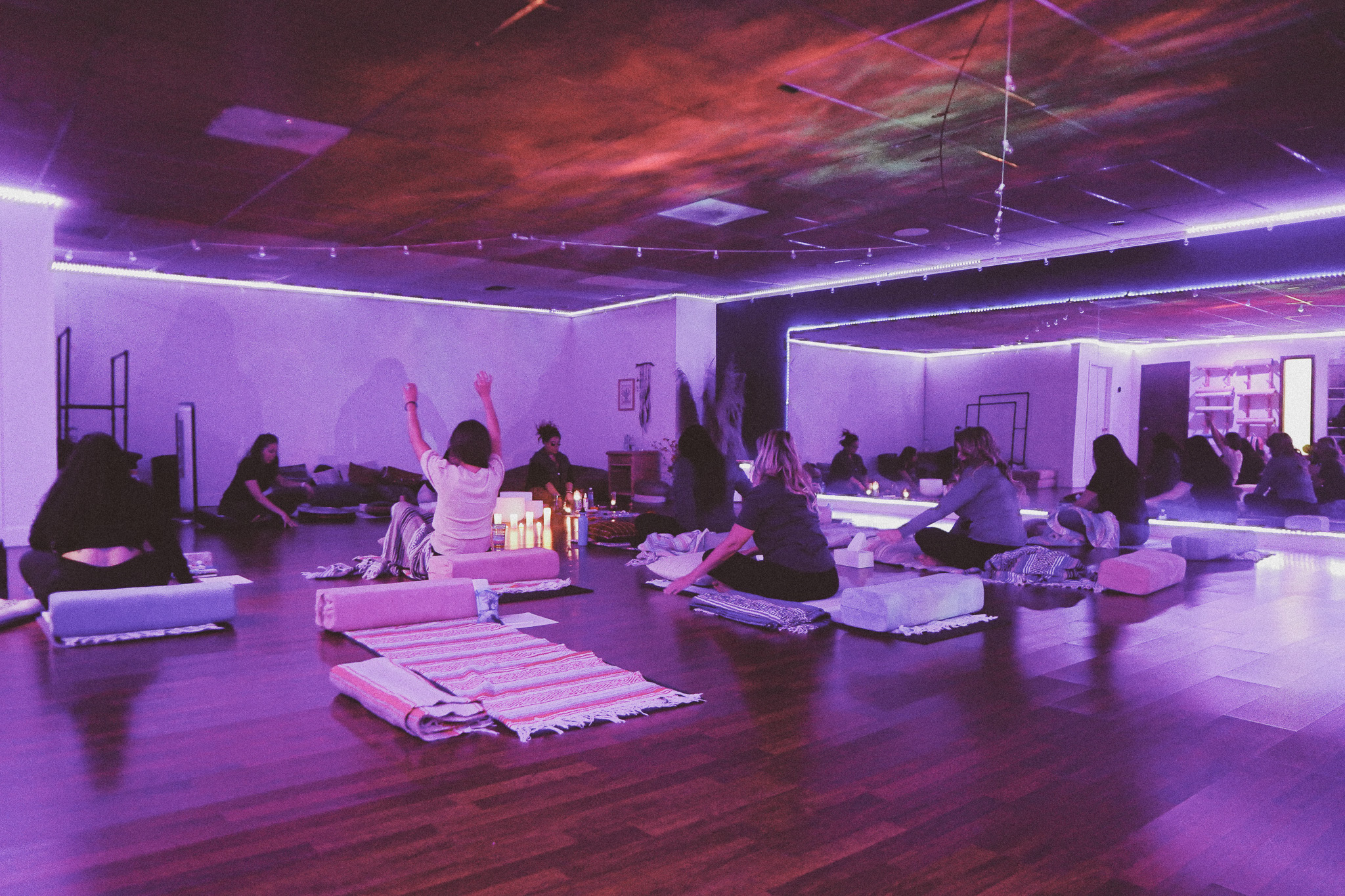
What actually makes someone feel like they belong?
- Knowing what to expect when they arrive
- Being greeted instead of ignored
- Having permission to be new
- Not feeling pressure to perform or disclose
- Seeing that different people are welcomed into the same room
- Eventually feeling comfortable enough to welcome someone else
“Everyone is welcome” has to become something people can actually feel
One of our phrases has always been “all walks of life.” The intention behind it was never that everybody who walks through the door has the same background, beliefs, personality, life experience, or reason for being there. In fact, the opposite is part of what makes community interesting.
One person may come because they are carrying grief. Someone else may be celebrating something. Another person may be overwhelmed by work. Someone may have been practicing meditation for years while the person sitting next to them has never intentionally meditated in their life. One person may feel comfortable talking to strangers immediately, while someone else needs five classes before they even feel ready to introduce themselves.
If the expectation for belonging is that everyone has to behave the same way, then we have not created belonging. We have created conformity.
A welcoming community has to make room for difference.
That includes differences in how people participate.
Some people want to share during a class. Others prefer to listen. Some people want conversation afterward. Others want to quietly gather their things and go home. Some people come every week and become familiar faces. Others may return only occasionally.
None of those approaches are inherently more meaningful than another.
This is why “come as you are” has to mean more than emotional openness. It has to include personality, capacity, boundaries, comfort level, and the freedom to participate without proving that you belong.
A truly welcoming space does not ask everybody to become the same. It creates enough room for different people to remain themselves while still sharing something together.
What does it mean to “take off the mask” without turning vulnerability into another expectation?
I think this is where conversations about authenticity need nuance.
When we say that we want people to take off the masks they may be wearing elsewhere, we are not saying everyone needs to walk into class and immediately tell a room full of strangers everything happening in their lives.
Privacy is healthy.
Discernment is healthy.
Boundaries are healthy.
Being authentic does not mean making every private experience public.
What we are trying to remove is the pressure to perform.
There is a difference between choosing not to share something because it feels private and believing you have to pretend everything is fine because that is the only version of you other people will accept.
There is a difference between being quiet because you want to listen and being quiet because you are afraid your real experience would make you unacceptable.
There is a difference between showing up joyful because you are genuinely joyful and forcing positivity because you think difficult emotions do not belong in a wellness space.
A community that makes room for authenticity should make room for all of those distinctions.
The goal is not to create a room where everyone tells everything. The goal is to create a room where nobody has to become someone else in order to belong.
Where in your life do you feel most able to be yourself?
Think about what is present in those relationships or environments. Is there less judgment? More patience? Are you allowed to change your mind? Can you have a difficult day without becoming the difficult person? Can you celebrate something good without minimizing it? Can you disagree without believing the relationship will disappear?
Those details may tell us much more about belonging than the word itself. Belonging is often less about someone saying “you are welcome here” and more about what repeatedly happens after we arrive.
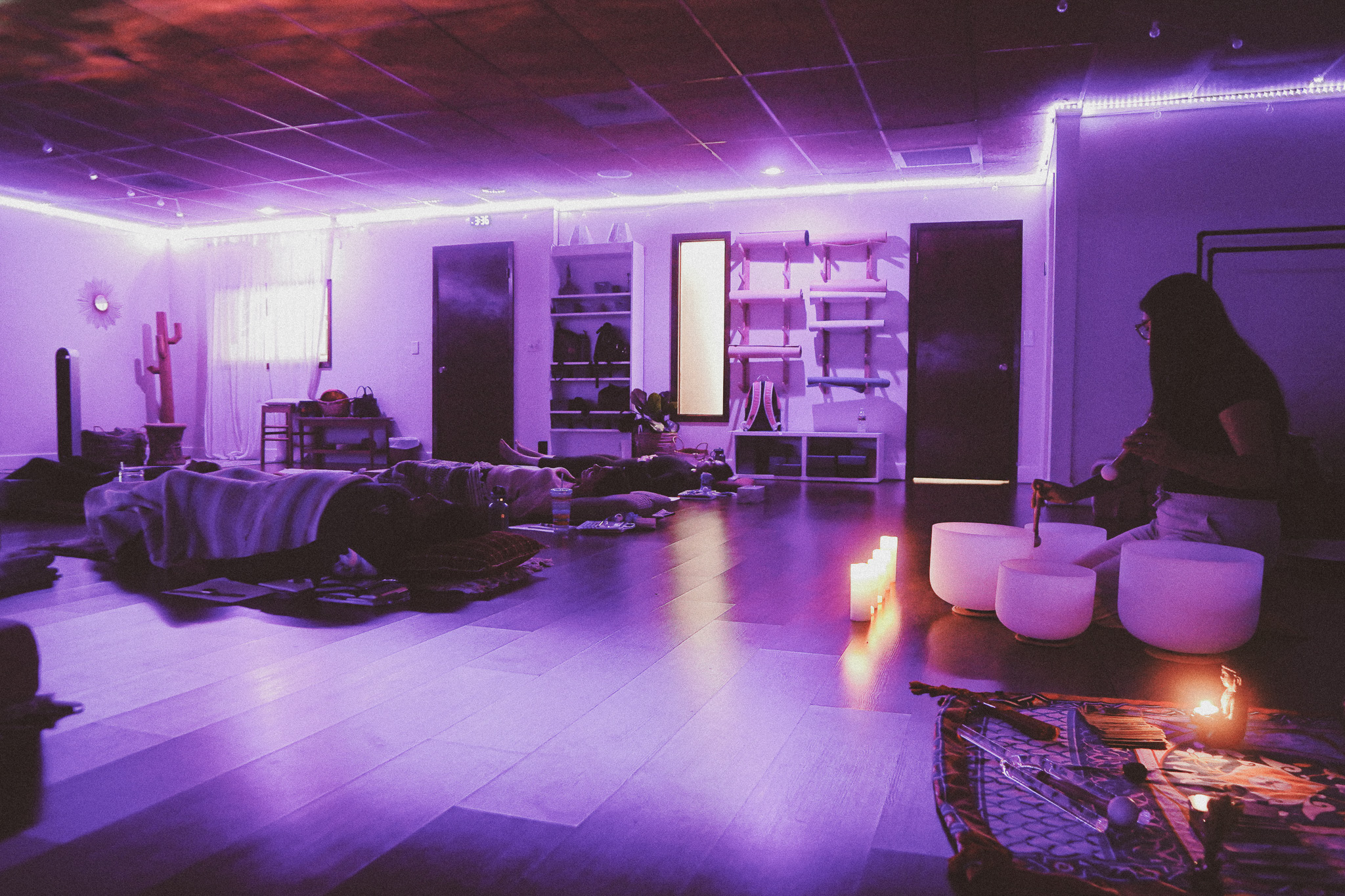
The “grandma’s living room” test
I use this example in classes all the time because it captures the feeling better than any formal wellness language ever could.
I want people to feel like they can get cozy in here.
Like you’re sitting in your own living room or maybe your grandma’s living room. The kind of place where you do not spend the whole time wondering whether you are sitting correctly, whether you are allowed to grab a blanket, whether you are bothering someone by asking where something is, or whether everyone else knows some rule that nobody explained to you.
That matters more than it may seem.
Think about the experience of walking into an unfamiliar wellness studio for the first time.
Maybe you do not know whether shoes stay on or come off. You do not know where to put your belongings. You are not sure whether you need a mat. You do not know where the bathroom is. Everyone else appears to know exactly what they are doing because they have been there before.
Those details are small, but small uncertainties can add up quickly when someone already feels nervous about trying something unfamiliar.
Hospitality reduces unnecessary uncertainty.
It says, “You do not have to figure everything out by yourself.”
That does not make the experience profound by itself. But it can create enough ease for someone to actually experience the reason they came instead of spending the first twenty minutes wondering whether they are doing something wrong.
Sometimes making a space feel welcoming has very little to do with saying something profound. It looks like showing someone where the bathroom is before they have to awkwardly ask.
Belonging often lives inside ordinary details
Someone notices you’re new
Not in a way that puts you on display, but enough to make sure you know where things are and what to expect.
Questions feel normal
You do not have to pretend you understand Reiki, sound healing, breathwork, meditation, or any other practice before trying it.
Your comfort matters
You are given choices and reasonable ways to adjust participation rather than being told there is only one correct way to experience the class.
You do not have to earn familiarity
You can be brand new and still be treated as though your presence belongs in the room.
The moment I realized the community was welcoming people without us asking
This is the part that gets me emotional.
For a long time, when I was physically in the space, I was usually the person welcoming someone new.
“Hi, welcome.”
“Let me show you where everything is.”
“Here is where you can put your stuff.”
“If you need the bathroom, these are the keys.”
“You need a mat? Here you go.”
Those interactions were intentional because we wanted people to immediately understand that they were not inconveniencing us by being unfamiliar with the space.
Then something started happening that I do not think you can manufacture.
I would see someone new walk in, and before I could even get over there, one of our members or someone who comes frequently would already be helping them.
“Oh, the bathroom is this way.”
“Here, you can use one of these mats.”
“You can put your stuff over here.”
And I would just stand there watching it happen.
Because that person had once been new too.
At some point, someone showed them how the space worked. They experienced what it felt like to be welcomed. They spent enough time here for the room to become familiar.
And now, without being assigned a role, they were extending that same experience to somebody else.
That was the vision becoming real.
You know a culture is becoming real when people begin practicing it even when nobody is instructing them to.
Culture is what people repeat when the founder is not standing beside them
I think this is true for communities, businesses, families, workplaces, and almost every group of people.
We can write values on a wall.
We can create mission statements.
We can explain how we want people to treat one another.
But eventually culture is revealed through behavior.
What happens when the owner is not looking?
What happens when somebody new enters the room?
What happens when another person looks confused?
Do people ignore them because “that’s the employee’s job,” or does somebody simply help because they know how it feels to be new?
This is why seeing members welcome people means so much to me. It shows that hospitality is no longer only a behavior coming from the top of the organization. It has become something people understand as part of participating in the space.
And there is a larger lesson in that.
The cultures we create are often transmitted less through what we tell people and more through what people experience repeatedly.
Someone is welcomed.
They learn what being welcomed feels like.
Eventually they encounter someone new.
And they repeat what was modeled for them.
That is a ripple.
People often learn how to participate in a community by experiencing how the community treats them first.
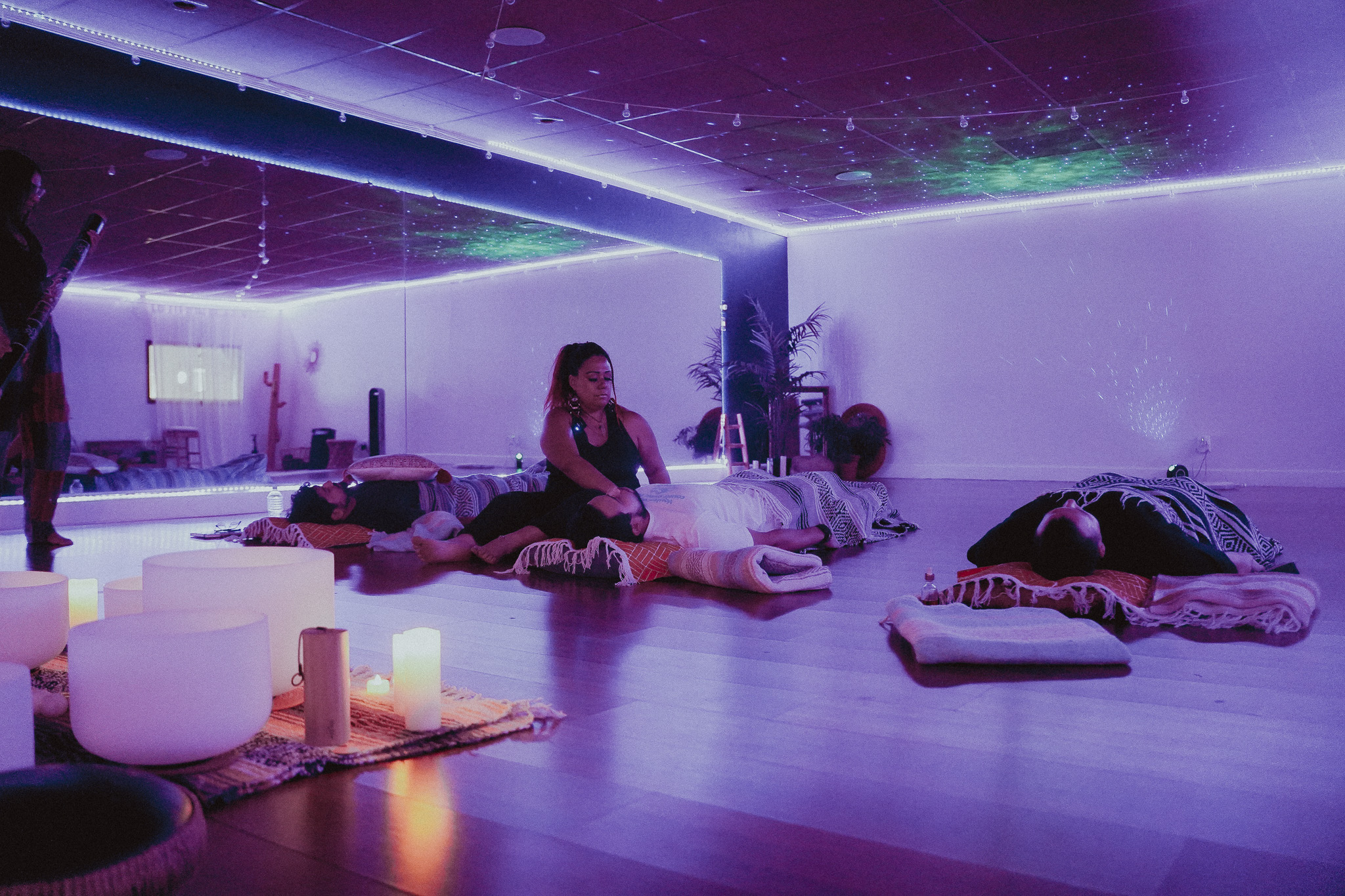
Belonging becomes especially meaningful when you remember what it feels like to be new
There is something interesting that happens after we become comfortable somewhere.
We can forget how confusing it felt the first time.
This happens everywhere.
At a job, the person who has worked there for five years can forget what it felt like not to understand the internal language everybody uses.
At a gym, the regular knows exactly where everything is and may not notice how intimidating the equipment looks to someone walking in for the first time.
In a social group, longtime friends understand every joke and reference while the newest person tries to find somewhere to enter the conversation.
Wellness spaces can develop the same blind spots.
Words like grounding, Reiki, chakra, somatic, breathwork, intention, integration, sound bath, or nervous system regulation may become completely normal to someone who has been exploring wellness practices for years.
To somebody else, they may sound like an entirely different language.
A community can become unintentionally exclusive when familiarity becomes an expectation.
That is why beginner-friendly culture requires remembering what it felt like not to know.
Where have you become so comfortable that you may have forgotten what it feels like to be new?
Maybe it is at work. Maybe inside your profession. Maybe in your friend group. Maybe at a gym, church, community organization, or hobby you have practiced for years.
What knowledge do insiders take for granted? What unspoken rules does a new person have to discover? What would change if the people who already belong saw welcoming newcomers as part of belonging itself?
There is also a tension inside the phrase “everybody belongs”
I think inclusive language becomes stronger when we are willing to examine its limits instead of treating it as a slogan.
Saying everybody belongs does not mean every behavior is acceptable.
Community requires boundaries precisely because multiple people are sharing a space.
If one person’s behavior repeatedly makes other people feel unsafe, disrespected, harassed, or unable to participate, then protecting community may require addressing that behavior.
Inclusion cannot mean that one person’s freedom to behave however they want becomes more important than everyone else’s ability to share the space.
There is a difference between welcoming people and abandoning standards for how people treat one another.
In fact, clear boundaries can strengthen belonging because they tell people that their dignity matters too.
So when we say everyone belongs, what we mean is that belonging is not reserved for a particular type of person.
You do not need a certain background.
You do not need prior experience.
You do not need to fit some wellness aesthetic.
You do not need to believe exactly what somebody else believes.
But shared community also asks us to practice respect for the other people who belong there.
Belonging means there is room for different people. Healthy community also means there are boundaries around how those different people treat one another.
A welcoming culture can hold both openness and boundaries
You do not need to perform a particular personality, belief system, emotional state, or level of experience.
Shared space requires recognizing that somebody else’s needs, boundaries, and experiences may be different from yours.
Nobody should have to disclose personal information or participate beyond their reasonable comfort in order to prove belonging.
Being welcomed into community also means participating in ways that respect the community around you.
A home away from home does not mean replacing home
We often describe The Healing Tree as a home away from home, and I love that language because of the warmth behind it.
But even that deserves clarity.
We do not want anyone to feel like their entire support system has to live inside one wellness studio.
Healthy belonging should expand our lives, not make them smaller.
The Healing Tree can become one meaningful place among many: alongside family, friendships, therapy, faith communities, hobbies, workplaces, neighborhood relationships, professional support, and the other communities people build throughout life.
“Home away from home” means familiarity.
It means walking through the door and knowing where things are.
Recognizing faces.
Knowing you do not have to explain yourself from the beginning every single time.
It means there is somewhere you can return without needing to be impressive.
That kind of familiarity can be deeply meaningful without requiring the space to become everything.
Healthy community gives us somewhere to belong while still encouraging us to remain connected to the larger life we are building outside of it.
What happens when the person who was welcomed becomes the person doing the welcoming?
This may be the part of the story that most clearly connects to our larger mission of Heal • Create • Inspire.
Someone walks through the doors for the first time.
Maybe they are nervous. They are welcomed. They begin learning the space. Over time, they become more comfortable being there.
That experience becomes part of what they know.
Then somebody else walks in for the first time.
Now the person who once needed reassurance recognizes the look on the new person’s face because they remember it.
So they help.
Nobody assigned them the task.
Nobody gave them a script.
They simply know what welcome felt like and choose to extend it.
That is how care begins moving through a community instead of coming from only one person.
And what becomes especially interesting is imagining where else that behavior travels.
Maybe the person who becomes more attentive to the newcomer here becomes more attentive to the new employee at work.
Maybe someone who learns what it feels like to be accepted without having everything figured out becomes more patient with a friend who is struggling.
Maybe someone who experiences a community where different people can share space begins creating more room for difference in their own family.
We cannot guarantee any of that.
But this is what we mean when we talk about the ripple.
One of the most beautiful forms of community is watching someone receive belonging, internalize what it felt like, and then offer that same feeling to the next person.
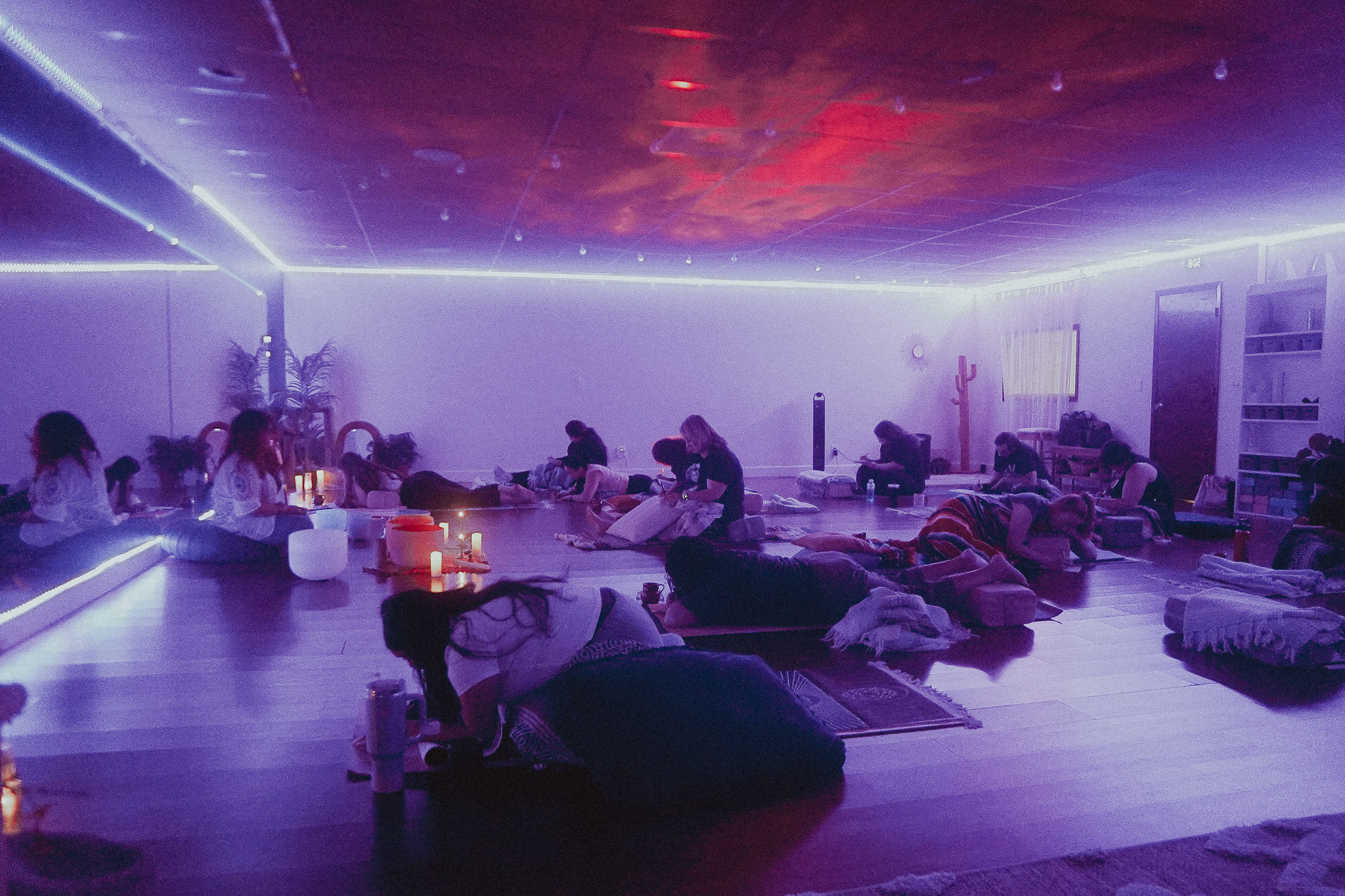
This is Heal • Create • Inspire in community
Heal begins with being given room to meet yourself as you are. You do not have to arrive already calm, already confident, already knowledgeable, or already connected. You have an opportunity to slow down and become more familiar with whatever season of life you are currently moving through.
Create is what happens when we begin participating in the culture around us. We create the environment through the way we speak, listen, welcome, respect boundaries, respond to difference, and help people feel less alone when they are new.
Inspire is what happens when those behaviors begin moving outward. Someone experiences care and becomes more capable of recognizing where care may be needed elsewhere. Someone feels welcomed and learns something about how they want to welcome people too.
That is why community itself is part of what we are creating.
The class matters.
The practice matters.
But so does the moment before class when somebody says, “Hey, are you new? Let me show you where everything is.”
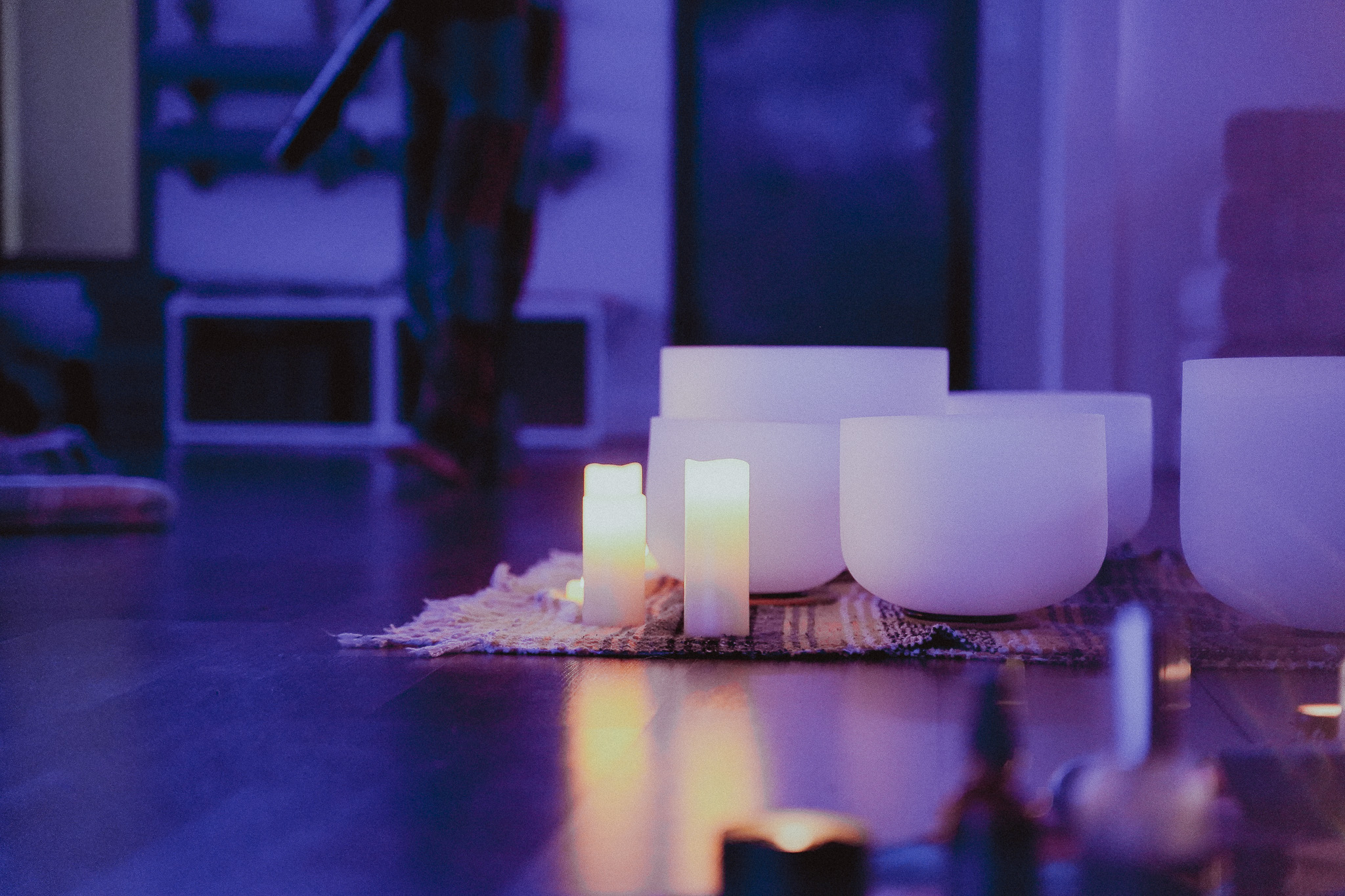
Sometimes the mission is happening before the bowls ever begin.
Community is not only created during the meaningful moments we plan. Sometimes it is created in the ordinary moments when one human being notices another human being and chooses to make room for them.
A beginner-friendly wellness community in Tempe, Arizona
The Healing Tree Collective is a community wellness space in Tempe where people can explore practices such as sound baths, breathwork, Reiki, meditation, Yoga Nidra, Tai Chi, tuning fork experiences, intentional movement, and community gatherings.
You do not need previous experience to walk through the door.
You do not need to know the terminology.
You do not need to already know somebody.
And you certainly do not need to arrive feeling like you already understand exactly what you need.
Part of exploration is being new.
Our hope is that the environment makes being new feel a little less intimidating.
Different ways to experience the community
Maybe belonging becomes real when you start helping someone else belong
When I look around and see members welcoming somebody new, I think that is why it affects me so deeply.
It is not simply helpful customer service.
It is evidence that the community understands the assignment without there ever needing to be an assignment.
People have experienced the space as something that belongs to them too.
And because it feels like theirs, they naturally begin caring for the experience of the next person who walks through the door.
That is all we ever wanted.
Not a room where everyone knows one another.
Not a community where everyone has the same story.
Not a wellness space where everyone believes the same things or participates in the same way.
A place where differences can walk through the door and still be met with the same basic message:
There is room for you here.
And perhaps the clearest sign that message is becoming real is when it no longer has to come only from us.
Welcome home does not mean “become like us.” It means there is room for you to arrive as yourself.
Maybe you have never been to a sound bath.
Maybe you have no idea what Reiki is.
Maybe being around a room full of people feels exciting. Maybe it feels intimidating.
You can still come.
Ask questions.
Be quiet.
Participate at your pace.
Learn the room.
And maybe one day, without even thinking about it, you will notice someone else standing near the door looking a little uncertain.
You will remember what that felt like.
And you might be the person who says:
“Hey, welcome. Let me show you where everything is.”
That is when a space becomes something much bigger than a business.
That is community.