28 May 2026
The Healing Tree Collective • Tempe, Arizona
Why Journaling Is Part of So Many of Our Classes
If you have taken one of our classes, you may have noticed that journaling shows up often.
Sometimes before a practice.
Sometimes after.
Sometimes as a gentle prompt.
Sometimes as part of integration.
And if you have ever wondered why, the answer is simple:
journaling helps people slow down enough to hear themselves.
In a world where so many of us are moving fast, staying busy, and pushing past what we feel, journaling gives us a moment to pause.
To notice.
To reflect.
To put words to something that may have only been living in the body, the heart, or the back of the mind.

Journaling helps turn inner experience into awareness
A lot of people are carrying thoughts, feelings, tension, questions, memories, and emotions they have not fully had time to process.
Sometimes they can feel that something is there, but they do not yet have language for it.
Journaling helps create that bridge.
It gives shape to what feels blurry.
It gives language to what feels unspoken.
It helps turn inner noise into something you can actually see, hear, and respond to.
Sometimes journaling is not about writing something profound. Sometimes it is simply about being honest enough to notice what is there.
Why journaling works so well with healing practices
In many of our classes, people are not only receiving information.
They are also having an experience.
Breathwork can bring things up.
Sound healing can soften the mind and body.
Meditation can make people more aware of what has been moving quietly underneath the surface.
Movement can reconnect someone with parts of themselves they have not fully felt in a while.
After those kinds of experiences, journaling becomes a simple but powerful way to stay in relationship with what was revealed.
It gives the experience somewhere to land.
Instead of rushing out of class and moving right back into the noise of life, journaling offers a small moment of integration.
A way to ask:
What did I notice?
What came up?
What do I need?
What am I learning about myself?
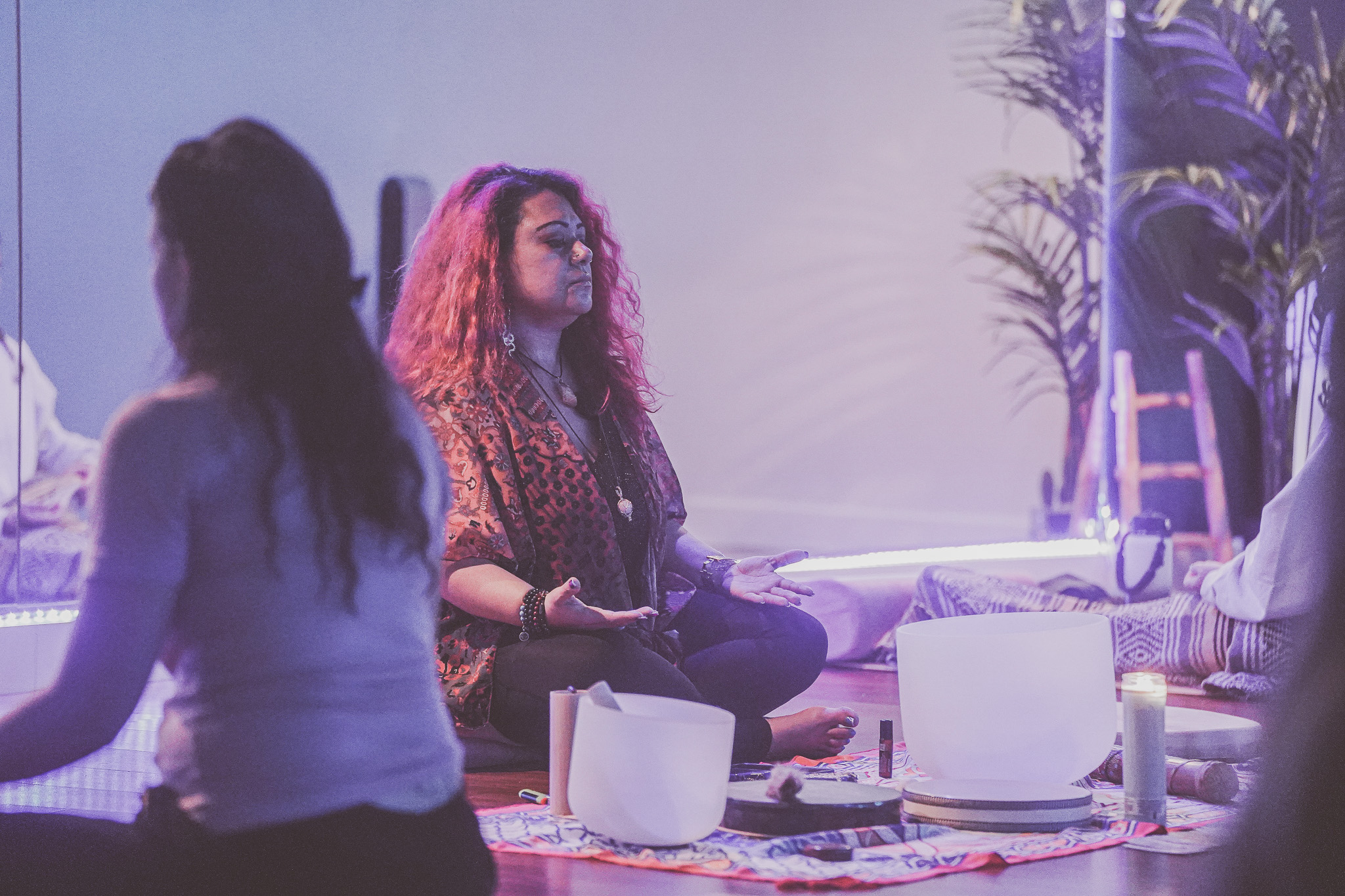

Journaling supports self-awareness
One of the biggest benefits of journaling is self-awareness.
It helps people notice patterns.
It helps them hear their own thoughts more clearly.
It helps them identify emotions, needs, fears, desires, resistance, and truth that may otherwise stay buried under the rush of everyday life.
This matters because healing often begins with awareness.
Not judgment.
Not fixing.
Awareness.
When people write honestly, they often start seeing things they did not realize they were carrying.
Or they begin recognizing that what they have been feeling has been asking for attention for a long time.
Journaling can help people:
- Understand what they are feeling
- Notice patterns and triggers
- Clarify what they need
- Reflect on what a class or session brought up
- Stay connected to the healing process after the class ends
- Practice honesty with themselves
Journaling can support emotional release too
Not every emotion needs to be spoken out loud right away.
Sometimes people need a softer place to put what they are feeling.
Journaling can be that place.
It can become a private and gentle container for sadness, anger, confusion, grief, gratitude, tenderness, fear, relief, or anything else that is moving through.
For many people, writing is one of the safest ways to begin acknowledging what is true.
This is especially helpful for people who are not used to sharing openly, who need time to process before speaking, or who are still learning how to hear their own voice.
Journaling can be a quiet form of emotional release — a way of letting something move without needing to explain it perfectly first.

Why we use journaling before and after class
Journaling can serve different purposes depending on when it is offered.
Before class, it can help someone check in with themselves.
It can help them arrive more intentionally.
It can help them notice what they are walking in with before the practice begins.
After class, it can help them reflect on what shifted.
What softened.
What became clearer.
What surfaced.
What they want to stay connected to after they leave.
In that way, journaling becomes a bridge between the class and the rest of life.
Before class, journaling may help with:
- Setting an intention
- Checking in with emotions
- Noticing stress or tension
- Becoming more present before the practice begins
After class, journaling may help with:
- Integration
- Capturing insights
- Processing emotions
- Honoring what the body or heart experienced
You do not have to be a “writer” for journaling to help
A lot of people think journaling is only for people who love writing or know exactly what to say.
But journaling does not have to be polished.
It does not have to be deep every time.
It does not have to look beautiful.
It can be messy.
Short.
Honest.
Simple.
A few words.
A list.
A sentence.
A question.
A truth you need to stop avoiding.
You do not have to be a writer.
You just have to be willing to meet yourself for a moment on the page.
Journaling is not about performing insight. It is about creating a place where your inner world can be heard a little more clearly.
Journaling as part of integration and healing
One of the reasons journaling shows up so often in our space is because healing is not only about what happens during the class itself.
It is also about what happens afterward.
How people stay connected to the experience.
How they listen.
How they integrate.
Journaling helps create continuity.
It gives people a way to carry the experience forward instead of leaving it behind the moment class ends.
It helps the practice move from something that happened in the room to something that begins shaping how they understand themselves.
That is part of why it matters.
Because the goal is not only to have a meaningful moment.
It is to support meaningful relationship with what that moment revealed.


Why journaling belongs in our classes
Journaling belongs in so many of our classes because it supports the deeper purpose of what we do.
We are not only creating experiences that help people pause.
We are creating experiences that help people reconnect.
And reconnection often requires reflection.
Journaling helps people hear themselves.
Trust themselves.
Understand themselves.
And that matters whether someone is coming to a sound bath, a breathwork class, a meditation, a movement practice, or an integration space.
It is one of the simplest tools we can offer.
And often, one of the most powerful.
Sometimes a journal prompt is not just a question. Sometimes it is an invitation back to yourself.
Looking for classes that support reflection, healing, and self-awareness?
Explore classes and healing experiences at The Healing Tree Collective in Tempe, Arizona. If you are seeking supportive practices that help you slow down, reconnect, and listen more honestly to yourself, we would love to welcome you in.