5 May 2026
The Healing Tree Collective • Tempe, Arizona
How Reiki Affects the Body
A lot of people are drawn to Reiki because they want to feel better, but one of the first questions they have is:
How does Reiki actually affect the body?
That’s a good question because Reiki is often talked about as an energetic practice, and for some people that can feel hard to understand at first.
But the effects of Reiki are often felt in very physical, very real ways.
People often leave a Reiki session feeling calmer, softer, lighter, more grounded, or more rested.
Their shoulders may drop.
Their breathing may deepen.
Their mind may quiet down.
Their body may finally let go of some of the tension it has been carrying.
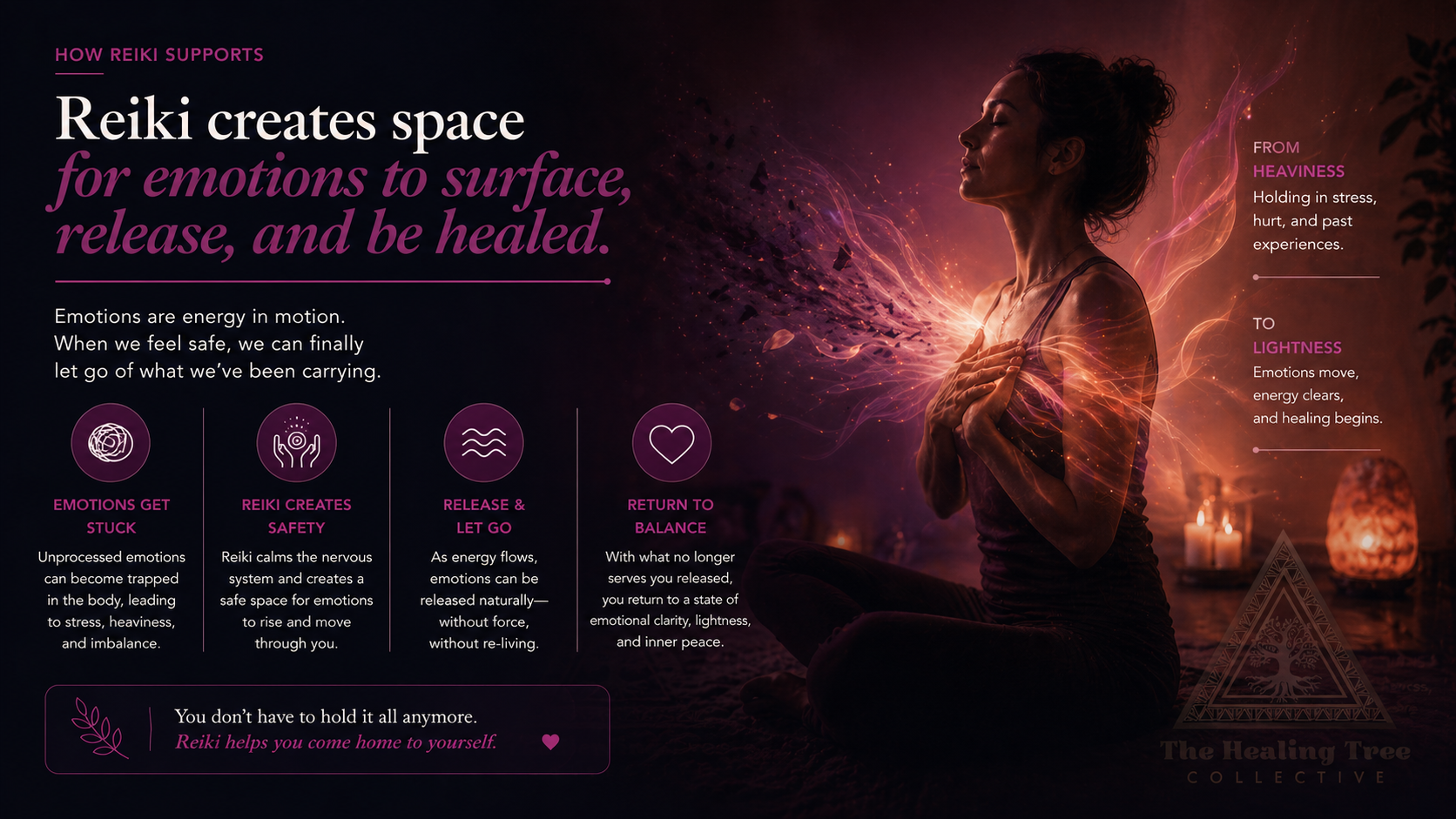
In simple language, Reiki affects the body by helping it shift out of stress and into a state that feels more restorative, balanced, and supportive of healing.
How Reiki may affect the body
- Helps the body relax
- Supports nervous system regulation
- Softens physical tension
- Encourages deeper breathing
- Creates space for rest and repair
- Supports overall balance and ease
Reiki often affects the body by helping it relax
One of the most common ways people experience Reiki in the body is through relaxation.
Not just “I sat still for a little while” relaxation, but a deeper kind of softening.
The kind where your breath gets fuller, your muscles unclench, and your whole system feels like it can exhale.
A lot of people do not realize how much tension they are carrying until they finally feel some of it release.
Reiki often helps create that moment.
A moment where the body stops bracing long enough to remember what ease can feel like.
Reiki often affects the body first through softness — helping what has been tight, guarded, or overworked begin to let go.
Reiki may help shift the nervous system out of stress mode
A big part of how Reiki affects the body has to do with the nervous system.
When someone has been under stress for a long time, the body can get stuck in a state of alertness.
Breathing becomes shallow.
Muscles stay tight.
The mind keeps scanning.
Rest becomes harder to access.
Reiki often supports a different experience.
It can help the body feel safe enough to come out of constant stress mode and move toward something more calm and restorative.
This is one reason people often describe Reiki as grounding, regulating, and deeply supportive.
When the nervous system begins to settle, the body can respond in beautiful ways:
slower breathing, a steadier heart rate, less internal tension, and a stronger ability to rest.
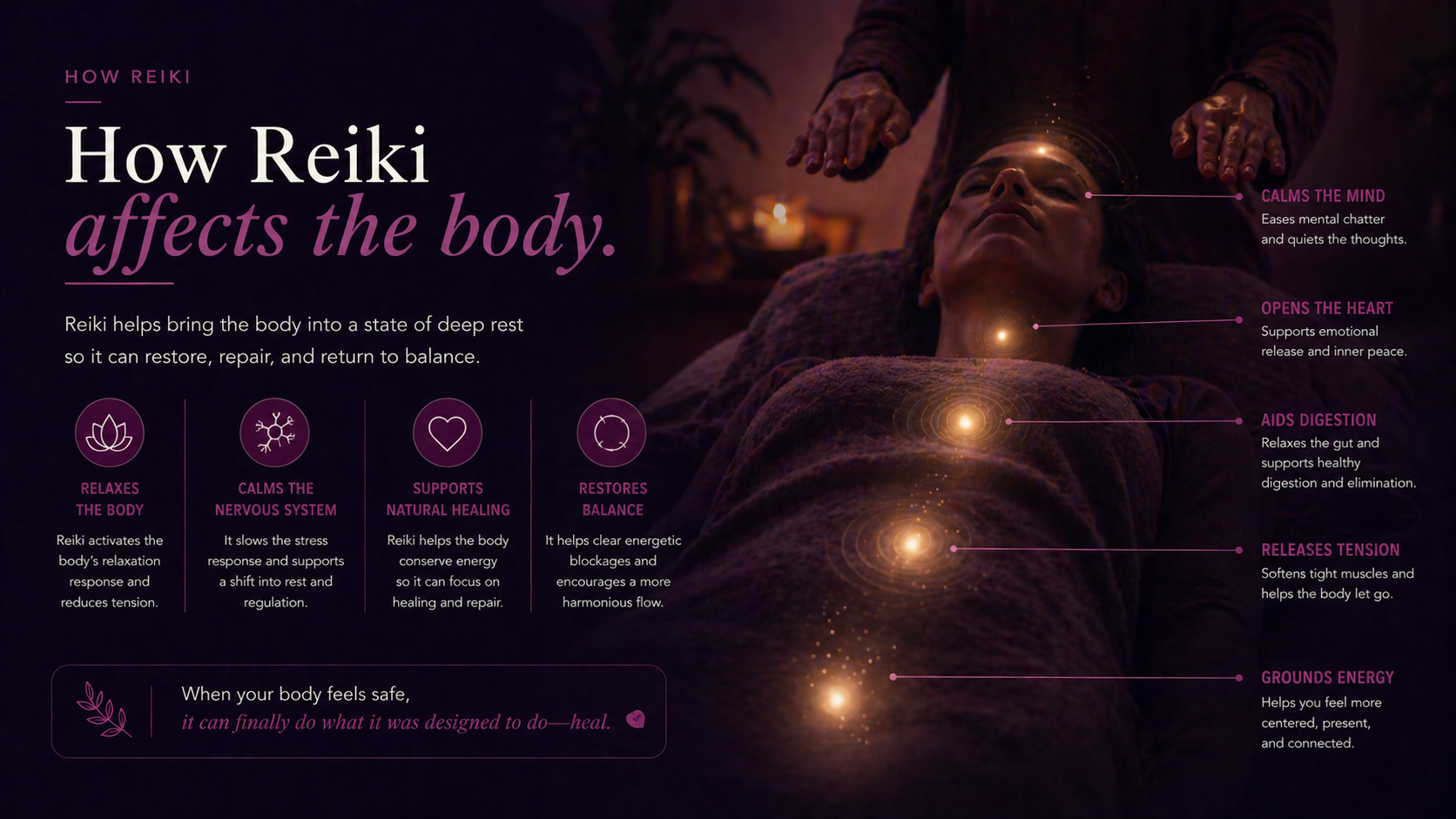
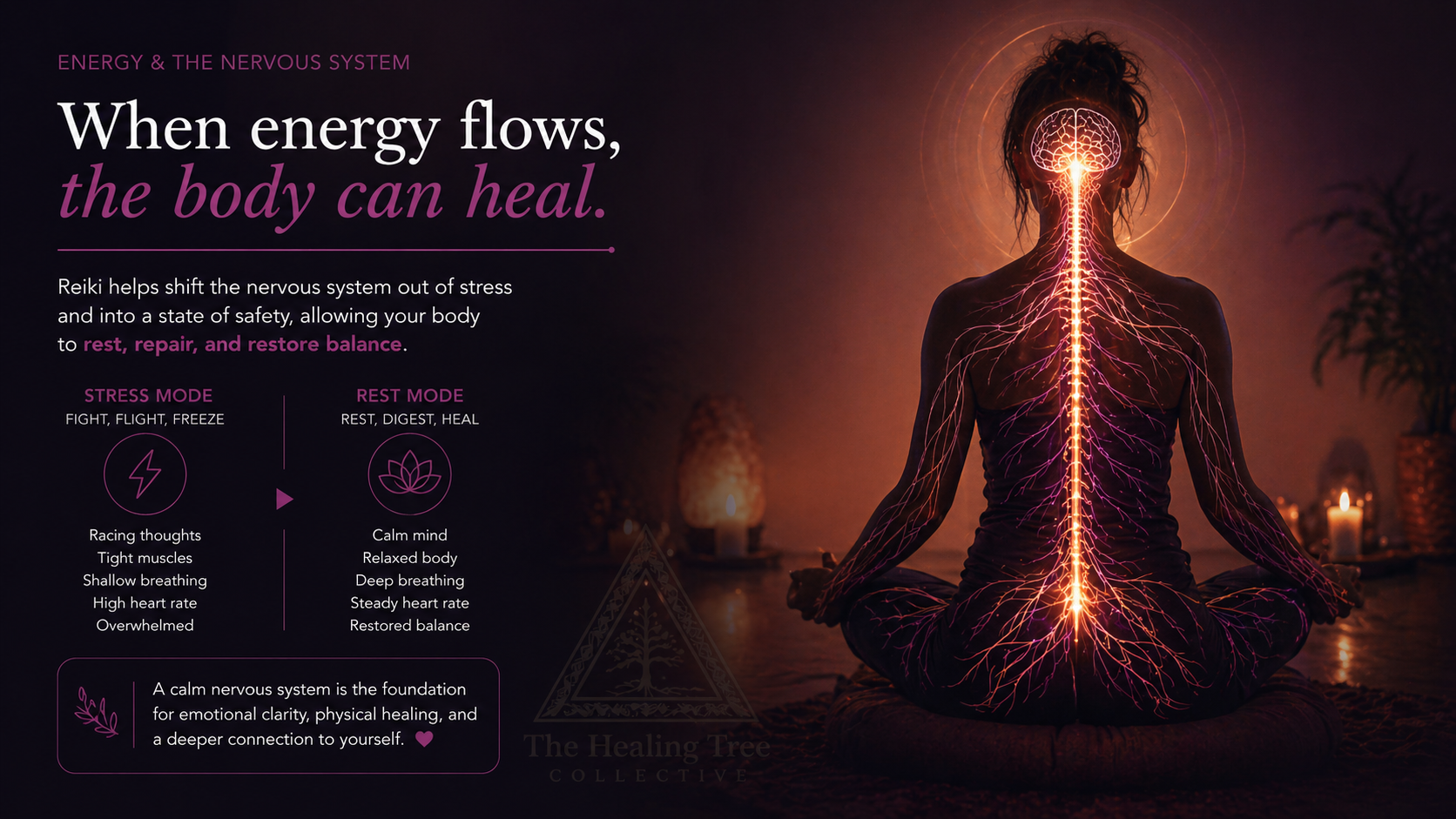
When the body feels safer, it can shift out of survival mode and into a state where rest, repair, and balance become more possible.
Reiki may help soften physical tension
Stress does not only live in the mind.
It often lives in the body too.
In the shoulders.
In the jaw.
In the chest.
In the stomach.
In the breath.
Reiki may help release some of that stored tension by supporting the body in relaxing more deeply.
People often notice that their muscles feel softer, their body feels heavier on the table or mat, and their breathing becomes slower and fuller.
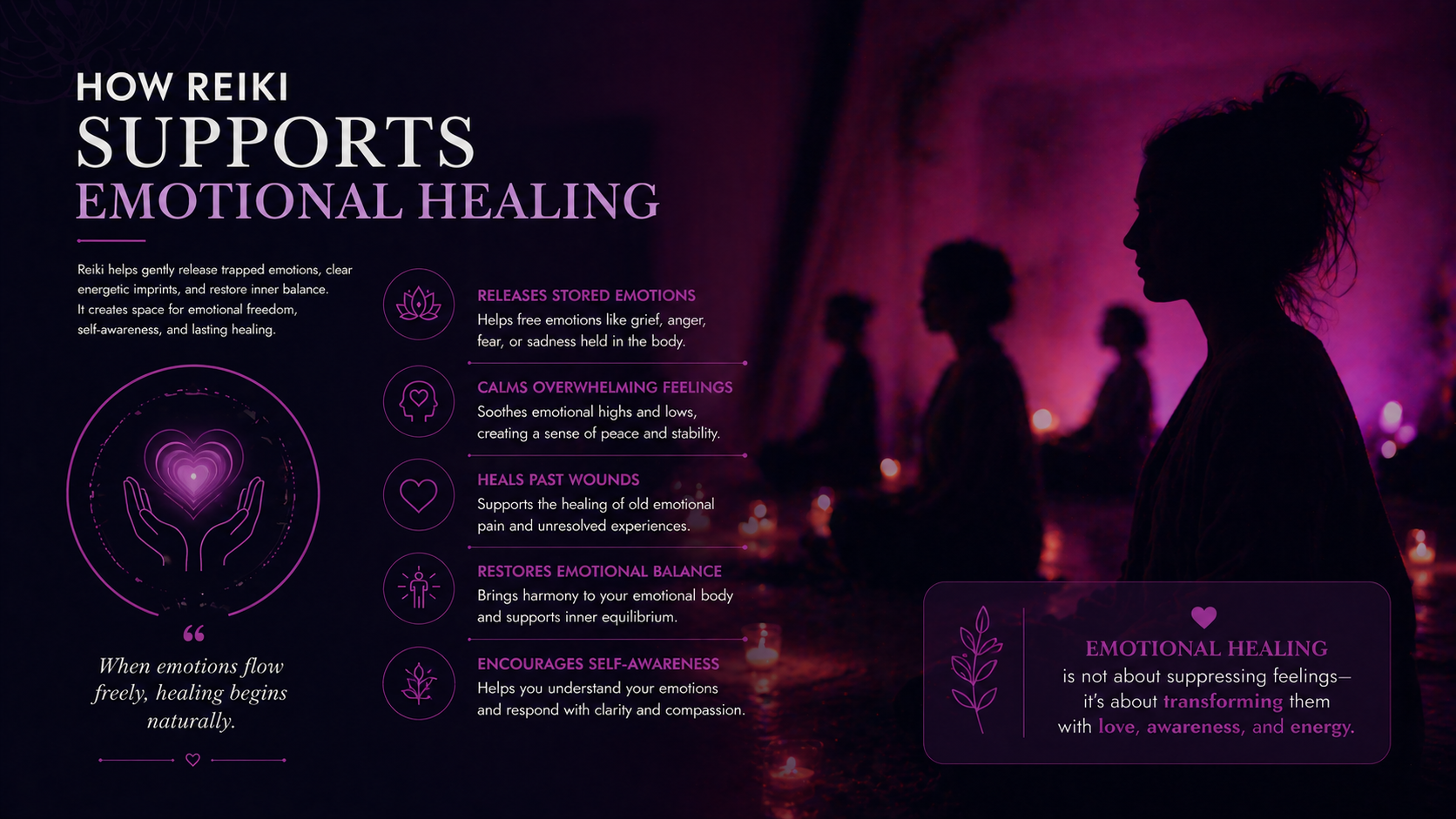
That release can feel physical, emotional, or both.
Because the body and emotions are not separate.
What we carry mentally and emotionally often shows up in the body as well.
Reiki can support deeper breathing
Another way Reiki may affect the body is through the breath.
Many people come in breathing from stress without even realizing it.
Their breath is short, shallow, or tight.
Their chest feels guarded.
Their body is working harder than it needs to just to stay regulated.
During Reiki, as the system begins to settle, people often notice their breath naturally deepen.
Not because they are being forced to breathe a certain way, but because their body feels supported enough to soften.
This matters because the breath is deeply connected to how the body feels.
Fuller breathing can support a greater sense of calm, presence, and internal spaciousness.
Sometimes the body tells you Reiki is working not through a dramatic moment, but through the simple fact that you can finally breathe a little deeper.
Reiki may create a feeling of warmth, tingling, heaviness, or lightness
People often ask what Reiki feels like in the body.
And the answer is: it varies.
Some people feel warmth where the practitioner’s hands are placed.
Some feel tingling.
Some feel a pleasant heaviness, like the body is finally dropping into deep rest.
Others feel lighter, clearer, or more open afterward.
Some people feel a lot during the session.
Others feel subtle shifts that make more sense later.
There is no one right experience.
The body responds in its own way.
Warmth
Some people feel warmth in certain areas of the body during Reiki.
Tingling
Others notice subtle tingling or energetic sensation as the body softens.
Heaviness
A grounded, restful heaviness can happen when the body fully lets go.
Lightness
Afterward, many people describe feeling lighter, clearer, and more balanced.
Reiki supports the conditions for healing
It is important to say that Reiki is not about forcing the body to heal on command.
It is about supporting the conditions where healing becomes more possible.
When the body is stressed, tense, and overstimulated, it often has less capacity to rest, recover, and regulate.
But when the system begins to settle, the body can redirect energy away from survival and toward restoration.
That is one of the most important ways Reiki affects the body:
it helps create more internal conditions for balance, repair, and ease.
Reiki does not overpower the body. It supports the body in remembering balance.
Reiki affects more than just one part of you
One of the reasons Reiki can feel so supportive is because its effects are often not limited to one area.
Someone may come in because they feel physically tense, and leave realizing their mind is quieter too.
Someone may come in feeling emotionally heavy, and leave noticing that their body feels lighter.
Reiki often works holistically.
It supports the body, yes, but also the emotional and energetic layers of what the body has been holding.
That is why many people describe Reiki as a whole-being experience, not just a physical one.
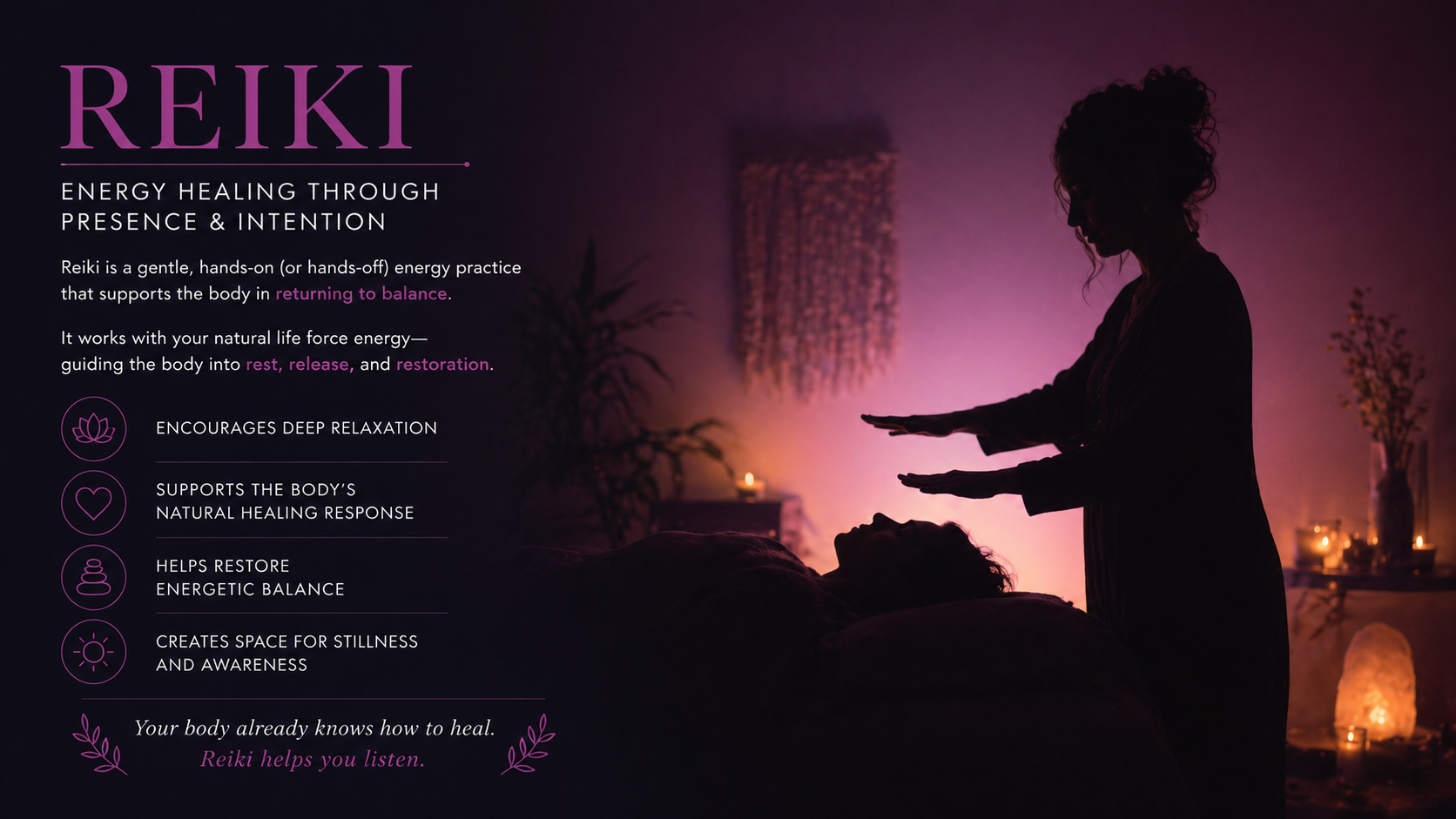
So, how does Reiki affect the body?
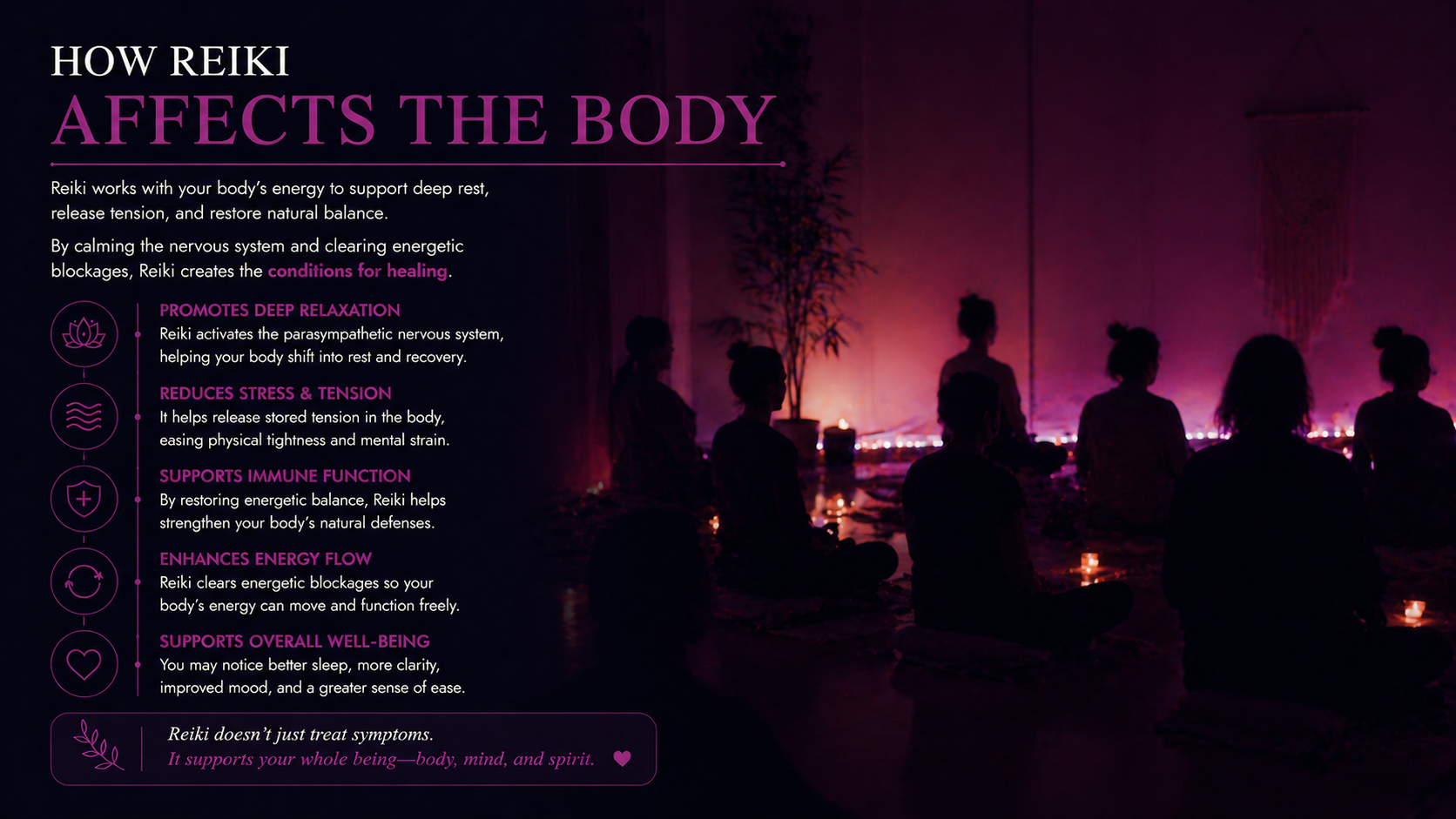
Reiki affects the body by helping it relax, soften, and return to a more balanced state.
It may support nervous system regulation, ease tension, deepen breathing, create more restfulness, and help the whole system feel more grounded and restored.
For some people, that effect feels immediate.
For others, it feels subtle and unfolds over time.
But again and again, people describe Reiki as helping them feel more at ease in their body.
Reiki affects the body by helping it shift out of stress and into a state where rest, repair, and balance can happen more naturally.
A gentler way back into your body
If your body has been feeling tense, tired, emotionally full, or stuck in stress mode, Reiki can be a gentle way to reconnect.
It does not ask you to force anything.
It simply offers your system support.
And sometimes that support is exactly what helps the body begin to soften, settle, and heal.
When the body feels safe, it can finally do what it was designed to do — rest, repair, and return to balance.
Ready to experience Reiki for yourself?
At The Healing Tree Collective in Tempe, Arizona, we offer beginner-friendly Reiki experiences designed to help you slow down, release tension, and reconnect with yourself. Whether you are curious about private Reiki or group Reiki, we would love to welcome you in.