14 May 2026
The Healing Tree Collective • Tempe, Arizona
What Is Yoga Nidra and Why Do Therapists Recommend It?
If you have heard the words Yoga Nidra and wondered what it actually is, you are not alone.
And if you have also noticed that some therapists, counselors, and mental health professionals recommend it, you may be wondering why.
In simple terms, Yoga Nidra is a guided practice of deep rest.
It is often described as yogic sleep, but it is not exactly the same as ordinary sleep.
It is a supported state where the body can soften deeply while the mind is gently guided through awareness, breath, and rest.
A lot of people are drawn to Yoga Nidra because they are tired in a way that goes beyond needing one good night of sleep.
They are mentally tired.
Emotionally tired.
Nervously tired.
And they need a practice that does not ask them to perform, push, or force calm.
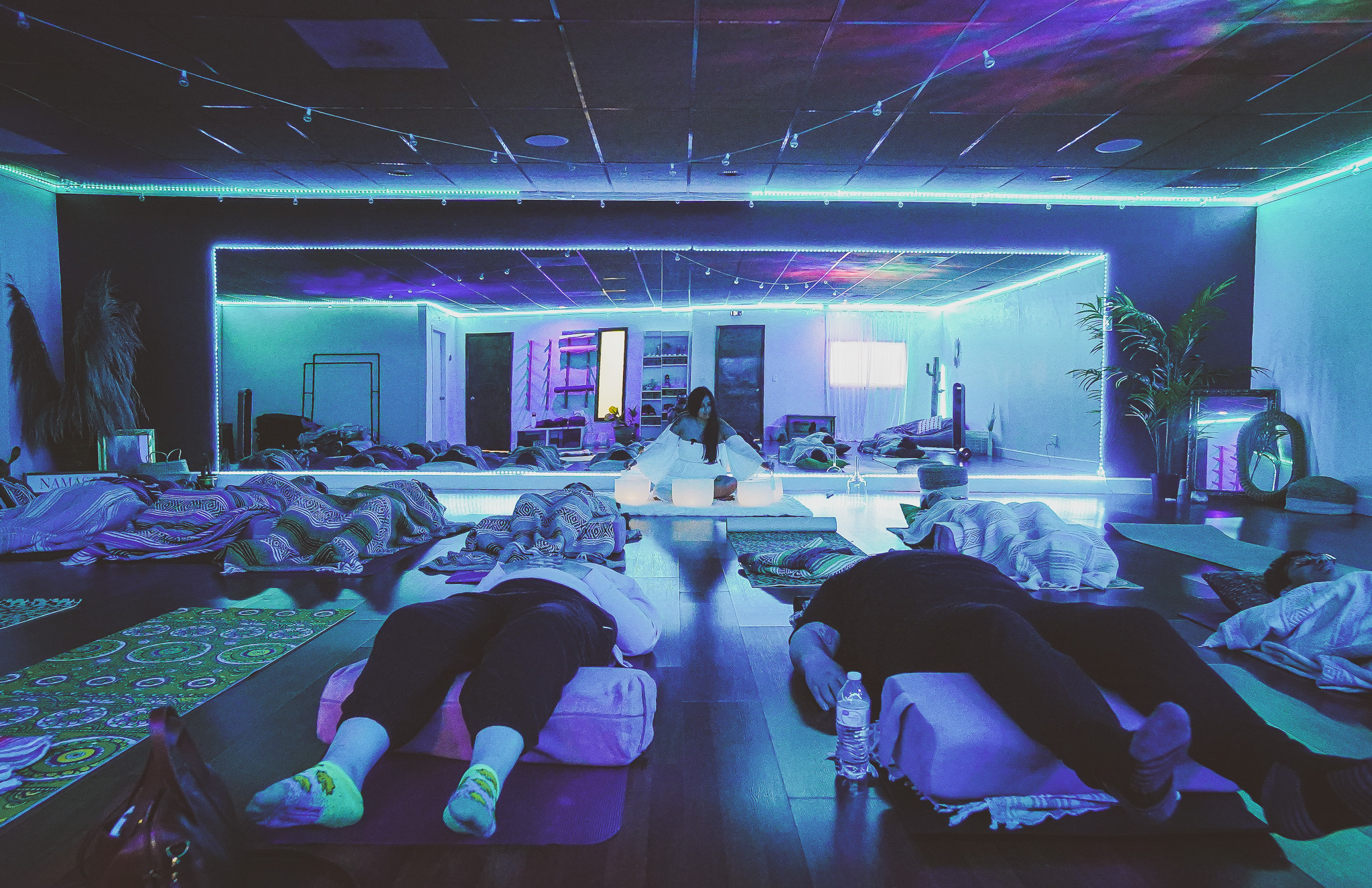
What is Yoga Nidra?
Yoga Nidra is a guided meditation practice usually done while lying down comfortably.
During the experience, you are invited to rest while a facilitator guides your awareness through different layers of relaxation, breath, sensation, and presence.
You are not being asked to stretch deeply, move a lot, or clear your mind perfectly.
You are being invited to receive.
To settle.
To let the body rest while awareness stays gently engaged.
For many people, Yoga Nidra feels more approachable than traditional meditation because there is less pressure to “do it right.”
You are not expected to sit upright and battle your thoughts.
You are guided the whole way through.
Yoga Nidra is a practice of deep rest and guided awareness. It creates a space where the body can soften and the mind can begin to settle without force.
Why do therapists recommend Yoga Nidra?
Therapists often recommend Yoga Nidra because many people do not only need more insight.
They need more support for the nervous system.
They need ways to rest more deeply, soften chronic tension, and experience stillness in a way that feels more accessible.
A person may understand their anxiety, burnout, grief, or stress intellectually and still feel completely exhausted in their body.
They may know what is happening and still not know how to come out of constant alertness.
Yoga Nidra can be helpful because it offers a structured, guided experience of slowing down.
It is not therapy.
It does not replace therapy.
But it can complement therapy by helping people practice rest, body awareness, and nervous system support in a direct and felt way.
Therapists may recommend Yoga Nidra because it can support:
- Deep rest and relaxation
- Nervous system regulation
- Stress relief
- A gentler relationship with stillness
- Body awareness and presence
- Support between therapy sessions
Why Yoga Nidra feels supportive for anxious or overwhelmed people
A lot of anxious or overwhelmed people struggle with practices that feel too effortful.
Sitting still in silence can feel frustrating.
Trying to meditate without guidance can feel impossible.
“Just relax” can feel like the least helpful instruction in the world.
Yoga Nidra often feels different because it offers support through structure.
You lie down.
You get comfortable.
You are guided.
The practice asks less of you and supports more of you.
That matters for nervous systems that are tired, overloaded, or used to always being on.
Instead of forcing stillness, Yoga Nidra invites it.
Instead of demanding calm, it creates conditions where calm may become more possible.


What happens during a Yoga Nidra practice?
Most Yoga Nidra classes begin with getting physically comfortable.
You may lie down on a mat with a blanket, pillow, or props to help your body feel supported.
From there, the facilitator guides the experience.
Depending on the class, that guidance may include body awareness, breath awareness, intention setting, visualization, or moving attention gently through different parts of the body.
The goal is not to force a big experience.
The goal is to help the body and mind move toward deeper rest and awareness.
Some people stay awake the whole time.
Some drift into a dreamy, in-between state.
Some fall asleep.
All of that can happen, especially when someone is deeply tired.
Yoga Nidra does not ask you to perform relaxation. It gives you a supported space where rest can happen more naturally.
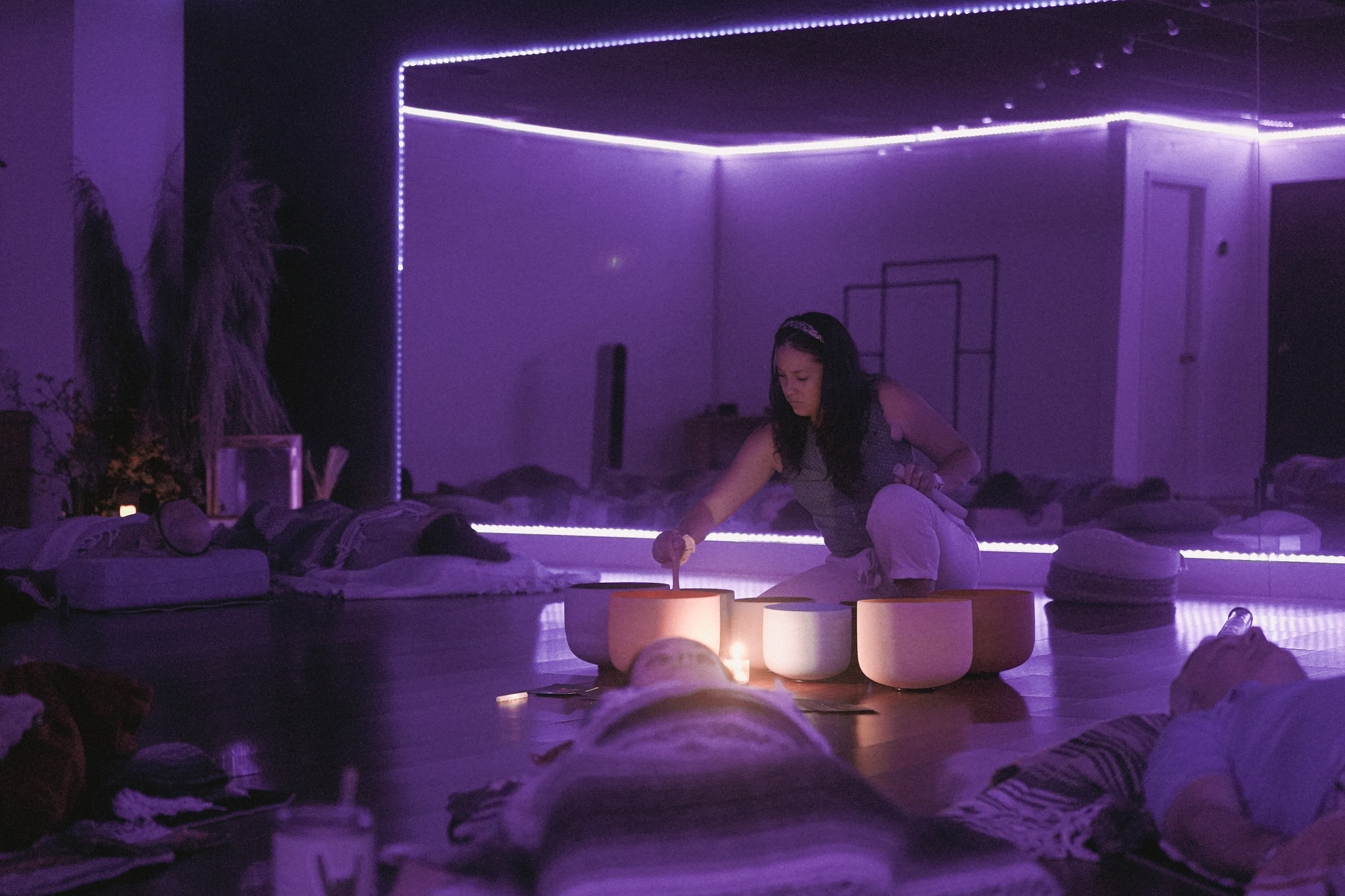
How Yoga Nidra supports therapy-complementary care
One of the reasons Yoga Nidra works well as a therapy-complementary practice is because it supports people outside the therapy room without trying to do therapy’s job.
It offers rest, nervous system support, awareness, and a gentler connection to the body.
For some clients, this can help them feel more resourced between sessions.
For others, it becomes a helpful way to wind down after emotionally demanding days.
For others, it is the first time they realize how difficult rest has actually been.
This is why therapists may recommend it.
Not because it replaces clinical care, but because it can support the body in ways that help the rest of the work feel more integrated.
Is Yoga Nidra good for beginners?
Yes, absolutely.
Yoga Nidra is one of the most beginner-friendly practices many people can try.
You do not need yoga experience.
You do not need meditation experience.
You do not need to know how to “turn your brain off.”
Because you are guided throughout the whole experience, Yoga Nidra can be especially supportive for people who feel intimidated by traditional meditation or who feel too tired, too anxious, or too overwhelmed for more effort-based practices.
Yoga Nidra may be a good fit if you are:
- Feeling anxious or mentally overloaded
- Burned out or emotionally exhausted
- Craving deeper rest
- Looking for therapy-complementary nervous system support
- New to meditation and wanting a gentler entry point
What does Yoga Nidra feel like?
Everyone’s experience is different.
Some people feel deeply relaxed.
Some feel emotional.
Some feel spacious, quiet, or surprisingly refreshed afterward.
Some feel like they hovered between waking and sleeping.
There is no perfect way to experience it.
You do not need to make anything happen.
The practice is not about achieving the “right” state.
It is about receiving the support of the practice as you are.
For many people, the most powerful part is simply realizing how rarely they let themselves rest this deeply.
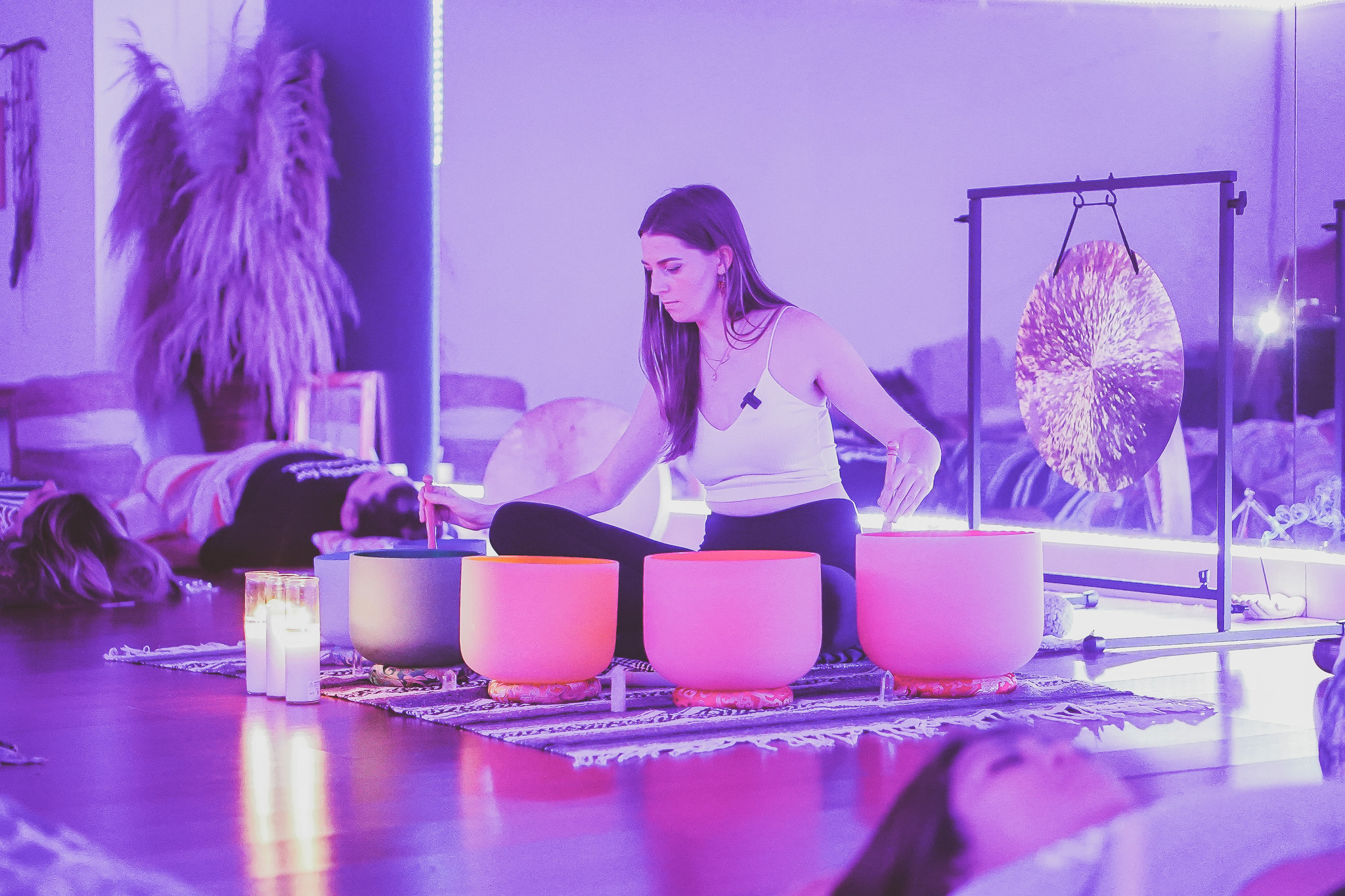

Yoga Nidra at The Healing Tree Collective
At The Healing Tree Collective, we believe people need spaces where deep rest feels more accessible.
Spaces where they do not have to perform calm.
Spaces where the body can soften and the nervous system can receive support in a more honest way.
Whether someone is navigating anxiety, burnout, grief, stress, emotional overwhelm, or simply the exhaustion of being human, Yoga Nidra can be a meaningful place to begin.
Especially when it is held in a supportive, trauma-aware environment.
That is part of why practices like Yoga Nidra matter so much in a broader circle of care.
They help people practice being with themselves gently, and that can support the work happening in therapy and in everyday life.
Therapists often recommend Yoga Nidra because it offers something many people are deeply missing: a guided, supported path into rest.
Curious about trying Yoga Nidra for yourself?
Explore classes at The Healing Tree Collective in Tempe, Arizona. If you are craving deep rest, nervous system support, and a gentler way to reconnect with yourself, we would love to welcome you in.