17 September 2026
The Healing Tree Collective • Spirituality, Business, Integrity and Community
When the Spiritual World Meets the Business World: Learning to Build With Integrity
I think one of the hardest challenges I faced while building The Healing Tree was trying to understand how two worlds that seemed completely different were supposed to exist together.
On one side was what I thought of as the spiritual world: meditation, Reiki, sound, breath, reflection, ceremony, gatherings, retreats, energy work, self-discovery, and practices that often invite people into very personal parts of themselves.
On the other side was the business world: pricing, revenue, marketing, customer acquisition, policies, operations, systems, contracts, payroll, rent, profit, growth, and all the things a company has to understand if it wants to keep operating.
For a while, those worlds felt almost incompatible to me.
How do you market something that is supposed to be meaningful without turning meaning into a sales tactic? How do you charge money for experiences connected to practices that may never have originated inside a commercial model? How do you think strategically about growth while still trying to act from the goodness of your heart? How do you build something financially sustainable without allowing money to become the measurement of whether the work matters?
The more responsibility we took on at The Healing Tree, the more obvious it became that avoiding those questions was not an option.
The spiritual world and the business world were going to have to meet.
The challenge was figuring out how they could meet without one swallowing the other.
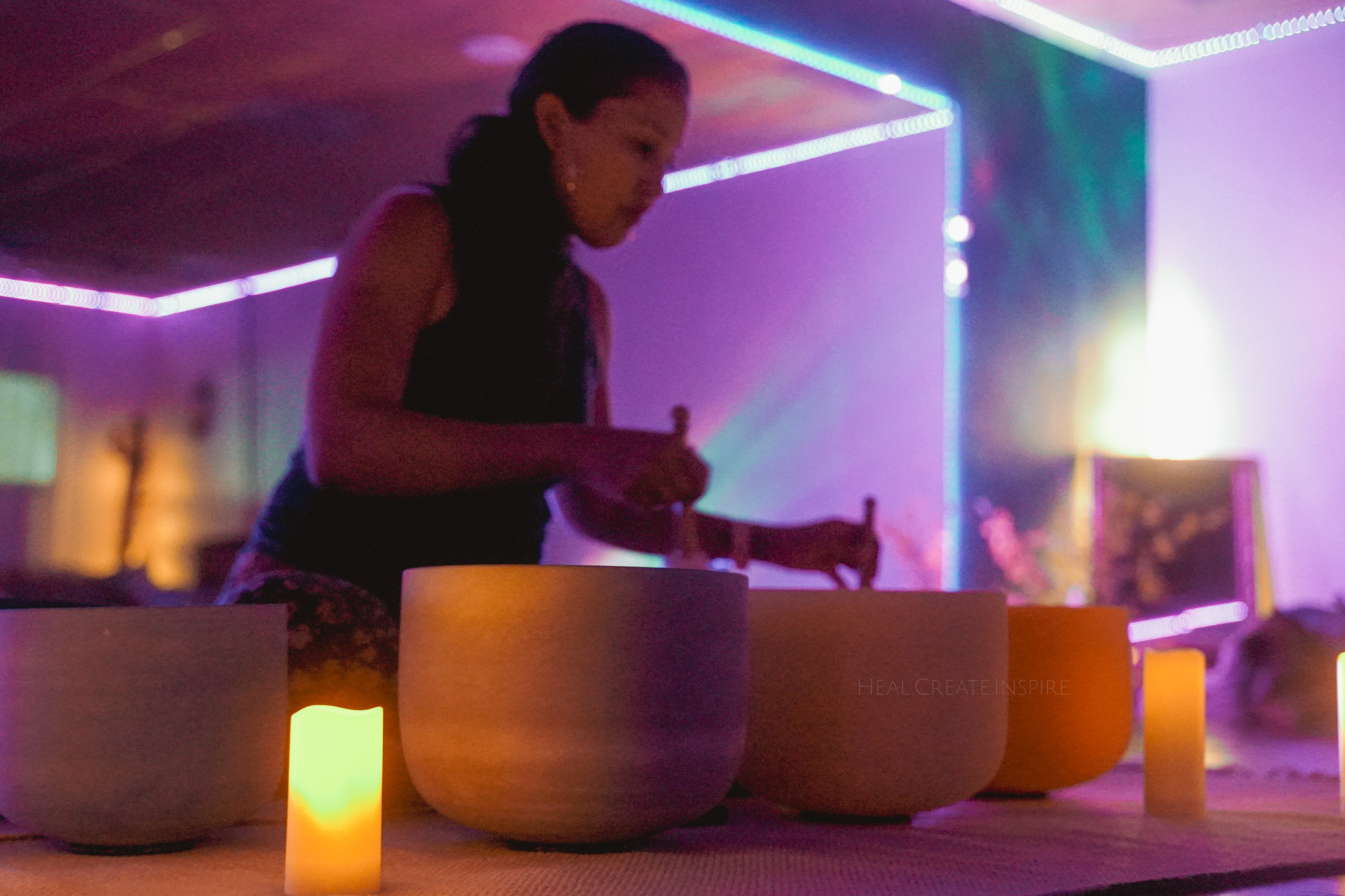
The question became bigger than business strategy.
It was not simply, “How do we make this profitable?” It was also, “How do we make this sustainable while still recognizing the responsibility that comes with inviting people into practices that can feel deeply personal, reflective, emotional, or spiritual?”
That is where business decisions started becoming integrity decisions.
For a long time, I thought spirituality and business were supposed to speak different languages
Part of the difficulty came from the assumptions I carried into both worlds.
Business language can be extremely transactional. We talk about leads, conversions, customer lifetime value, pricing strategy, revenue per customer, retention, upsells, funnels, margins, and growth. Those tools are not inherently bad. They help us understand whether a business is functioning and where it needs attention.
But apply that language carelessly to a deeply human experience and something can begin to feel uncomfortable.
A person walking into a wellness class may technically be a customer, but they are also a human being who may be nervous, grieving, curious, exhausted, skeptical, hopeful, or exploring something very personal. If we think about them only as a conversion or a recurring-revenue opportunity, we have reduced the relationship before it has even begun.
Spiritual and wellness spaces can create the opposite problem. Sometimes money, systems, structure, or profitability are treated as though they automatically make the work less pure.
But refusing to talk about business does not remove business reality.
The rent still exists. Practitioners still deserve to be compensated. Insurance still costs money. Someone still has to clean the space, answer inquiries, maintain booking systems, market the classes, replace equipment, and make sure the lights stay on.
Avoiding economics does not make a space more spiritual. Sometimes it simply makes the space less sustainable.
The challenge was never choosing between heart and business. The challenge was figuring out whether the business could become one of the ways the heart of the work was protected.
That realization changed the conversation for me.
Maybe systems do not have to destroy humanity.
Maybe good systems can protect it.
Maybe a cancellation policy protects practitioners’ time. Maybe clear class descriptions reduce anxiety for first-time guests. Maybe sustainable pricing keeps an accessible community space alive longer. Maybe responsible marketing helps somebody discover an experience they genuinely did not know existed.
The question is not whether we use business tools.
The question is what values are directing how we use them.
The hardest part was learning to trust myself without assuming every instinct was automatically right
When there is no exact blueprint, self-trust becomes important very quickly.
We were trying to build something that did not fit neatly into one established model. It was not simply a yoga studio. Not exactly a spa. Not therapy. Not a traditional spiritual center. Not merely an event venue. Not just classes. The Healing Tree was becoming an ecosystem of practitioners, wellness modalities, community, education, private experiences, gatherings, and personal exploration.
That meant there were many moments when nobody could hand us the correct answer.
We had to make decisions.
And because the work felt meaningful, those decisions often carried more emotional weight than an ordinary business calculation.
I kept coming back to this idea of acting from the goodness of my heart. I wanted to know that whatever we were creating came from a genuine desire to serve people rather than exploit them.
But even that deserves examination.
Good intentions are important. They are not enough by themselves.
We can have good intentions and still create confusing policies. We can care deeply about practitioners and still design compensation that does not work. We can genuinely want affordability and accidentally create pricing that makes the business impossible to sustain. We can believe in a modality and still overstate what it can reasonably promise.
Self-trust therefore cannot mean, “Whatever feels right to me must be right.”
A more mature version of self-trust may sound like: I trust myself enough to make the best decision I can, listen carefully to what happens next, and change the decision when reality teaches me something I did not yet understand.
Integrity is not the belief that our intentions make us incapable of getting something wrong. Integrity is being willing to look honestly when our impact does not match our intention.
What does it actually mean to lead from the heart?
Maybe it does not mean making every decision emotionally. Maybe it means allowing our values to determine which outcomes matter while still using data, structure, feedback, boundaries, and financial reality to help us understand how to reach them responsibly.
Heart without structure can become unsustainable. Structure without heart can become transactional. The interesting work is learning how to let each one correct the blind spots of the other.
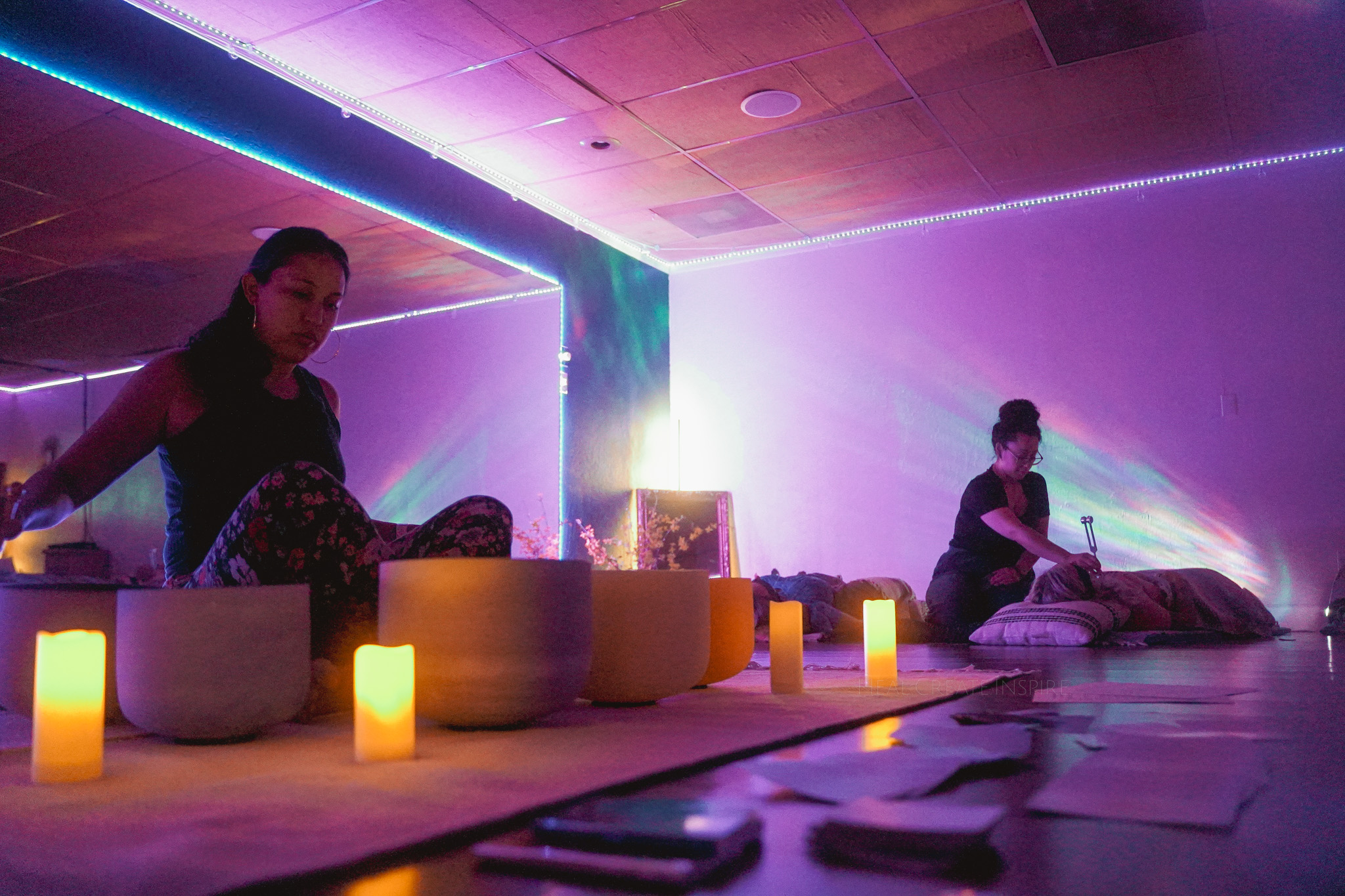

Some of these practices were never designed to fit neatly into modern consumer culture
This is part of what made the collision between the two worlds feel so uncomfortable.
Meditation, breath practices, spiritual rituals, energy practices, movement traditions, circles, ceremonies, sound, and other contemplative experiences did not all originate from the same place, and they certainly did not all originate as modern commercial wellness products.
Different practices carry different histories, lineages, cultural contexts, philosophies, and interpretations. Some have ancient roots. Some are modern adaptations. Some have religious or spiritual foundations. Others are presented today in secular wellness environments.
That means putting all of them under one convenient label like “wellness industry” can flatten important differences.
And yet, these practices now exist inside a modern economy.
People teach them professionally. Studios host them. Retreats are organized around them. Practitioners invest time and money into training. Events need venues. People purchase tickets. Businesses advertise.
We cannot pretend that intersection does not exist simply because it makes us uncomfortable.
What we can do is become more thoughtful about it.
Where did a practice come from? What are we qualified to say about it? Are we presenting spiritual belief as belief or disguising it as scientific certainty? Are we respecting the practitioner who has spent years learning their work? Are we giving guests enough information to make their own choices? Are we acknowledging that different people may interpret the same experience differently?
Those questions become especially important when money enters the relationship, because commerce creates incentives.
If dramatic claims sell more tickets, there can be pressure to make dramatic claims.
That is exactly where integrity has to become stronger than marketing temptation.
The fact that something is difficult to market responsibly does not give us permission to exaggerate it. Sometimes integrity means accepting that the slower explanation is the better explanation.
When spirituality enters business, several responsibilities appear at once
Respect the practice
Learn what can reasonably be understood about its history, context, purpose, and limitations rather than reducing everything to a trendy label.
Respect the practitioner
Recognize training, experience, preparation, boundaries, and the value of the person actually holding the experience.
Respect the guest
Give people enough information and autonomy to decide whether something feels appropriate for them without manufacturing fear or dependency.
Respect the business reality
Build pricing, systems, and operations that allow the work to continue instead of depending indefinitely on burnout or unpaid labor.
Stigma made the business side harder.. and also forced us to communicate more clearly
Another challenge was recognizing that not everybody looks at these practices the same way.
Some people hear Reiki and immediately feel comfortable because they have experienced it before. Someone else hears the same word and becomes skeptical. Some people already understand sound baths, meditation, energy work, or breathwork as normal parts of their wellbeing. Someone else may see those practices as strange, overly spiritual, unscientific, or simply outside anything they have ever encountered.
Those reactions matter.
It would be easy to respond defensively and say people who are skeptical simply “do not understand.”
But skepticism can contain useful information.
Maybe someone is skeptical because they have seen exaggerated wellness claims before. Maybe they have watched people use scientific language inaccurately. Maybe they have encountered spiritual communities where questions were discouraged. Maybe they simply come from a worldview where the language we are using feels unfamiliar.
If our mission includes inviting more people to explore these practices, then dismissing skeptical people would defeat the purpose.
We have to be able to communicate in a way that leaves room for curiosity.
That means explaining what someone will actually experience instead of assuming they already understand the terminology. It means acknowledging where experiences vary. It means distinguishing between spiritual interpretations and claims we can responsibly make as a business. It means giving someone permission to try a practice without requiring them to adopt a whole belief system around it.
If we want more people to explore unfamiliar practices, we cannot require them to stop asking questions before they are allowed through the door.
What if skepticism is not always resistance?
Sometimes skepticism may actually be the beginning of trust. A person wants to understand what something is before participating. They want to know what will happen, what claims are being made, where a practice comes from, and whether they can opt out of something that does not feel right.
A responsible wellness space should be able to hold those questions. If the work has value, asking clearer questions should help us communicate it more honestly rather than threaten it.
The bridge between these two worlds may be consent, education and choice
Over time, I have come to believe that one of the most important ways to connect the spiritual and business sides of this work is through education.
If someone knows what a class involves, they can decide whether they want to attend.
If they understand that a practice may feel different from person to person, they do not have to believe they failed because their experience was quieter than somebody else’s.
If they know participation is invitational rather than forced, they can begin listening to their own comfort and boundaries.
If we explain that a wellness class is not a replacement for medical or mental-health treatment when professional care is needed, then the modality can remain inside the role it is actually equipped to play.
That kind of communication may not sound as exciting as promising transformation.
But it creates a healthier relationship.
Instead of positioning ourselves as the authority who knows what someone needs, we create an environment where they can explore, ask questions, pay attention to their own experience, and decide what feels meaningful to continue.
That is good ethics.
It is also good business.
Because trust created through clarity is much more sustainable than trust created through hype.
Maybe the strongest bridge between spirituality and business is not better selling. It is creating enough clarity that people can choose for themselves.

What if making money is not the betrayal.. what if losing the intention is?
This is probably one of the biggest internal shifts I have had to make.
There can be guilt around making money in work that feels meaningful.
If a practice helps people create intentional space for themselves, does charging for it somehow make the intention less pure? If a community becomes financially successful, does that mean it has become too commercial? If an event sells out, does that somehow diminish the sincerity of why it was created?
I do not think those conclusions automatically follow.
Money can absolutely distort priorities. A business can begin choosing whatever generates the most revenue regardless of whether it aligns with the mission. Marketing can become manipulative. Scarcity can be manufactured. Emotional vulnerability can be exploited. Practitioners can be underpaid while customers are charged premium prices. Growth can become more important than care.
Those are real risks.
But the existence of those risks does not mean the only ethical option is to remain financially unstable.
A healthy business can create continuity.
Revenue can pay practitioners. It can improve a physical space. It can fund equipment. It can create lower-cost offerings. It can support staff. It can make community programming possible. It can give owners enough capacity to think beyond surviving the next month.
Profit is not automatically integrity.
But financial instability is not automatically virtue either.
The question comes back to intention and structure:
What is the money helping us sustain, and what are we willing or unwilling to compromise in order to make it?
Maybe the problem is not that meaningful work generates revenue. The problem begins when generating revenue becomes more important than the values that made the work meaningful in the first place.
Trusting the vision also meant accepting that not everyone would understand it
When you build something inside an emerging or misunderstood category, there is a temptation to constantly defend it.
You want everyone to understand.
You want skeptical people to see what you see.
You want to explain why these practices matter, why people keep returning, why the community feels meaningful, and why the work deserves to exist.
But not everyone is going to see it the same way.
And perhaps they do not have to.
Our responsibility is not to convince every person that every modality offered at The Healing Tree belongs in their life.
Our responsibility is to present the work clearly and responsibly, create a thoughtful environment, support qualified practitioners, respect people’s autonomy, listen when something needs improvement, and let people decide whether there is something here they want to explore.
That shift takes pressure off the mission.
“More people need to experience this” does not have to mean “everyone must believe in this.”
It can mean more people deserve access to information and opportunities to explore practices they may never have encountered before.
Choice remains theirs.
Our job is not to remove skepticism from the world. Our job is to create enough integrity that curiosity has somewhere trustworthy to go.
What integrity can look like when the worlds merge
Let people explore without pressuring them to adopt a specific belief, identity, or long-term commitment.
Explain practices clearly while distinguishing experience, tradition, belief, and evidence.
Create sustainable exchange without manufacturing fear, inadequacy, urgency, or dependence.
Let systems, marketing, and revenue support the mission rather than quietly replacing it.
The Healing Tree became a place where those worlds could practice meeting each other
I do not think we solved the tension between spirituality and business.
I am not sure it is something that gets solved permanently.
Maybe it is something we keep practicing.
Every new offering brings the question back.
Every practitioner relationship brings it back.
Every pricing decision brings it back.
Every advertisement brings it back.
Every time we describe a wellness practice publicly, we are deciding how much complexity we are willing to preserve instead of simplifying everything into a promise.
Every time we grow, we have to ask whether our systems are making the experience more accessible or more impersonal.
Maybe that ongoing tension is not a sign that something is wrong.
Maybe the tension itself keeps us accountable.
If business completely wins, the space can become transactional.
If ideals completely ignore business reality, the space may eventually disappear.
So the work is continuing to bring them back into conversation.
Can a business become more human without becoming less competent?
Sometimes we act as though human-centered business means loose systems, unclear expectations, inconsistent communication, or avoiding difficult financial decisions. But care does not require disorder.
Perhaps the more interesting possibility is a business that becomes more organized precisely so the humans inside it are better supported. Clear systems can reduce confusion. Sustainable revenue can reduce panic. Thoughtful boundaries can reduce resentment. Good operations can create more room for actual presence.
The business side may not be the enemy of the heart. It may simply need to remain accountable to it.
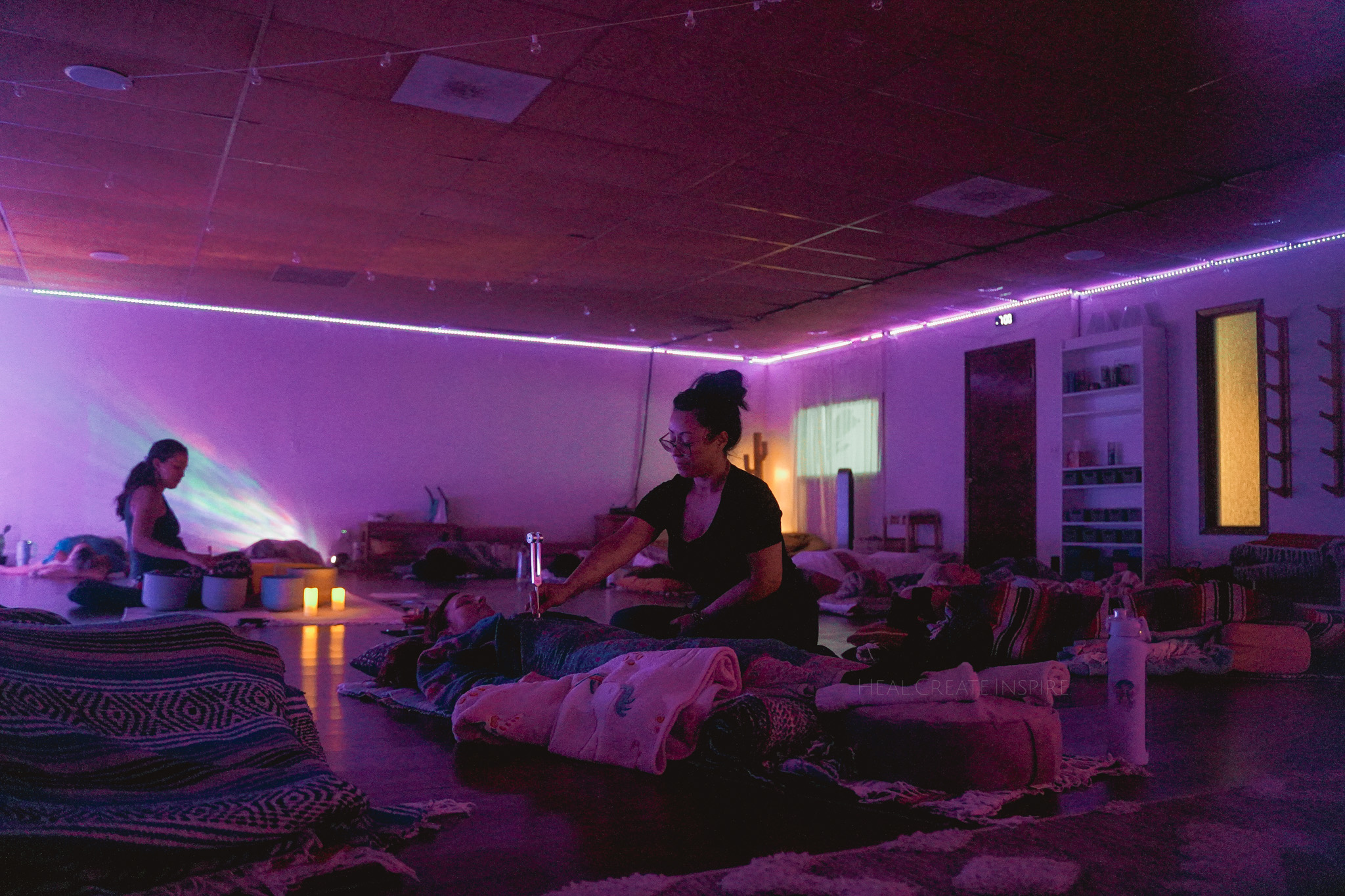
This is where Heal • Create • Inspire becomes part of how we operate
Heal • Create • Inspire is not only something we talk about inside classes. If it is actually our mission, it should influence how the organization itself behaves.
Heal asks us to keep looking inward. What fears are shaping a decision? Are we operating from scarcity? Are we protecting an idea because of ego? Are we listening when somebody tells us their experience did not match what we intended? Are we willing to question the way we have always done something?
Create asks what kind of business we want to build from that awareness. What would pricing look like if accessibility and sustainability were both allowed into the conversation? What kind of practitioner ecosystem do we want? What kind of workplace culture? What kind of marketing? What kind of relationship do we want community members to have with the space?
Inspire is what may happen if the result gives someone else permission to imagine business differently too.
Maybe another entrepreneur sees that values and revenue do not have to be enemies. Maybe a practitioner becomes more intentional about how they communicate their own work. Maybe someone attending a class takes the same question back to their workplace: how do I bring more humanity into the systems I am responsible for?
The ripple does not require everyone to build a wellness studio.
It simply asks whether what we learn inward can influence what we create outward.
The goal is not to build a spiritual business or a traditional business. The deeper question is whether we can build a human business—one where values and viability are required to remain in conversation.
We are still learning what this kind of business can become
When we stepped into The Healing Tree, I felt pressure to figure the whole thing out.
How would the model work?
How would practitioners work together?
Would people participate consistently?
Would the community understand what we were trying to create?
Could all of these different modalities coexist inside one ecosystem?
Could we make it affordable?
Could we make it sustainable?
Could we make enough money without allowing money to become the entire point?
I wanted answers.
What I think I understand now is that some of those answers could only emerge through the building itself.
The community had to participate before we could understand the community.
Practitioners had to teach before we could understand how the ecosystem needed to support them.
Memberships had to exist before we could see how people would use them.
We had to make decisions, see the consequences, learn, and revise.
The merge between the spiritual world and the business world was not one decision.
It became an ongoing practice in discernment.
Maybe the two worlds were never supposed to remain separate.
Maybe business can learn something from spiritual practice: reflection, humility, intention, relationship, patience, and the understanding that not everything meaningful can be reduced to a number.
And maybe spiritual and wellness communities can learn something from responsible business: sustainability, clarity, structure, accountability, measurement, boundaries, and the reality that a mission needs systems if it is going to remain available to people.
Neither side has to disappear.
Neither side gets to operate without accountability.
The work is learning how to hold them together.
For us, that has meant returning again and again to the same questions:
Are we still acting from the intention that brought us here?
Are we creating something sustainable enough to continue?
Are practitioners being honored?
Are guests being respected?
Are we communicating responsibly?
Are we still willing to change when what we learn asks us to?
Maybe integrity is not choosing the spiritual world over the business world. Maybe integrity is refusing to let either world operate without remembering the human beings at the center of both.