19 September 2026
The Healing Tree Collective • Money, Spirituality, Stewardship and Sustainability
Money, Spirituality and Stewardship: Can We Build Something Sacred and Sustainable?
I think there is still a huge stigma around money and spirituality, and I understand why. Some practices were not created inside modern commercial systems. Some were passed through traditions, communities, families, spiritual lineages, teachers, ceremonies, or forms of exchange that looked very different from buying a ticket online for a class.
Then those practices enter a modern city, inside a modern economy, inside a physical studio that has rent, utilities, insurance, software, marketing costs, equipment, maintenance, facilitators, and people whose labor makes the entire experience possible. Suddenly two conversations that may once have felt separate are sitting right beside each other: what does it mean to honor the work, and what does it take financially for the work to continue existing?
That tension has been one of the hardest things for us to navigate at The Healing Tree. We have wanted people to have access to these experiences. We have wanted practitioners to have places where they can share their work. We have wanted the environment to feel community-centered rather than purely transactional. But none of those intentions remove the fact that the business has bills to pay and people to compensate.
For a long time, it felt like there was an unspoken expectation that we had to choose a side. Either we cared about the heart of the work, or we cared about making money. Either the space was truly community-centered, or it was a business. Either the practices were sacred, or they were monetized.
Over time, I have come to think that those are incomplete choices.
The deeper responsibility is figuring out how to honor both.
Money does not automatically corrupt meaningful work.
But money does create incentives, and incentives deserve attention. Once revenue becomes part of a spiritual or wellness experience, we have to ask harder questions about pricing, marketing, claims, practitioner compensation, accessibility, growth, and what we are unwilling to compromise simply because something might be more profitable.
That is where stewardship enters the conversation.
The discomfort around money did not come from nowhere
I do not think we should dismiss people who feel uneasy about monetizing spiritual or contemplative practices. There are legitimate reasons for the discomfort. A meaningful practice can become commercialized until the original philosophy is barely recognizable. Vulnerability can become a sales tool. A person can be convinced that they are blocked, broken, energetically damaged, or incomplete and then sold the supposed solution. Spiritual authority can be used to discourage questioning. Expensive programs can be presented as though higher prices automatically mean deeper transformation.
Those possibilities are real, and they are exactly why conversations about money need more nuance rather than less. Saying “there is nothing wrong with making money” is true in one sense, but it does not finish the ethical conversation. The question is not simply whether money is allowed. The question is what happens to the relationship between practitioner, guest, practice, and organization once financial incentives become part of the environment.
At the same time, rejecting money altogether creates its own set of problems. If a practitioner is expected to continually provide their work for free because the work is spiritually meaningful, who has the financial privilege to remain a practitioner? If a community space never charges enough to cover its expenses, how long can it stay open? If the people doing the administrative, emotional, creative, and operational labor are continually underpaid, are we really protecting the integrity of the work—or are we simply making the hidden labor invisible?
Those questions made me realize that both extremes can create harm. Commercialization without integrity can exploit meaningful practices. But romanticizing unpaid or underpaid labor can exploit the people carrying those practices.
The ethical question is not simply, “Are we making money?” It is, “What kind of relationship with money allows the people, practices, and community inside this work to be treated with dignity?”
Who pays when meaningful work is expected to be free?
Someone always carries the cost. Sometimes the participant pays directly. Sometimes a donor or organization subsidizes the experience. Sometimes another service funds it. Sometimes a practitioner absorbs the cost through unpaid labor. Sometimes the owner covers the difference personally. The absence of a visible price does not necessarily mean the experience has no economic cost.
That realization changes the conversation. Instead of asking whether money should exist, perhaps we should ask how the cost is distributed, whether the exchange is transparent, whether the people doing the work are supported, and whether people with fewer resources still have meaningful pathways to participate.
Stewardship means remembering that we did not invent the practices we host
This is one of the reasons I use the word stewardship instead of simply ownership. We can own and operate The Healing Tree as a business, but we do not own meditation, Reiki, sound, breath, movement, ritual, or the human desire to gather and reflect. Many of the practices moving through this space have histories and traditions that existed long before our business did, and different practitioners bring their own training, lineages, interpretations, and lived experience into the room.
That creates responsibility. It means we should resist treating every modality as a product we can reshape however we want simply because we control the booking page. We have to remain curious about where practices come from, what claims are appropriate, which practitioners are qualified to hold certain experiences, how we talk about spiritual ideas publicly, and where cultural or historical context matters.
It also means recognizing that different practices have different relationships with money. There is no single historical rule that says every spiritual practice was always free, nor would it be accurate to pretend that all traditions approached exchange in the same way. Communities have supported teachers and spiritual workers through many forms of exchange: gifts, donations, patronage, food, housing, service, community support, fees, or combinations of these depending on place and tradition.
So rather than romanticizing one universal “old way,” I think the more useful question is what ethical stewardship looks like now, in this specific place, with these specific practitioners and guests. What helps the work remain respectful? What helps it remain accessible? What helps the practitioner continue offering it? What helps the business stay open?
Stewardship means recognizing that something can move through our business without belonging entirely to our business.
Sustainability is not greed, but sustainability can still lose its way
One of the biggest internal shifts for me was accepting that wanting The Healing Tree to make money does not automatically mean we have lost the heart of the work. We need the business to generate revenue because revenue keeps the physical space functioning. It supports practitioners. It pays people. It allows us to maintain systems, improve the environment, market classes, build partnerships, create new programs, and continue serving people instead of constantly operating at the edge of closure.
Early in this journey, I watched several other spaces doing related work close within a relatively short period of time. Seeing that raised a very practical question for me: if we believe these kinds of community spaces matter, how do we build one that survives long enough to keep mattering?
That question should not be interpreted as criticism of why any other particular space closed. Businesses close for many reasons, and from the outside we rarely know the whole story. What the experience did for me was make financial sustainability impossible to ignore. A beautiful mission does not automatically create a viable operating model.
At the same time, sustainability itself can become a justification for almost anything if we are not careful. A business can tell itself that every upsell, price increase, exaggerated claim, artificial scarcity tactic, or aggressive sales technique is necessary because “we have to survive.” That is where stewardship asks us to look again. Financial viability matters, but the way we pursue viability matters too.
We should be able to ask whether an action helps sustain the organization without automatically assuming that sustainability makes the action ethical.
Sustainability protects the mission only when the way we create sustainability remains accountable to the mission.
Money creates responsibilities in both directions
Responsibility to guests
Pricing and marketing should not rely on convincing someone that they are broken, incomplete, or dependent on the space in order to keep purchasing.
Responsibility to practitioners
Accessibility should not depend on consistently undervaluing the people whose preparation, training, care, and presence make the experience possible.
Responsibility to the business
The organization needs enough revenue, structure, and planning to remain available rather than continually relying on crisis or personal sacrifice.
Responsibility to the mission
Financial success should expand the organization’s ability to serve rather than quietly becoming the purpose everything else is organized around.
Accessibility creates another tension: everyone deserves opportunities, but not everything can be free
This is the part of the conversation where simple answers stop being very useful. We believe more people should have opportunities to explore practices that support reflection, rest, community, and personal wellbeing. We also know financial circumstances differ dramatically. Even a price one person considers inexpensive may be meaningful for someone else.
So what do we do with the genuine value of accessibility when the organization itself cannot sustainably give everything away?
For us, part of the answer has been designing the overall ecosystem instead of asking one offering to solve every problem. A relatively accessible class can exist alongside memberships, private experiences, special events, partnerships, workplace wellness programs, practitioner services, and other offerings. Different parts of a business can serve different functions, and a diversified model can create more room to protect lower-cost points of entry.
That does not mean accessibility has been solved. It means accessibility becomes something we design toward continuously. We can keep asking whether people have approachable ways to enter, whether recurring participation can become more affordable, whether partnerships can create additional access, and whether growth gives us more capacity to serve rather than simply more capacity to sell.
The question becomes less about making everything free and more about building enough financial creativity that money does not automatically become the gatekeeper for every meaningful experience.
Accessibility does not always mean removing money from the equation. Sometimes it means designing the equation differently.
Could a thriving business actually create more access?
We often assume affordability and profitability sit on opposite sides of the table, but a healthier business may have more options. It may be able to offer community events, subsidized experiences, introductory pricing, partnerships, scholarships, lower-cost memberships, better practitioner support, and more educational content because it is no longer operating entirely from financial survival.
None of that happens automatically. Growth can just as easily move a business toward exclusivity. The point is that financial health creates capacity, and stewardship asks what we choose to do with that capacity.
There is another stigma worth questioning: the idea that struggle proves sincerity
I think mission-centered people can sometimes develop a complicated relationship with success. When an organization is small, underfunded, and constantly sacrificing, the struggle can almost become evidence that the work is pure. If the business begins growing, generating more revenue, paying people better, or creating stronger systems, there can be a fear that it is somehow becoming less authentic.
But financial hardship does not automatically make an organization ethical, just as financial success does not automatically make it exploitative. The real questions are about how the organization behaves. How are people treated? How honestly are services described? Are practitioners supported? Are customers pressured? Are profits reinvested thoughtfully? Are there still opportunities for different financial circumstances? Does leadership remain accountable when growth creates new power?
Struggle can actually create its own ethical problems. When a business is constantly in survival mode, boundaries become harder to maintain. Owners may overwork. Practitioners may be asked to accept less. Decisions can become reactive. Every cancelled class can feel like a crisis. The emotional burden of keeping the mission alive can begin consuming the people who created it.
There is no virtue in burning out the people carrying a meaningful mission simply so the mission can appear untouched by money.
Perhaps one of the things we need to rethink is the assumption that service and abundance must oppose each other. What would happen if financial health allowed a community-centered organization to serve more consistently, pay people fairly, improve access, and continue operating for years instead of disappearing because the model required endless sacrifice?
A mission does not become more honorable because the people carrying it are exhausted, underpaid, or constantly afraid it may disappear.
The real danger is not money itself; it is what money can persuade us to stop questioning
Money has power because it changes incentives. When a particular class sells well, there is an incentive to offer more of it. When dramatic language generates more bookings, there is an incentive to make the language more dramatic. When a higher-priced service creates stronger margins, there is an incentive to prioritize it.
Some of those incentives may align beautifully with the mission. Others may not.
That is why stewardship requires ongoing discernment rather than one-time good intentions. We have to keep asking why we are making a decision. Are we adding an offering because people genuinely want it and we believe it fits the ecosystem, or because it looks profitable? Are we changing our language because we found a clearer way to explain the experience, or because a more sensational claim performs better in advertising? Are we raising a price because the economics genuinely require it, or because we have begun confusing exclusivity with value?
None of those questions have automatic answers. A profitable idea can also be deeply aligned. A higher price can be completely appropriate. A successful marketing campaign can help more people discover something meaningful. Stewardship does not require distrusting every business decision that works financially.
It requires remaining willing to examine what financial success is teaching us to prioritize.
Money becomes dangerous when its presence makes us stop asking questions we would have asked before the money arrived.
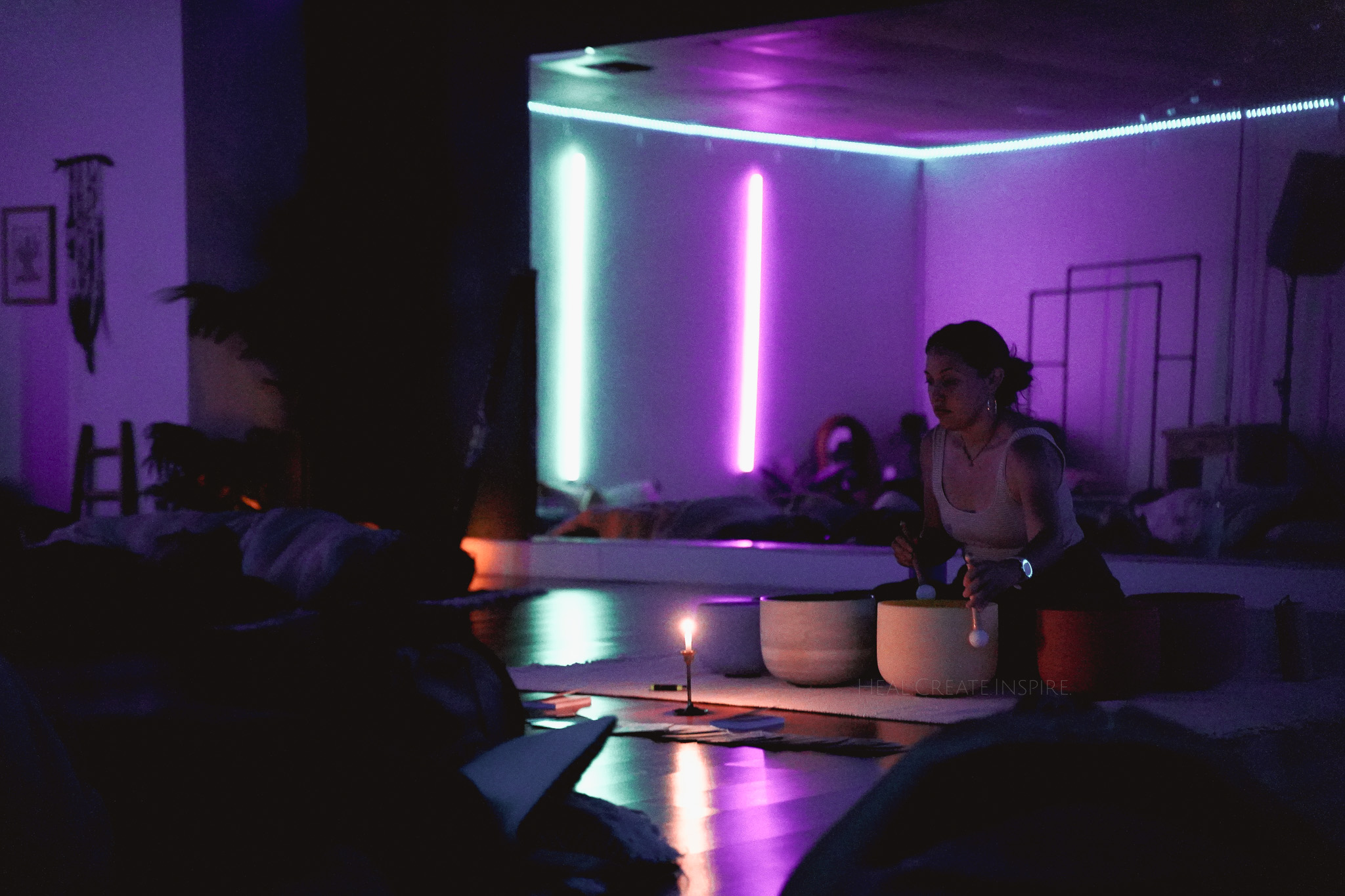
Stewardship is a continuing practice.
There may never be one permanent formula that perfectly balances accessibility, practitioner compensation, business health, tradition, growth, community expectations, and changing costs.
The goal is not perfection. The goal is remaining accountable enough to keep adjusting the model without losing sight of who and what the model exists to support.
Money can become part of the exchange without becoming the meaning of the exchange
I think this distinction is where the conversation finally started making more sense to me. Someone can purchase a class, but the transaction does not completely describe what happens inside the room. A person may pay for access to a facilitated experience, but what they notice, feel, question, discover, or choose afterward belongs to them.
Likewise, a practitioner can be compensated for their time without claiming ownership over someone’s transformation. They are being paid for the work they actually provide: training, preparation, facilitation, presence, space-holding, instruction, equipment, and the experience they create within the boundaries of their role.
That creates a healthier economic relationship because we do not have to sell certainty. We do not have to say, “Pay this amount and you will heal.” We do not have to guarantee release, clarity, peace, emotional breakthrough, or spiritual change. We can say something much simpler and more honest: this is the experience being offered, this is what participation may involve, this is what it costs to access it, and you get to decide whether it is something you want to explore.
In that model, money supports access to the container. It does not purchase a guaranteed outcome.
The exchange can be financial without turning someone’s inner experience into a product we pretend to control.
Heal • Create • Inspire also asks us to examine our relationship with money
Money may seem like an unusual topic to connect with Heal • Create • Inspire, but I actually think it belongs directly inside the mission because money touches so much of what we create together.
Heal begins inward. What stories do we carry about money? Do we automatically associate wealth with greed? Do we believe meaningful work has to be financially difficult in order to remain meaningful? Do we believe charging for our time makes us selfish? Or, on the other side, have we learned to measure worth entirely by revenue and financial achievement? Those beliefs can shape how we build without us realizing it.
Create asks what kind of economic relationship we want to build from that awareness. Can we create pricing that respects both access and labor? Can we create business models where practitioners are supported and the community still has approachable ways to participate? Can we create marketing that communicates value without manipulating fear? Can we build financial systems that give the mission more stability instead of allowing constant scarcity to dictate every decision?
Inspire is the ripple. Maybe another entrepreneur begins questioning the assumption that heart-centered work cannot be financially healthy. Maybe a practitioner becomes more comfortable charging fairly without feeling that payment compromises their intention. Maybe a business owner realizes that profitability and accessibility can be designed together rather than treated as enemies.
In that way, even money becomes part of the larger conversation about what we are creating and why.
The goal is not to remove money from meaningful work. The goal is to create a healthier relationship with money so that it can support the work without quietly becoming the reason for the work.
This conversation is still unfinished
I think one of the reasons money and spirituality remain difficult to talk about is because there is no simple answer that works across every practice, tradition, organization, practitioner, or community. Different people will continue to hold different beliefs about what should be charged, what should be donation-based, what belongs inside a business, what should remain outside commerce, and how spiritual work should be exchanged.
I do not think our responsibility is to resolve that disagreement for everyone.
Our responsibility is to stay honest about the decisions we make inside The Healing Tree. Why is something priced the way it is? Who is being supported through that price? Is the guest receiving clear information? Are we making claims we can stand behind? Does growth still serve the community? Are we building a model that can last without asking people behind the scenes to continually sacrifice more than is sustainable?
The answers may change over time. Costs change. Practitioners change. Programs evolve. The business grows. New opportunities appear. Some models that once worked stop working.
Stewardship means remaining willing to return to the question.
Not, “How do we make as much money as possible?”
And not, “How do we prove we do not care about money?”
But rather: how do we build enough financial health to protect the people, purpose, access, and community we are actually trying to sustain?
Maybe we need a more honest conversation about money in wellness.
A conversation where practitioners can say they deserve to be paid without being accused of losing their integrity.
A conversation where guests can ask whether prices are accessible without being told that questioning cost means they do not value the work.
A conversation where businesses can pursue profitability while remaining accountable for how they market, price, compensate, grow, and communicate.
And a conversation where spiritual meaning does not have to disappear simply because a financial exchange exists.
That is the conversation we are still learning how to have at The Healing Tree.
Not because we believe we have solved the tension.
But because pretending the tension does not exist would be much easier than actually stewarding it.
Maybe the question was never whether spirituality and money can coexist. Maybe the real question is what kind of relationship between them allows both the work and the people carrying it to remain whole.