16 September 2026
The Healing Tree Collective • Stewardship, Integrity and Building Community Wellness
The Weight of Stewardship: What It Means to Build a Wellness Space With Integrity
When I first stepped into this world, I felt like I was being shown a lot all at once.
I was learning about practices I had never experienced before. I was learning about myself in ways I had not really expected. I was encountering conversations around self-discovery, reflection, energy, breath, sound, meditation, Reiki, and different ways people make sense of their inner lives.
And for somebody who tends to look at things pretty logically, there was a lot to take in.
It was exciting.
It was fascinating.
And it was also a lot.
What made the experience even more intense was how quickly the perspective changed. We were not given years and years to explore all of this privately before another responsibility arrived. Before long, The Healing Tree became part of our lives, and suddenly we were no longer asking only, “What does this mean for me?”
We were asking, “How do we carry this responsibly for other people?”
That is a very different question.
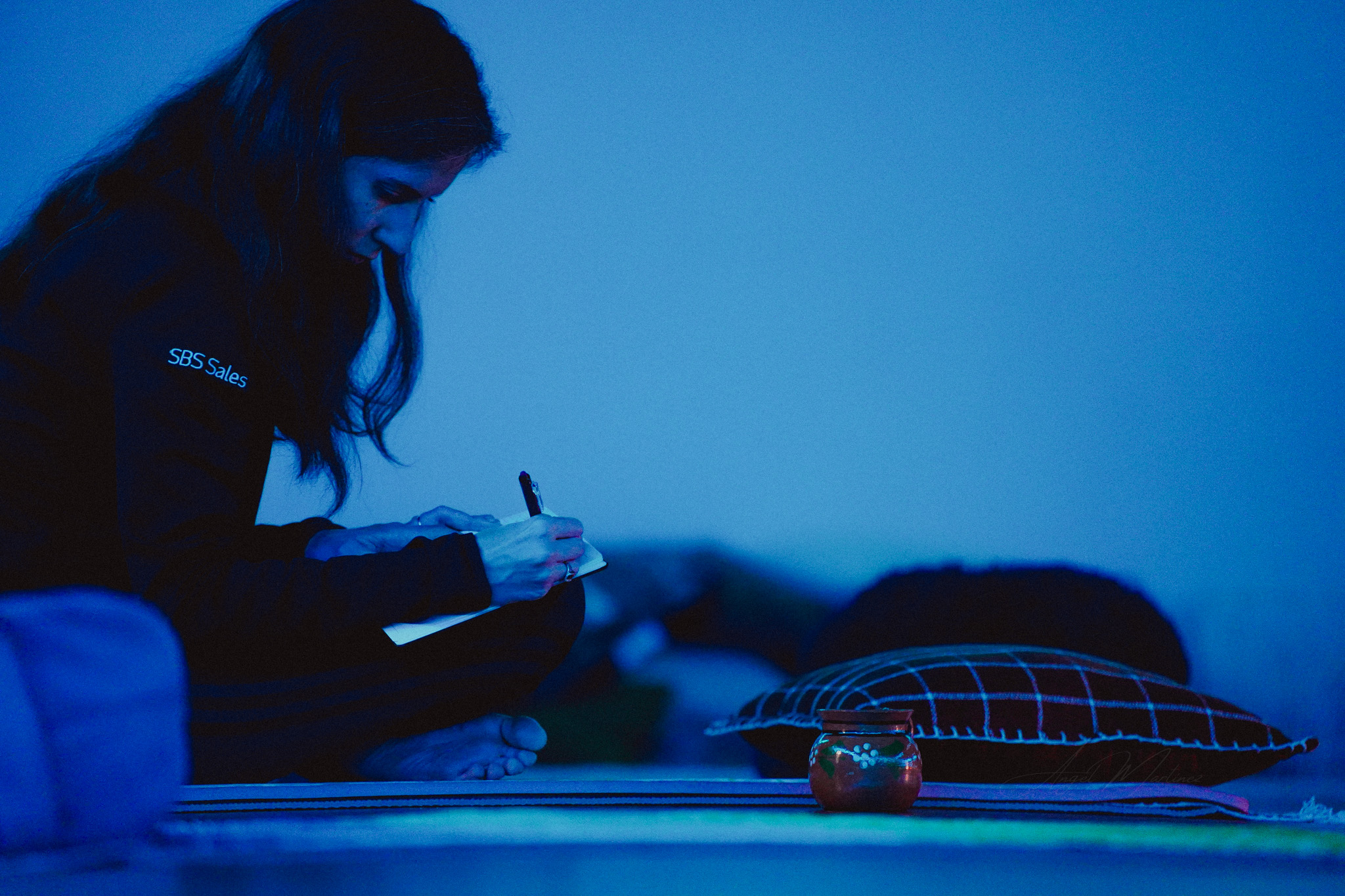
Learning becomes different when other people are affected by your decisions.
It is one thing to explore a wellness practice personally and decide what it means to you. It is another thing to build a space where practitioners offer that work, guests trust the environment, money changes hands, policies have to be created, and the decisions you make begin shaping someone else’s experience.
That is where curiosity starts becoming stewardship.
There is a strange moment when something personal becomes something you are responsible for carrying
In the beginning, my relationship with a lot of these practices was personal. I was learning because I was curious. I was experiencing things for myself. I was asking questions because I wanted to understand what was happening in my own life.
That kind of learning gives you permission to be messy.
You can change your mind.
You can believe something one month and question it the next.
You can have an experience that feels profound and later decide you interpreted parts of it differently than you do now.
Then a community space enters the picture, and suddenly the questions widen.
What language do we use when we talk about these practices publicly? What promises are appropriate to make? How do we create enough structure that guests know what they are walking into? How do facilitators feel supported? How do we make classes financially accessible while still paying people fairly? What happens when a practice has spiritual or traditional roots but is now being offered inside a modern business?
And perhaps one of the hardest questions:
How do we continue learning while also being responsible for the decisions we have to make today?
Because leadership rarely waits until you feel like you know everything.
There is a point where learning stops being only about what you understand and starts becoming about how responsibly you behave with what you understand so far.
What changes when knowledge becomes responsibility?
This question reaches far beyond wellness. A parent can experience it. A leader can experience it. A teacher, therapist, business owner, coach, practitioner, or community organizer can experience it too. At some point, something you are still learning begins affecting people who trust you to make decisions.
The temptation can be to hide uncertainty because leadership is supposed to look confident. But perhaps stewardship asks for something more difficult: enough confidence to make decisions and enough humility to admit that some of those decisions may need to evolve as you learn more.
Owning a wellness space forced us to look through a wider lens
Once The Healing Tree became something we were responsible for, we had to stop looking at everything only through the experience of a guest.
The guest experience still mattered deeply, but there were suddenly many people inside the equation.
A facilitator might have spent years learning a modality and now needs a place where they can share it sustainably. A guest may be curious about a practice but also needs clear language, reasonable expectations, and the freedom to make choices about participation. The business needs enough revenue to pay rent, insurance, technology, marketing, payroll, equipment, maintenance, and the countless unglamorous expenses required to keep a physical space operating.
Then there is the larger community.
What are people actually looking for? What feels accessible? What feels intimidating? What kind of schedule works for people’s lives? What practices resonate? Which ones need more education? What price feels affordable to a guest while still creating something sustainable for the people offering the work?
None of those questions exists by itself.
Lower the price enough and accessibility may improve, but the practitioner still needs to be compensated and the building still needs to stay open. Increase compensation without understanding the economics of the class and the offering may disappear entirely. Add more classes and people gain more options, but too many offerings without enough attendance can strain both practitioners and the business.
Suddenly the work is no longer only spiritual, emotional, or personal.
It is operational.
Financial.
Relational.
Ethical.
And all of those realities have to exist in the same room.
Stewardship means learning to hold the mission and the mechanics at the same time. The values matter. The numbers matter. The practitioners matter. The guests matter. Sustainability matters because without it, there is eventually no space left to steward.

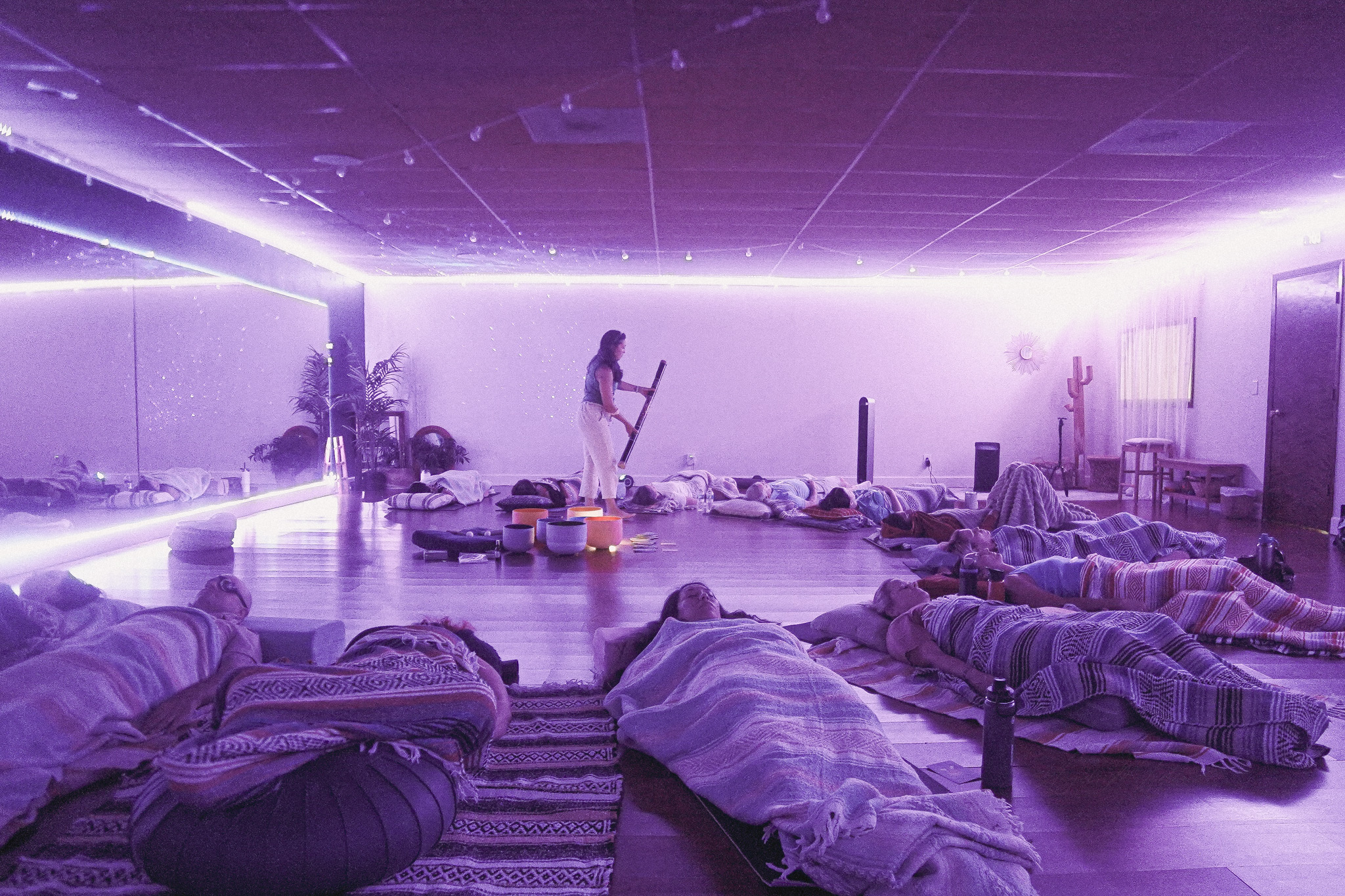
Can you build a business around practices that were not originally created as products?
This is one of the tensions we had to sit with very early.
Many wellness, contemplative, spiritual, and traditional practices were not developed because somebody was trying to create a modern consumer product. They emerged from cultures, traditions, lineages, communities, spiritual systems, personal practices, and different understandings of wellbeing that existed long before online booking systems, monthly memberships, paid social-media advertising, and commercial wellness studios.
Then modern life enters the conversation.
A practitioner still needs to eat.
A studio has rent.
Someone has to clean the blankets, answer emails, maintain the calendar, purchase equipment, replace broken items, market classes, manage cancellations, handle accounting, and create systems that allow twenty different moving pieces to function together.
Money enters the experience whether we are comfortable talking about it or not.
I think the mistake would be assuming that money automatically corrupts meaningful work or, at the opposite extreme, pretending that because something is meaningful there should be no ethical questions around how it is monetized.
Both positions are too simple.
The more useful question is: what does responsible exchange look like?
How do we charge enough to sustain the work without exploiting people’s vulnerability? How do we compensate practitioners while keeping experiences approachable? How do we market something meaningful without manufacturing fear or convincing people they are broken so we can sell them a solution?
Those questions are not obstacles to the business.
They are part of the business.
Integrity is not separate from the business model. If the mission is care, then pricing, marketing, compensation, policies, and customer experience are all places where care has to become operational.
Stewardship creates questions that do not have one perfect answer
Accessibility
How do we make experiences financially reachable without building a model that eventually becomes unsustainable?
Practitioner support
How do we honor the time, training, preparation, and emotional labor practitioners bring into the room?
Guest autonomy
How do we invite exploration without implying that a person needs a particular modality, outcome, or belief system?
Business sustainability
How do we build enough structure, revenue, and operational stability for the space to continue serving people over time?
There was no obvious blueprint for the exact thing we were trying to build
This was another source of pressure.
There are established models for yoga studios. There are established models for gyms. There are models for spas, therapy practices, event venues, community centers, meditation studios, and membership businesses.
But what we were trying to understand did not fit cleanly into one category.
The Healing Tree could have elements of a wellness studio, community space, practitioner ecosystem, educational environment, event venue, and reflective gathering place at the same time.
That sounds exciting creatively.
Operationally, it can be confusing.
Which business model do you borrow from when none of them completely represents what you are building? How do you price a calendar containing very different modalities? How do you create consistency while still allowing each practitioner to remain authentic to their own work? How much standardization protects the guest experience, and at what point does too much standardization begin flattening the individuality that makes the practitioners valuable?
We had to answer those questions while operating.
Not from a textbook.
Not after five years of planning.
In real time.
And that is where pressure can become very heavy, because every unfinished question begins feeling like something you should already know.
What if not having a blueprint is not evidence that you are doing it wrong?
Sometimes there is no blueprint because the model is poorly thought out. But sometimes there is no blueprint because you are combining things in a way that has not yet been standardized.
The challenge is learning how to tell the difference. Are we struggling because the idea fundamentally does not work, or are we encountering the normal friction of creating something that requires experimentation? That question cannot be answered by optimism alone. It requires data, listening, financial reality, community feedback, and a willingness to change parts of the model without abandoning its purpose.
The pressure of stewardship can quietly turn into the belief that you have to figure everything out immediately
Looking back, I think this was one of the hardest parts.
When something matters deeply to you, responsibility can become urgency very quickly.
We need to figure out the pricing.
We need to figure out memberships.
We need to figure out practitioner compensation.
We need to fill classes.
We need to build community.
We need systems.
We need marketing.
We need to communicate the practices responsibly.
We need to protect the heart of the space.
And somehow every one of those things can begin feeling equally urgent.
That is where stewardship can start becoming control.
You begin believing that because you are responsible for something, you must also be capable of predicting every outcome, preventing every problem, knowing every answer, and keeping every person satisfied.
But responsibility is not the same as control.
We are responsible for listening carefully, making thoughtful decisions, correcting mistakes, creating clear expectations, learning, and continuing to act with integrity.
We are not capable of controlling how every person responds to every decision.
Stewardship becomes exhausting when responsibility quietly turns into the belief that everything depends entirely on you.
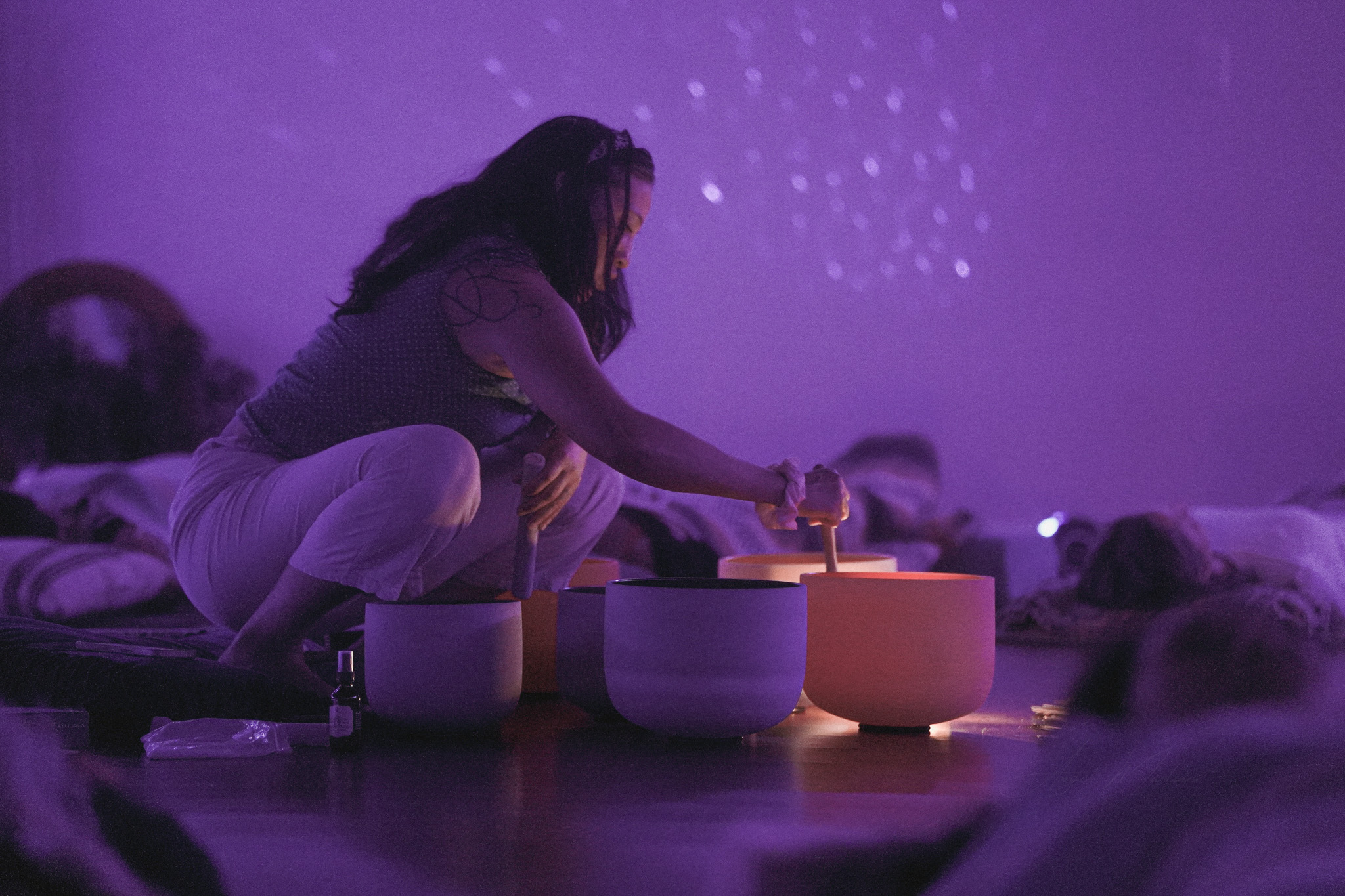
Humility becomes especially important when you are still relatively new to the work
There is another part of this story that I do not want to gloss over.
We stepped into responsibility quickly.
That meant there were people around us with deeper experience in particular modalities than we had. Practitioners who had studied their work longer. People who had spent years developing their understanding of sound, Reiki, breath, movement, meditation, or other practices.
Owning the space did not suddenly make us the most knowledgeable people in every room.
And I think recognizing that is part of stewardship too.
A leader does not always need to be the greatest technical expert. Sometimes leadership means creating the conditions where people with different expertise can contribute responsibly.
That requires asking questions rather than pretending.
It requires listening to practitioners.
Listening to guests.
Learning where a facilitator’s expertise begins and where ours does.
Creating boundaries around claims.
Understanding that being responsible for the ecosystem does not mean becoming the authority on every practice inside the ecosystem.
Leadership does not require knowing more than everyone around you. Sometimes good stewardship means knowing enough to recognize whose knowledge needs to be in the conversation.
Can we lead something without needing to become the center of it?
That may be one of the more important questions in community-centered work. If the organization depends on one person’s expertise, personality, approval, or presence for everything, then what happens to the community when that person is not there?
Stewardship may be less about becoming indispensable and more about creating enough clarity, trust, and shared responsibility that other people can bring their gifts forward too.
There is a difference between owning the business and owning the work
This distinction has become increasingly important to how I think about The Healing Tree.
We can own and operate a business.
That does not mean we own meditation.
We do not own Reiki.
We do not own breath.
We do not own sound.
We do not own the human desire to gather, reflect, move, pray, rest, or understand ourselves more deeply.
Those things are much larger than one company.
That perspective changes the relationship with the business.
Instead of asking only, “How do we get more people into our classes?” the question can become, “What role can this space responsibly play within a much larger ecosystem of human wellbeing?”
Maybe someone discovers meditation here and eventually practices at home.
Maybe they meet a practitioner here and later work with that practitioner privately.
Maybe they learn a breathing tool and use it somewhere completely unrelated to The Healing Tree.
Maybe they eventually move away and find another community.
None of those outcomes means the business failed to retain someone.
Sometimes successful stewardship means helping something meaningful move through you without needing to possess it forever.
The business may be ours to operate. The practices, relationships, insights, and experiences that move through the space belong to something much larger than us.
Making money and serving people do not have to be opposing values
I think this tension deserves a direct conversation because wellness businesses can become uncomfortable around money.
There can be an idea that if something is truly heart-centered, it should somehow exist outside economics.
But a physical community space cannot survive indefinitely on intention alone.
Rent still arrives.
Practitioners deserve compensation.
Marketing costs money.
Software costs money.
Maintenance costs money.
Owners and staff have lives and families too.
If the people carrying a mission continually burn themselves out because sustainability feels morally uncomfortable, eventually the mission becomes harder to carry.
The ethical problem is not simply that money exists.
The ethical questions are about how money moves.
Are people pressured into buying because their fear is being manipulated? Are wellness claims exaggerated to increase conversion? Are practitioners being compensated fairly? Is the pricing structure understandable? Are we creating lower-cost access where the model allows it? Are we transparent about what a class can and cannot promise?
Those questions are much more useful than pretending meaningful work should not have an economic structure.
Sustainability is not the opposite of service. A sustainable structure can be one of the things that allows service to continue.
Integrity becomes visible in ordinary business decisions
Do we invite people into an experience, or do we convince them something is wrong with them so they feel pressured to buy?
Can we create affordability while still respecting the financial realities of practitioners and the space?
Do we describe possibilities responsibly without guaranteeing emotional, spiritual, or health outcomes?
When something does not work, can we acknowledge it, learn from it, and change rather than protecting our image?

The responsibility was heavy because the vision mattered
When I think back on the pressure we carried, I can understand where a lot of it came from.
We did not want to mess it up.
We could see how meaningful the space could be for people, and that made every decision feel heavier.
But over time, I have had to question whether caring deeply about something means carrying it with constant tension.
Maybe stewardship is not gripping the thing as tightly as possible.
Maybe it is paying attention.
Listening.
Creating structure.
Allowing feedback.
Learning when to lead and when to let someone else lead.
Taking responsibility when something belongs to us without assuming everything belongs to us.
That is a very different posture than feeling as though we have to personally solve the entire future of the space.
Caring for something deeply does not mean holding it so tightly that there is no room for the thing—or the people inside it—to evolve.
Heal • Create • Inspire applies to the business itself
I often think about Heal • Create • Inspire in relationship to the people who come into The Healing Tree, but this journey reminds me that the mission has also been working on us as we build the organization.
Heal has required looking inward at the pressure, fear, attachment, scarcity, control, responsibility, and identity we have brought into leadership. Owning a wellness business did not somehow exempt us from having our own patterns. In many ways, the responsibility gave those patterns more opportunities to become visible.
Create has been literal. We have had to create the model as we go. Pricing, partnerships, practitioner relationships, memberships, class structures, policies, marketing, culture, and the broader ecosystem around the studio have all required repeated creation and revision.
Inspire is where the model begins moving beyond us. A practitioner creates something we never would have created. A member welcomes somebody new. A guest takes something they learned into their family. A community partner imagines a collaboration. Someone sees what exists here and begins building something meaningful somewhere else.
That is when stewardship becomes different from ownership.
The goal is not to control every ripple.
It is to take responsibility for what we are creating at the point where our hands actually touch it.
Maybe stewardship means holding a vision with enough care to protect its integrity and enough openness to allow other people to become part of what it grows into.
What are we actually trying to build at The Healing Tree Collective?
We are still answering that question.
I actually think that matters.
The Healing Tree is a business because it has to function as one. It needs revenue, systems, structure, planning, accountability, and sustainable operations.
But we do not want the business mechanics to become the purpose.
The purpose is creating a place where people can explore themselves, experience different wellness practices, meet practitioners, slow down, connect with community, and perhaps carry something useful from those experiences back into their everyday lives.
The systems exist to help make that possible.
The systems are not the mission.
That distinction is something we have had to keep learning.
Because a business naturally asks, “How do we grow?”
Stewardship adds another question:
What are we becoming as we grow?
What happens when growth and integrity appear to ask for different things?
This may be one of the defining questions for any mission-centered organization. There may be opportunities that generate revenue but pull the organization away from its purpose. There may be practices that feel deeply aligned but cannot yet support themselves financially. There may be moments when the right answer is growth and others when the right answer is restraint.
Integrity does not always give us the easiest decision. Sometimes it simply gives us the question we need to keep returning to: does this help us become more of what we said we were trying to create?
We are still figuring it out—and maybe that is part of responsible leadership
There was a time when not having every answer felt like evidence that we were behind.
Now I think differently.
Some answers only become available after enough real people have participated in the experiment.
You can create projections and plans. You should.
But then people enter the system.
They tell you what they need.
Practitioners show you what works.
Attendance patterns tell you something.
Financial numbers tell you something.
Your own capacity tells you something.
The community becomes part of the information.
Responsible leadership is not knowing the final form before the work begins.
It may be having a clear enough purpose to keep learning without losing yourself every time the model needs to change.
Maybe stewardship begins with admitting that the thing matters enough to keep asking better questions.
How do we support practitioners?
How do we keep experiences accessible?
How do we create a sustainable business without turning vulnerability into a commodity?
How do we honor practices that existed before us?
How do we stay curious instead of pretending expertise we do not have?
How do we grow without allowing growth itself to become the mission?
And how do we carry responsibility without convincing ourselves that we have to carry everything alone?
We may answer those questions differently five years from now than we do today.
I hope we do.
Because if we are listening, learning, and staying in relationship with the community, then the answers should become more informed over time.
The goal was never to have everything figured out. The goal is to keep figuring it out without losing the integrity of why we are here.