14 September 2026
The Healing Tree Collective • Global Heart Activation • Collective Meditation and Possibility
Can We Recreate the Maharishi Effect? Why I Think Some Ideas Are Worth Dreaming About
Can we recreate the Maharishi Effect?
I don’t know.
And I think saying “I don’t know” is important here, because there is a difference between being inspired by an idea and claiming that we have proven it.
The Maharishi Effect is a theory associated with research on Transcendental Meditation suggesting that sufficiently large groups of practitioners may be associated with changes in the surrounding social environment, including reported reductions in crime, violence, conflict, and other indicators of social disorder. Researchers have published studies reporting findings consistent with that hypothesis, including the well-known Washington, D.C. demonstration in the 1990s.
But the larger causal claim remains controversial. We cannot responsibly say that people sitting together in meditation have been proven to reduce crime in strangers living elsewhere. Global Heart Activation is also not the same meditation protocol studied in Maharishi Effect research, so we should not present our gathering as though we are reproducing that experiment.
And still…
I find myself asking another question.
Why can’t we dream about what might become possible when people intentionally practice peace together?
Not because dreaming makes something scientifically true.
But because nearly everything humans intentionally create begins with imagining something that does not fully exist yet.
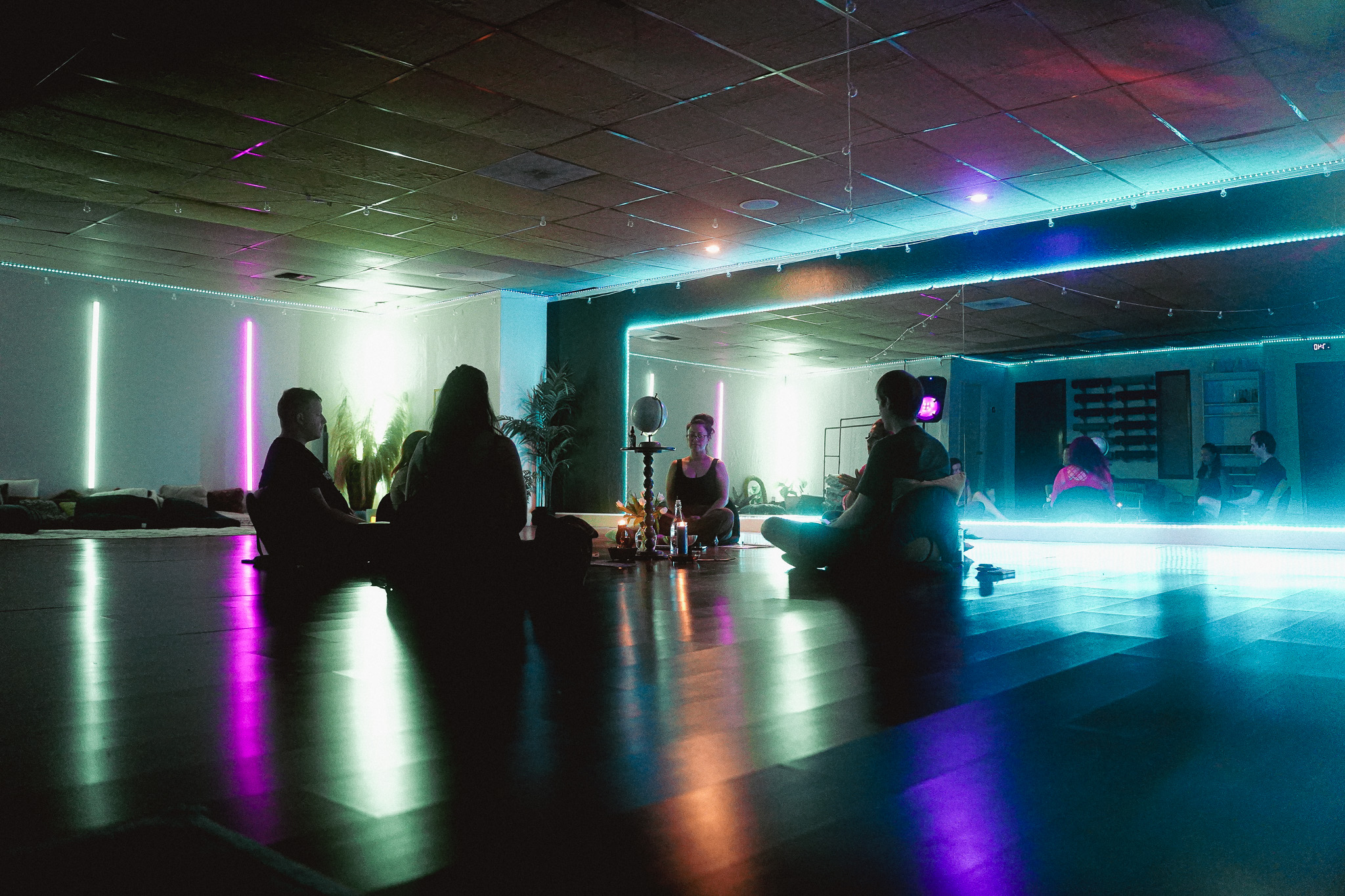
What if we let curiosity exist beside uncertainty?
- What do we know?
- What do we only believe?
- What remains theoretical?
- What can we observe directly?
- And what possibilities are still worth exploring even before we have every answer?
There is a difference between believing something is possible and pretending we know it is true
I think this distinction matters because spiritual conversations can easily move from possibility into certainty without us noticing.
We experience something personally. It feels powerful. It resonates deeply. Maybe prayer has played an important role in our lives. Maybe meditation has changed the way we relate to ourselves. Maybe we have experienced moments during a group practice that felt larger than what we can easily explain.
Those experiences are real experiences.
But a real experience and a universal explanation are not the same thing.
I can believe prayer has made a difference in my life without being able to prove exactly how prayer operates. I can believe collective meditation matters without knowing whether it creates a measurable effect outside the people participating. I can feel something powerful in a room without needing to immediately label that experience as scientific evidence for a particular theory.
To me, there is freedom in admitting that.
Because once we stop needing certainty, we can become genuinely curious.
“I believe this matters” and “I can prove exactly how this works” are two different statements. We do not have to confuse them in order for either one to have meaning.
But why dream about it at all?
Because imagination influences what people decide is worth attempting.
Think about how many things begin as ideas that sound unrealistic from the position of the present.
Someone imagines a community where people who would normally never meet one another can sit together.
Someone imagines a business that operates differently from the industry around it.
Someone imagines repairing a relationship that currently feels impossible.
Someone imagines a neighborhood becoming safer.
Someone imagines a different future for their children.
Someone imagines people from opposing backgrounds learning how to see one another as human again.
None of those possibilities become guaranteed because someone dreamed about them.
But without imagination, we often become limited to reproducing whatever already exists.
That is what interests me about the Maharishi Effect beyond the scientific debate. It presents a radical possibility: perhaps human beings are more connected than we usually understand ourselves to be.
Is that particular theory correct?
I do not know.
But the question it creates is worth sitting with.
Dreaming does not mean pretending something has already been proven. Sometimes dreaming simply gives us permission to investigate a possibility we would otherwise never attempt.
When did skepticism become the opposite of hope?
I don’t think it has to be.
Skepticism can ask us to examine evidence carefully. Hope can ask us not to reduce possibility only to what has already been demonstrated. Those two ways of thinking can actually help one another.
Without skepticism, hope can become credulity. We may believe something simply because we want it to be true.
Without hope, skepticism can become cynicism. We may stop imagining possibilities because we have become more invested in explaining why something cannot work than exploring whether some version of it could.
Perhaps the more interesting position lives somewhere between the two: show me the evidence, and also let me keep asking what might be possible.
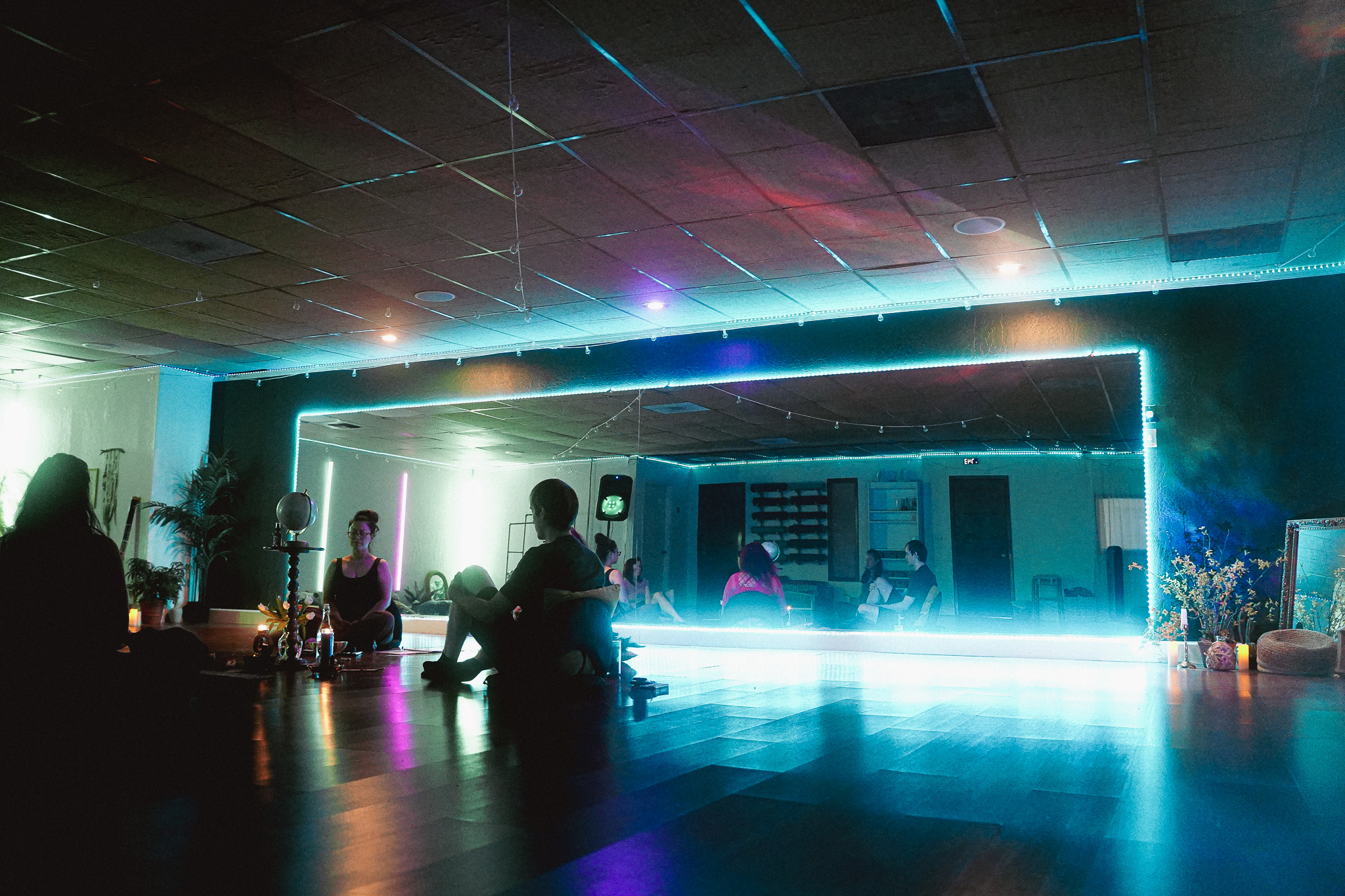

Maybe the first effect of collective meditation is much closer than we think
When people hear the Maharishi Effect described, attention naturally goes toward the extraordinary part of the theory: meditators gathering in one place and crime or violence changing somewhere else.
That is the controversial claim.
But before we get there, there are other effects we can think about that do not require an invisible mechanism at all.
Imagine that twenty people gather around the intention of peace.
For an hour, those twenty people intentionally examine peace, compassion, conflict, connection, and whatever the theme brings up inside them.
Then those twenty people leave.
One returns to their family.
Someone else returns to work.
Another goes to school.
Another person talks to customers all day.
Someone manages employees.
Someone parents children.
Someone has a difficult conversation waiting for them later that week.
If the practice influences even a portion of those interactions, then the gathering has already moved beyond the walls of the room.
Maybe someone becomes a little slower to escalate conflict.
Maybe someone recognizes that they have been treating another person as an enemy rather than a human being.
Maybe another person finally has a conversation they have been avoiding.
Maybe someone becomes more interested in volunteering or supporting a community organization.
Those changes would not prove the Maharishi Effect.
But they would still demonstrate something important: people who practice together eventually go back into the world and participate in that world.
Maybe before asking whether meditation changes the people outside the room, we should pay attention to how it changes the people who eventually walk out of the room.
What if “collective power” is not one mysterious thing?
We use phrases like collective energy, collective power, collective prayer, and collective consciousness. Depending on someone’s worldview, those phrases can mean very different things.
For one person, collective power may describe something explicitly spiritual: a belief that consciousness or prayer has effects beyond conventional physical interaction.
Someone else may understand collective power psychologically and relationally. When people gather around a shared intention, they reinforce values, influence one another, create social norms, and leave with a stronger sense that they are not acting alone.
Someone else may see it socially. Groups organize. Groups create institutions. Groups change culture. Groups vote, volunteer, donate, advocate, teach, build, care for neighbors, raise children, create businesses, and determine what behaviors become normal inside communities.
Perhaps there is no need to flatten those possibilities into one explanation.
We can ask what can be observed directly.
We can remain open about what we cannot yet explain.
And we can still intentionally create environments where people practice the qualities they want more of in the world.
Collective influence can be explored through several different lenses
Spiritual
Some people believe prayer, consciousness, or collective intention has effects that extend beyond observable physical interaction.
Relational
What one person practices can influence the way they communicate, listen, respond, and participate in relationships.
Cultural
Groups reinforce shared norms. Communities repeatedly practicing compassion may help make compassionate behavior more expected within those communities.
Practical
Shared concern can lead people toward volunteering, service, giving, advocacy, learning, or other forms of direct participation.
Can twenty people really change a community?
Perhaps not in the dramatic way we sometimes imagine.
Twenty people cannot single-handedly solve homelessness, eliminate violence, repair every broken institution, end political division, or create peace throughout an entire city.
But that does not mean twenty people are meaningless.
Twenty people have families.
Relationships.
Workplaces.
Neighbors.
Decisions.
Money they choose how to spend.
Conversations they choose how to conduct.
Children who observe them.
Coworkers who experience the way they lead.
People they encounter when they are frustrated, afraid, tired, or angry.
We tend to imagine societal influence only in large quantities because large systems are easy to see from a distance.
But culture is also created through repeated ordinary interactions.
So perhaps the better question is not whether twenty people can single-handedly transform a city.
It is whether twenty people intentionally practicing something together can create twenty different points where another way of behaving enters the community.
A ripple does not have to begin with one enormous action. It can begin with many ordinary interactions becoming slightly different because the people inside them are practicing something different.
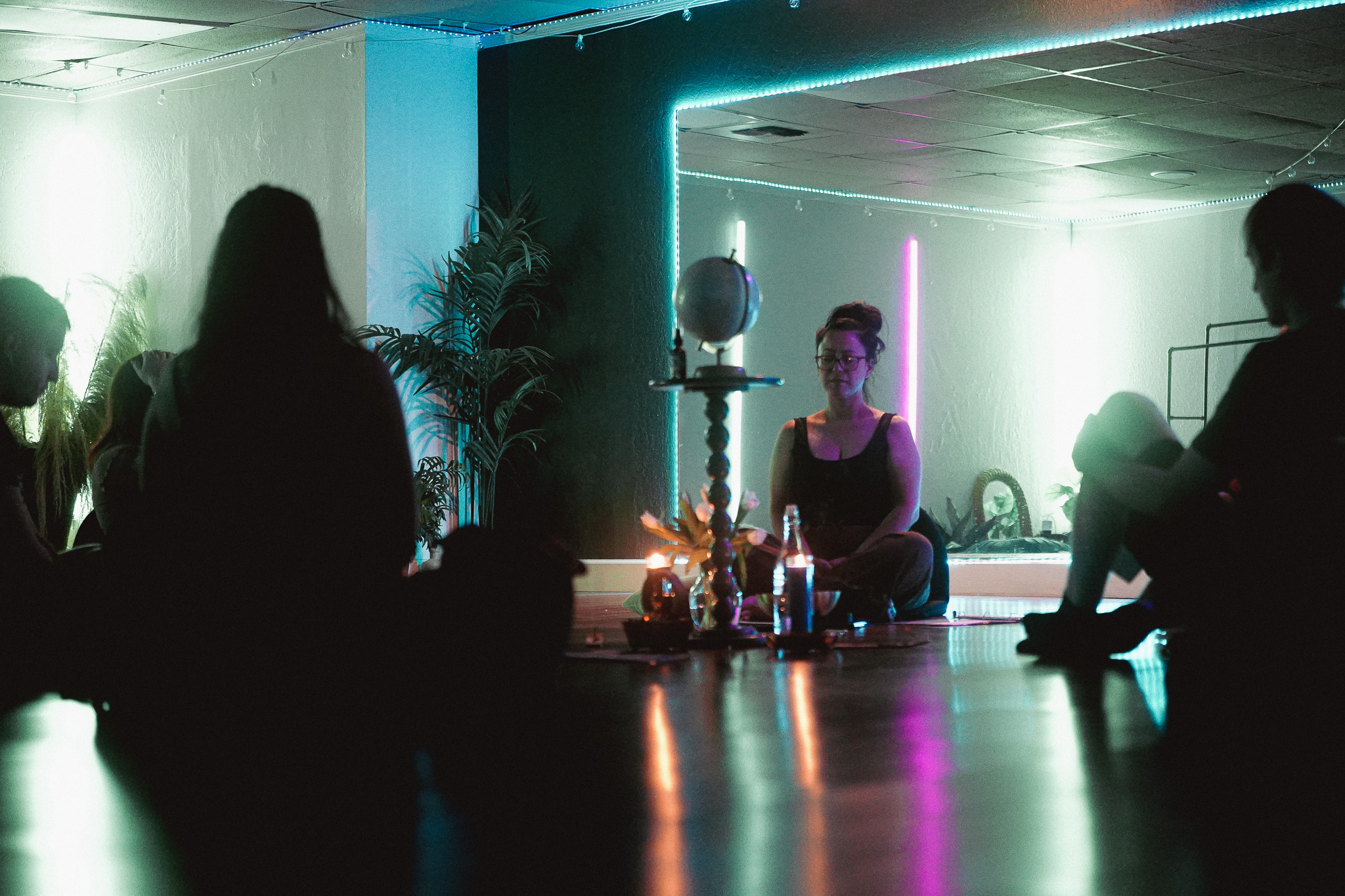
There is something powerful about choosing what we practice together
Communities are always practicing something, whether we intentionally name it or not.
A workplace may practice urgency.
A family may practice avoidance.
An online community may practice outrage.
A friend group may practice humor.
A neighborhood may practice mutual care.
A culture may practice competition.
These things become patterns because they are repeated.
That makes me wonder what happens when we intentionally choose another pattern to rehearse.
What if once a month we practice compassion together?
What if we practice seeing people we disagree with as human?
What if we practice holding grief without immediately escaping it?
What if we practice peace not as an abstract word, but by examining how conflict actually moves through our own relationships?
What if we practice hope without requiring ourselves to pretend everything is okay?
The word “practice” matters because one hour does not create permanent transformation.
We rehearse.
Then life tests what we rehearsed.
Then perhaps we come back and practice again.
Maybe collective meditation matters partly because communities become shaped by what their members repeatedly practice together.
What are we already practicing collectively without realizing it?
This may be one of the bigger questions underneath Global Heart Activation.
When outrage dominates our attention, we practice outrage. When we constantly assume the worst intentions in others, we practice suspicion. When every disagreement becomes evidence that another person is bad, we practice dehumanization.
That does not mean anger is wrong. Some situations deserve anger. It does not mean disagreement is a problem. Healthy disagreement is necessary.
The question is whether the emotional pattern we repeatedly rehearse is helping us create the kind of community we say we want.
And if it isn’t, what might we intentionally practice instead?
Belief can inspire action but belief also deserves responsibility
There is one thing I want to be especially careful about when talking about a theory like the Maharishi Effect.
Believing that meditation or prayer may have collective value should never become an excuse to ignore practical problems.
If a community has violence, it may need investment, opportunity, effective public policy, accountable institutions, mental-health resources, education, housing, community leadership, conflict intervention, and many other concrete responses.
Sitting in meditation should not be used to pretend those realities disappear.
But it also does not follow that contemplative practice has nothing to contribute.
Maybe the relationship is not either/or.
Maybe we pray and participate.
Meditate and volunteer.
Reflect and organize.
Practice compassion and still hold people accountable.
Explore consciousness while also paying attention to the material conditions shaping people’s lives.
A spiritually meaningful practice becomes much more grounded when it remains connected to reality rather than replacing reality.
Believing collective prayer matters does not require us to choose prayer instead of action. Our deepest intentions may become more meaningful when they inform the actions we are willing to take.
Global Heart Activation is our invitation to explore the question
This is where the idea connects back to what we are creating at The Healing Tree Collective.
Global Heart Activation is not our attempt to announce that we have scientifically reproduced the Maharishi Effect.
We are not claiming that attendance at one of our gatherings will lower crime rates in Tempe.
We are not conducting a controlled scientific experiment.
And Global Heart Activation is not the Transcendental Meditation and TM-Sidhi protocol studied in Maharishi Effect research.
The connection is philosophical and inspirational.
The research raised a possibility that speaks to something we already believe is worth exploring: there may be value in people intentionally gathering around a shared intention rather than always practicing alone.
Each Global Heart Activation gathering centers around a common topic or theme.
Maybe peace.
Maybe compassion.
Maybe grief.
Maybe a particular human concern happening in the world.
We gather around that theme through prayer, meditation, reflection, and shared intention.
Then we remain curious about what happens.
Inside ourselves.
Between the people in the room.
And eventually through the way those people return to their lives.
Global Heart Activation is not built on the promise that we know exactly what collective prayer can do. It is built on the belief that the question is worth gathering around.
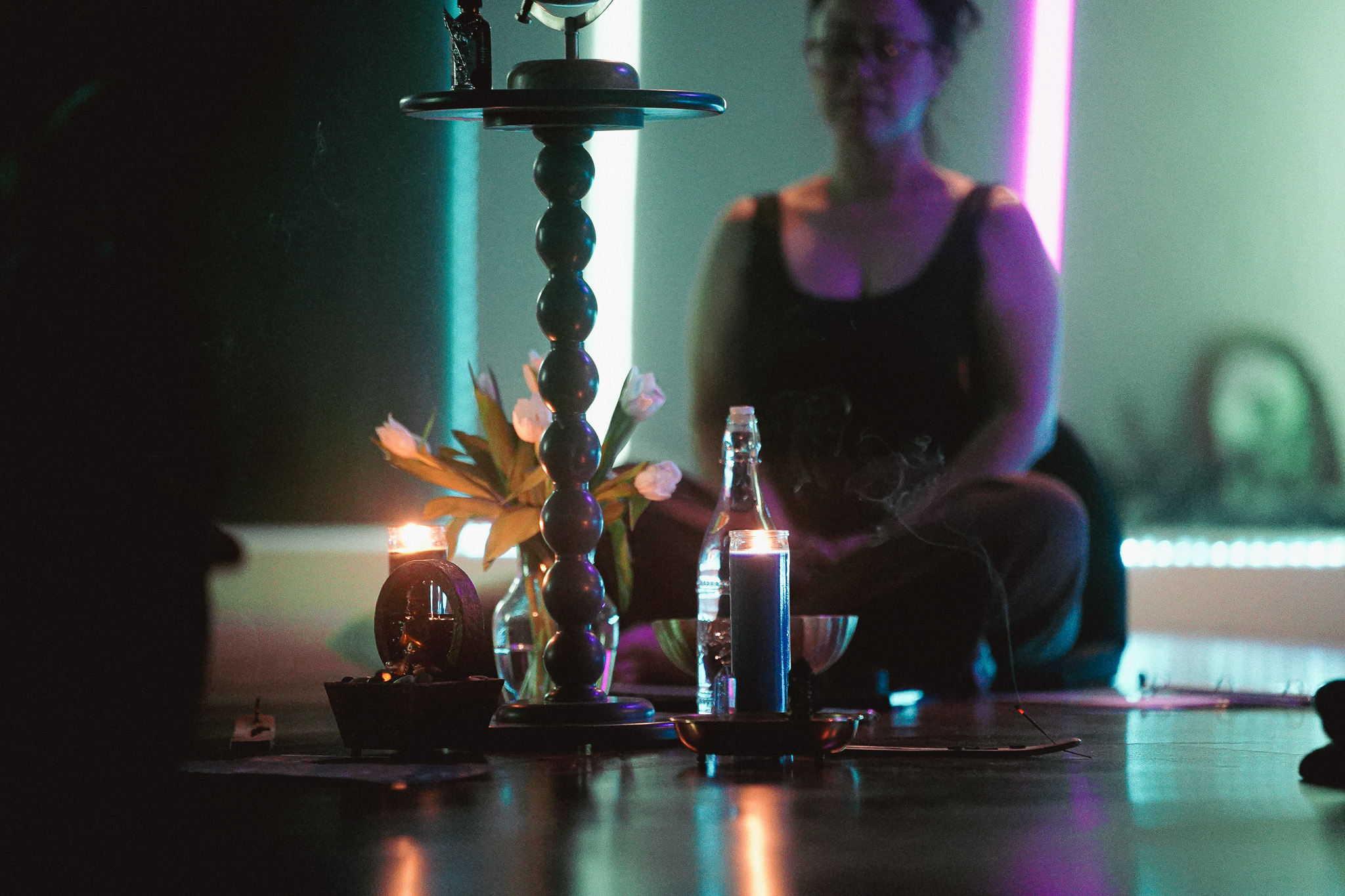
What if believing in possibility changes what we are willing to create?
This may be the part of the conversation I care about most.
There are ideas we dismiss because they seem too idealistic.
People from different backgrounds actually listening to one another.
Businesses operating from something other than extraction.
Workplaces becoming more human.
Communities choosing cooperation over constant division.
People doing enough inner work that they stop unconsciously repeating some of the pain handed to them.
A group gathering simply because they want to practice love toward the world.
Maybe some of those aspirations sound naive.
But there is another danger too: becoming so afraid of naivety that we stop imagining alternatives entirely.
Cynicism can feel intelligent because it protects us from disappointment.
If I never believe something better is possible, I never have to risk being wrong.
But I also never have to participate in creating it.
Hope asks something harder.
It asks us to remain aware of reality while refusing to assume reality can only ever look the way it looks today.
We can question extraordinary claims without surrendering our capacity to imagine extraordinary possibilities.
This is the dream inside Heal • Create • Inspire
Heal • Create • Inspire has always been connected to this idea of the ripple.
Heal begins inward. We become more aware of our own fear, anger, grief, assumptions, reactions, and the stories shaping how we see ourselves and other people.
Create asks what becomes possible when we begin living from that awareness differently. We create relationships, businesses, families, communities, conversations, and environments through the choices we repeat.
Inspire is where what we are practicing may reach someone else.
Maybe the ripple is direct.
Someone experiences more patience from us and offers that patience somewhere else.
Maybe it is cultural.
Enough people begin practicing a different way of relating that the expectations inside a community slowly shift.
Maybe there are dimensions of collective influence we do not fully understand.
I can leave room for that possibility too.
What matters to me is that we do not wait until every philosophical question is solved before we begin practicing what we already know we want more of.
If we want more compassion, we can practice compassion.
If we want more connection, we can practice connection.
If we want more peace, we can create places where peace is intentionally rehearsed.
Maybe that changes the world in ways we can measure.
Maybe it changes the world through people and relationships.
Maybe both.
Maybe something else.
I don’t know.
And I’m okay beginning there.
We do not have to know exactly how far a ripple will travel before deciding that creating a better ripple is worth doing.
Explore collective prayer and meditation in Tempe
Global Heart Activation at The Healing Tree Collective is a community-centered gathering in Tempe, Arizona built around collective prayer, meditation, shared intention, and reflection.
Each gathering focuses on a particular theme, giving the group a common point of attention. You may come because prayer is already part of your spiritual life. You may connect more strongly with meditation. You may simply be curious about what happens when people gather intentionally around compassion, peace, connection, and care.
You do not need to believe the Maharishi Effect has been proven.
You do not need to interpret collective intention exactly the way somebody else does.
There is room for belief.
There is room for skepticism.
There is room for spirituality.
There is room for questions.
What matters is the willingness to gather around something beyond ourselves and become curious about what that experience creates.
Global Heart Activation invites us to explore:
So can we recreate the Maharishi Effect?
I don’t know.
And I actually think that is a more exciting answer than pretending we already know.
Because “I don’t know” leaves room for exploration.
It leaves room for science to keep asking questions.
It leaves room for spiritual experience without forcing it into scientific language.
It leaves room for us to observe what happens inside our own community.
And it leaves room to dream.
What if people came together every month and intentionally practiced peace?
What if those people carried something from that practice into their families, relationships, workplaces, and neighborhoods?
What if another person experienced that difference and carried something forward too?
How far could that travel?
I do not know.
But I do know that I would rather participate in the experiment of creating more love, compassion, connection, and peace than assume those things cannot make a difference simply because we cannot predict exactly how far the ripple will go.
Why can’t we dream about it?
Not pretend.
Not overpromise.
Not claim something has been proven when it hasn’t.
Dream.
Gather.
Practice.
Pay attention.
Bring prayer if prayer is meaningful to you.
Bring meditation.
Bring curiosity.
Bring your hope for something better.
Then let’s see what happens when a group of people chooses, even for one hour, to intentionally practice the qualities they wish existed more abundantly in the world.
Maybe possibility begins when enough of us stop assuming a better world is too unrealistic to practice.