19 August 2026
The Healing Tree Collective • Empathy, Belonging and Human Connection
Come As You Are: How Community Teaches Empathy and Human Connection
We do not have to feel the same way to recognize one another, care for one another, or belong in the same room.
One of the most meaningful parts of gathering in community is knowing that every person arrives carrying something different. Someone may walk through the door while holding grief. Another person may be celebrating a milestone they worked toward for years. Someone may be questioning a job, relationship, or new direction, while someone else may know that something feels heavy without having words for it yet.
“Come as you are” means that none of those people has to become emotionally identical before they can share space. No one has to hide their sadness because another person feels joyful. No one has to minimize a celebration because someone else is moving through difficulty. Each person can acknowledge where they are while making room for the humanity of the people around them.
At The Healing Tree Collective, this is one of the ways community becomes a practice. We are not only learning how to breathe, rest, move, meditate, or reflect. We are learning how to see one another more clearly without immediately comparing, judging, fixing, or absorbing every emotion in the room.
Community can remind us:
- Everyone is walking through a different part of life
- Another person’s emotions are not always about us
- Empathy does not require emotional absorption
- Different experiences can exist beside one another
- We can care for others while remaining connected to ourselves
What does it mean to truly come as you are?
Many of us have learned to adjust ourselves before entering a shared space. We may try to appear more positive, less emotional, more confident, or easier to be around. We may decide that our grief is too heavy, our joy is too much, or our uncertainty should remain hidden until we have found an answer.
Coming as you are does not mean sharing every detail of your life. It does not require complete vulnerability or public emotional expression. It means you are allowed to acknowledge your actual experience without pretending to be in a different place.
You can know that you feel overwhelmed and still participate quietly. You can feel joyful without apologizing for that joy. You can recognize that you are uncertain without turning your uncertainty into something shameful.
This permission creates a more honest form of belonging. You are not being welcomed only because you appear calm, happy, productive, or spiritually centered. You are being welcomed as a person whose emotional state may change from one day to the next.
Coming as you are means you do not have to hide the part of the journey you are currently walking through.

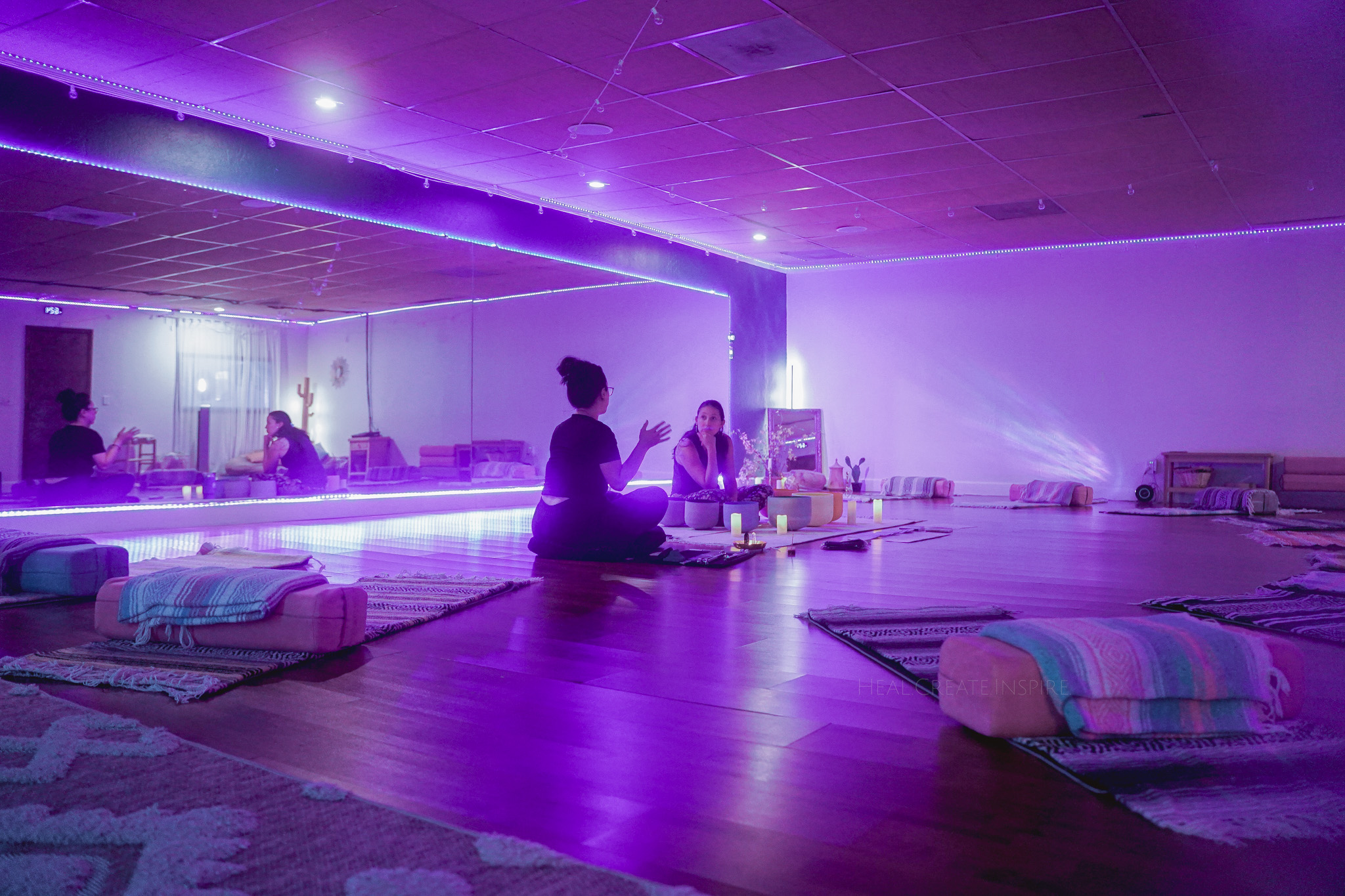
We do not need to feel the same in order to connect
Connection is sometimes confused with sameness. We may assume that people have to share the same background, emotion, belief, or life experience before they can understand one another.
Community teaches us something different. Two people can be in completely different emotional places and still meet one another with care.
One person can say, “I am grieving,” while another says, “I am celebrating.” Neither experience invalidates the other. The room does not have to choose which emotion deserves to exist.
This is a meaningful practice because life continually places us beside people whose experiences are different from ours. A coworker may be moving through a private hardship during a season when our own life feels stable. A friend may receive an opportunity we wanted for ourselves. A family member may feel hopeful about a change that makes us uncertain.
Empathy does not require us to manufacture the same emotion. It asks us to recognize that another person’s experience can be true even when it is not our own.
“This is where you are right now. This is where I am right now. We can acknowledge both.”
Different realities can exist in the same room
Grief and celebration
We can make room for someone’s pain without denying the joy that may also be present within our own life.
Certainty and questioning
One person may feel clear about their direction while someone beside them is reconsidering nearly every part of theirs.
Expression and silence
One guest may process by speaking, while another may need quiet, privacy, or more time before they understand what they feel.
Empathy helps us remember that we see only one moment
In everyday life, we often respond to the small portion of another person’s story that is visible to us. We see the driver who is impatient, the coworker who seems withdrawn, the customer who sounds frustrated, or the friend who has not responded.
Our minds may quickly create an explanation. We decide that the person is rude, uncaring, angry with us, or intentionally making the situation difficult.
Sometimes those interpretations may be partly correct, but often we are seeing one moment within a much larger life. The impatient driver may have received painful news. The withdrawn coworker may be exhausted from caregiving. The friend who has not responded may be overwhelmed and unsure how to explain it.
Empathy creates a pause between what we observe and the conclusion we make. It leaves room for the possibility that another person is carrying something we cannot see.
We rarely know the entire story behind the moment we are witnessing.

Compassion does not require us to absorb everything
For some people, empathy becomes exhausting because they believe they must take on the emotional state of everyone around them. If another person is upset, they feel responsible for fixing it. If someone is grieving, they believe they should become equally heavy. If someone reacts strongly, they immediately assume they caused it.
Compassion can exist without emotional absorption. We can acknowledge another person’s pain while remaining aware of our own body, feelings, and boundaries.
This may sound like, “I see that you are having a difficult time, and I do not have to make your experience about me.” It may mean listening without searching for a solution. It may involve offering care while recognizing that we do not have the capacity to carry the entire situation.
Remaining connected to ourselves does not make us less compassionate. It allows compassion to become more grounded and sustainable.
Absorbing another person’s experience may sound like:
“They are upset, so I must have done something wrong. I need to make them feel better before I can feel okay.”
Grounded empathy may sound like:
“I can recognize that they are having a difficult moment while staying connected to what is true for me.”
You can hold space for where another person is without leaving where you are.
Compassion and boundaries belong together
Understanding that another person may be struggling does not mean every behavior must be accepted. Empathy is not permission for someone to cause harm, ignore consent, cross a boundary, or avoid responsibility.
We can remember the humanity behind someone’s reaction while remaining honest about the impact of that reaction. A person may be overwhelmed, and we may still need to ask them not to speak to us disrespectfully. Someone may be grieving, and we may still recognize that we do not have the capacity to provide the level of support they need.
Boundaries help us care without abandoning ourselves. They allow us to say, “I understand that you are in a difficult place, and this is what I need in order to remain present in this relationship.”
A healthy community does not ask people to tolerate harm in order to prove that they are compassionate. It makes room for context, accountability, dignity, and clear limits.
Compassion with boundaries may include:
- Listening without agreeing to something that feels harmful
- Acknowledging emotion without accepting disrespect
- Offering support without becoming responsible for every outcome
- Recognizing when professional support may be more appropriate
- Taking space when your own capacity has been reached
- Remembering that empathy and accountability can exist together
Compassion remembers the person. Boundaries protect the relationship and the people within it.
Community gives us practice seeing one another
Empathy is not only an idea. It is something we practice in real interactions with people whose lives may be very different from our own.
In a community wellness space, one person may share something that changes the way we understand a familiar experience. We may hear about grief, family responsibility, cultural expectations, career uncertainty, parenting, loneliness, or the difficulty of slowing down.
We may never have lived through the same situation, but we can listen. We can become more aware of the assumptions we carry and recognize that our own experience is not the only way life can be understood.
This is one of the reasons intentional community matters. It brings humanity closer. Instead of thinking about compassion in the abstract, we sit beside an actual person whose story may expand the way we see the world.
Seeing one another may involve:
- Listening before deciding what someone needs
- Recognizing that silence can also be participation
- Making room for joy and difficulty at the same time
- Resisting the urge to compare emotional experiences
- Allowing another person’s perspective to deepen our own
- Remembering that every person carries more than we can see
You can cheer for someone while honoring your own path
Community creates opportunities to witness people in both difficult and joyful seasons. We may support someone through uncertainty and later celebrate when they take a meaningful step. We may watch another person gain confidence, begin a business, change direction, or reconnect with something important to them.
Celebrating another person can become difficult when we compare their timeline with our own. Their success may remind us of something we are still waiting for or working toward.
Empathy allows us to recognize both truths. We can be genuinely happy for someone while acknowledging that their milestone brings up feelings within us. We do not have to turn their joy into evidence that we are behind.
Their path is where they are. Our path is where we are. Both continue unfolding.
We can cheer one another on without turning someone else’s life into a measurement of our own.
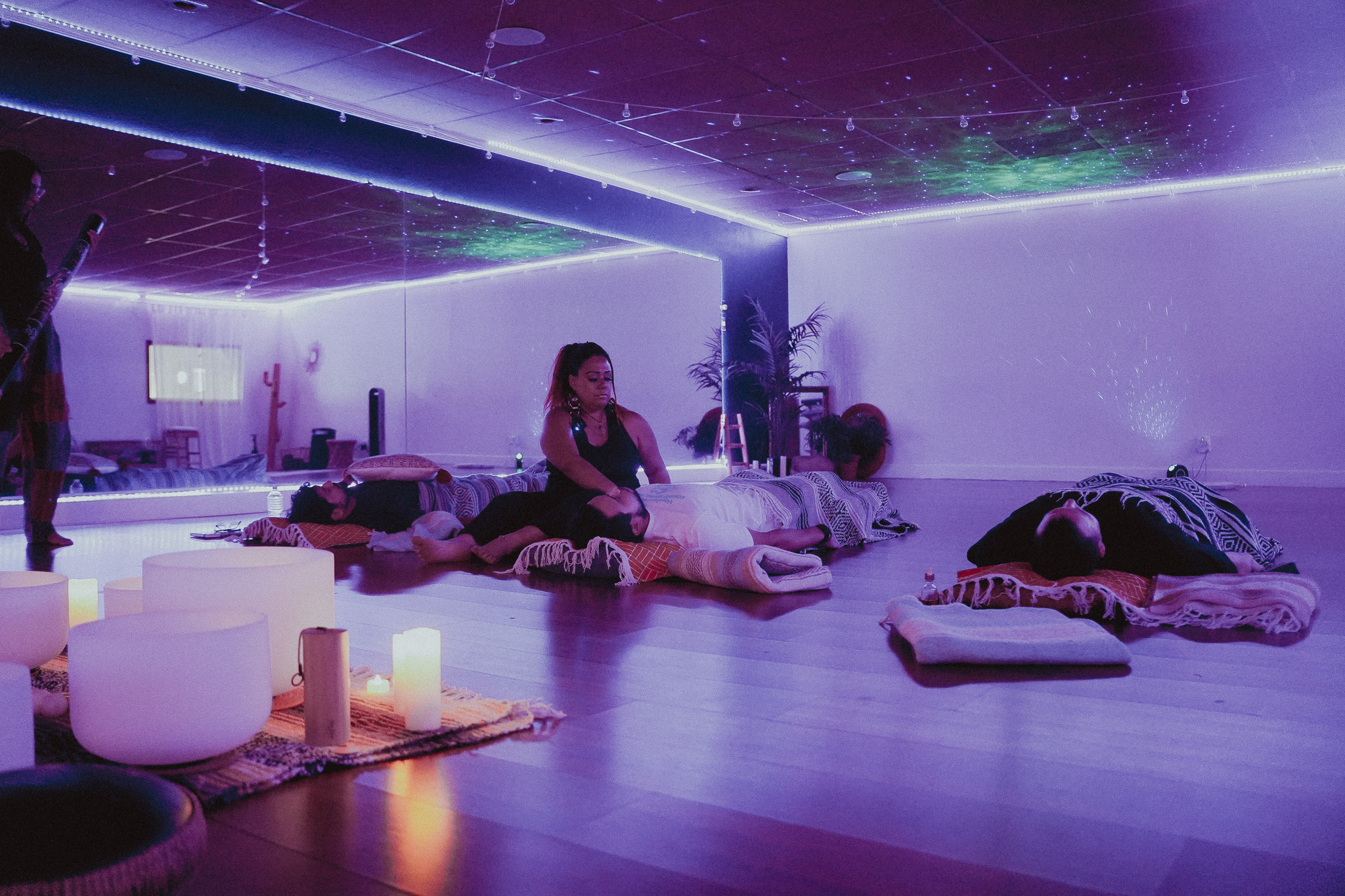
Nurturing humanity in a technology-driven world
Technology allows us to communicate across distance, share information quickly, and remain connected in ways that were not previously possible. It can support creativity, education, relationships, accessibility, and community.
At the same time, digital communication can make it easier to reduce people to a comment, opinion, image, or single moment. We may react quickly without considering the person on the other side of the screen. We may consume thousands of human stories without taking enough time to truly encounter another human being.
As technology continues to change, our capacity for empathy becomes even more important. We need spaces where we practice looking at one another, listening without immediately responding, and remembering that people are more complex than the small pieces of themselves we see online.
Community wellness spaces are one way to nurture that humanity. They create an opportunity to be physically present with other people, share time without constant digital input, and remember what it feels like to listen with our full attention.
As our tools become more advanced, our responsibility to nurture human connection becomes even more important.
You do not have to speak in order to belong
Coming as you are also means honoring the way you naturally process. Some people understand themselves through conversation. Others need silence, movement, journaling, rest, or time alone before they have language for what they experienced.
A supportive community does not make belonging dependent on how much someone shares. You can attend a class and choose to listen. You can notice what is happening in your body without explaining it to the group.
The ability to remain quiet can create greater safety, especially for someone entering a new space or moving through an experience they are not ready to discuss.
Connection may still happen. You may feel supported by another person’s words, the shared silence, or the simple awareness that other people also chose to take intentional time for themselves.
You can participate by:
- Listening to what others choose to share
- Resting without explaining what you need
- Following the practice at your own pace
- Reflecting privately after class
- Speaking only when and if it feels appropriate
- Allowing your presence to be enough
Community wellness in Tempe, Arizona
The Healing Tree Collective is a beginner-friendly community wellness studio in Tempe, Arizona, offering accessible opportunities for reflection, nervous system care, creativity, rest, personal growth, and meaningful human connection.
Guests are invited to attend without pressure to perform, explain everything, or arrive in a specific emotional state. You do not need previous experience with holistic wellness practices, and you do not need to know anyone in the room before joining us.
Explore wellness and community at The Healing Tree Collective
Our Tempe wellness community welcomes guests from Tempe, Phoenix, Mesa, Chandler, Scottsdale, the ASU community, and throughout the East Valley.
You can arrive in grief, celebration, uncertainty, exhaustion, hope, or transition. You can share, listen, rest, move, breathe, or simply notice where you are.
We get to see one another
There is something powerful about being in a room where people are allowed to be in different places and still remain connected.
We can recognize that someone is having a difficult day without allowing their emotional state to completely determine ours. We can celebrate another person without abandoning the complexity of our own life. We can acknowledge what someone is carrying without deciding that we must fix it.
This practice moves beyond the class. It influences how we respond in traffic, at work, within our families, and in the brief interactions that make up everyday life.
We begin leaving more room for what we do not know. We become slower to reduce a person to one reaction. We remember that one day we may be the person who needs patience, while on another day we may be the person able to offer it.
That is part of what community can teach us. We do not have to feel the same. We do not have to be in the same season. We simply have another opportunity to see one another—and to remain connected to ourselves while we do.
Come as you are and make room for the humanity around you
At The Healing Tree Collective, we create community wellness experiences where people can slow down, reconnect with themselves, and practice being present with others without pressure to perform a particular emotion.
Join us at our Tempe wellness studio and explore a class rooted in reflection, compassion, nervous system care, and meaningful connection. You do not need to hide where you are, and you do not need everyone around you to feel the same way in order to belong.