10 May 2026
The Healing Tree Collective • Tempe, Arizona
How Community-Based Regulation Supports Clinical Work
Clinical work matters deeply.
Therapy gives clients language, insight, reflection, containment, and a place to process what they are carrying.
But many clients also need something beyond insight alone:
they need spaces where regulation can be practiced in real time, in relationship, and in the body.
That is part of why community-based regulation matters.
Not as a replacement for therapy.
Not as a substitute for clinical care.
But as a therapy-complementary layer of support that helps clients experience nervous system steadiness, co-regulation, rest, and connection outside the therapy room.

Regulation is not only individual — it is relational
A lot of conversations about regulation focus only on what an individual can do alone:
breathe differently, think differently, calm down, self-soothe, push through less.
And while personal practices matter, regulation is often deeply relational too.
Human beings do not only regulate in isolation.
We regulate through safe connection, attuned environments, predictable support, co-presence, rhythm, and relationship.
That is why a supportive room can change how the body feels.
That is why being around grounded, nonjudgmental people can help the nervous system soften.
That is why community matters.
Community-based regulation is the experience of a person’s nervous system being supported not only by an internal tool, but by the environment, the relationships, and the felt sense of not being alone.
Why this matters for clinical work
Therapists often help clients identify patterns, name triggers, increase insight, and build emotional awareness.
But many clients leave session and return to environments that are overstimulating, isolating, dysregulating, or emotionally demanding.
That gap matters.
A client may understand their response intellectually and still not have enough real-life support to help their body settle.
They may know what grounding is and still struggle to access it when they are alone.
They may understand their trauma responses and still need more embodied practice with safety, pace, and connection.
Community-based regulation can help bridge that gap.
It gives clients opportunities to practice being with themselves in environments that feel more supported, less isolating, and more regulating.
What community-based regulation can offer clients
Community-based regulation does not mean clients need to share their deepest story in a group setting.
It does not mean therapy becomes public.
It means there are spaces where clients can experience support alongside others in ways that help the nervous system soften.
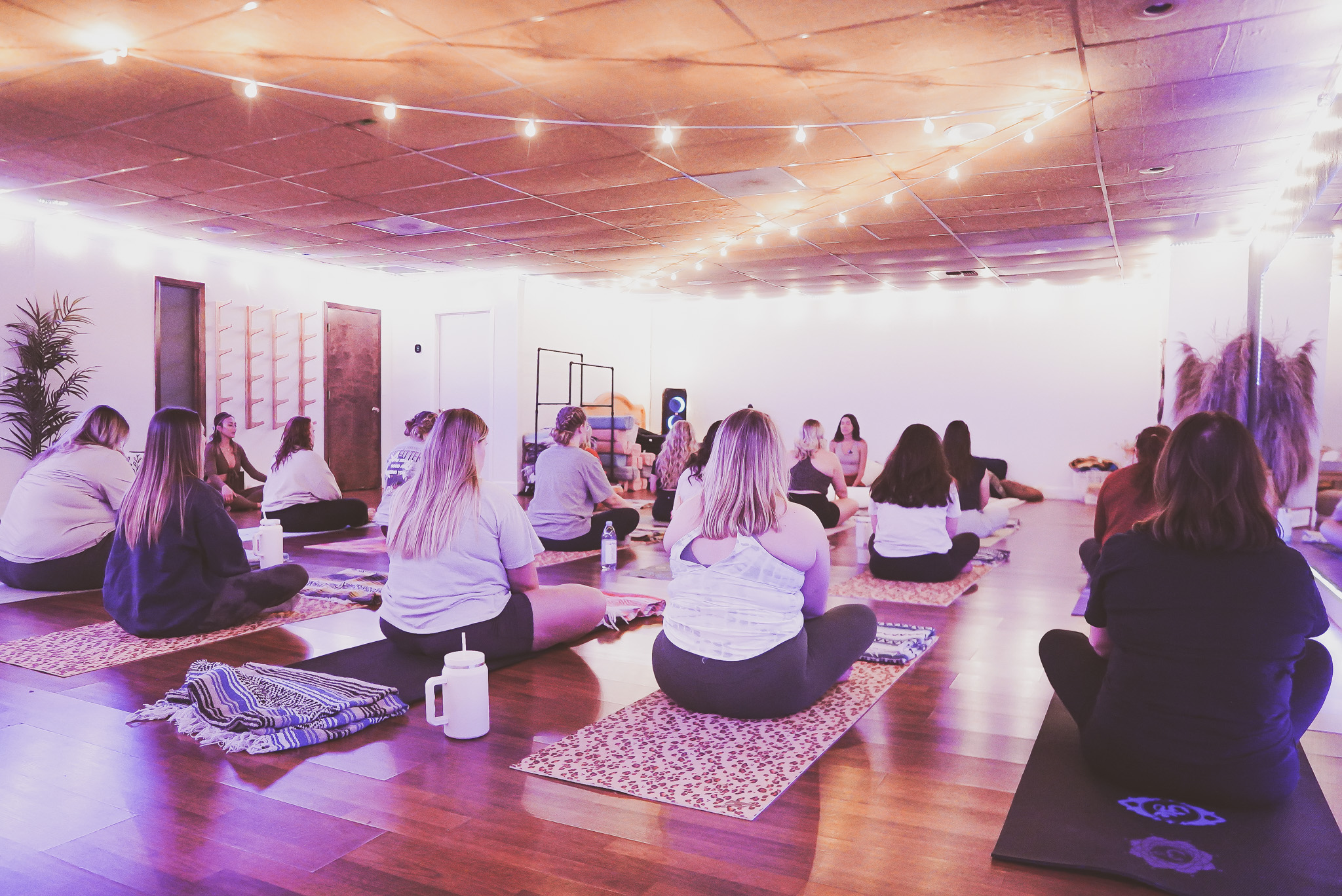
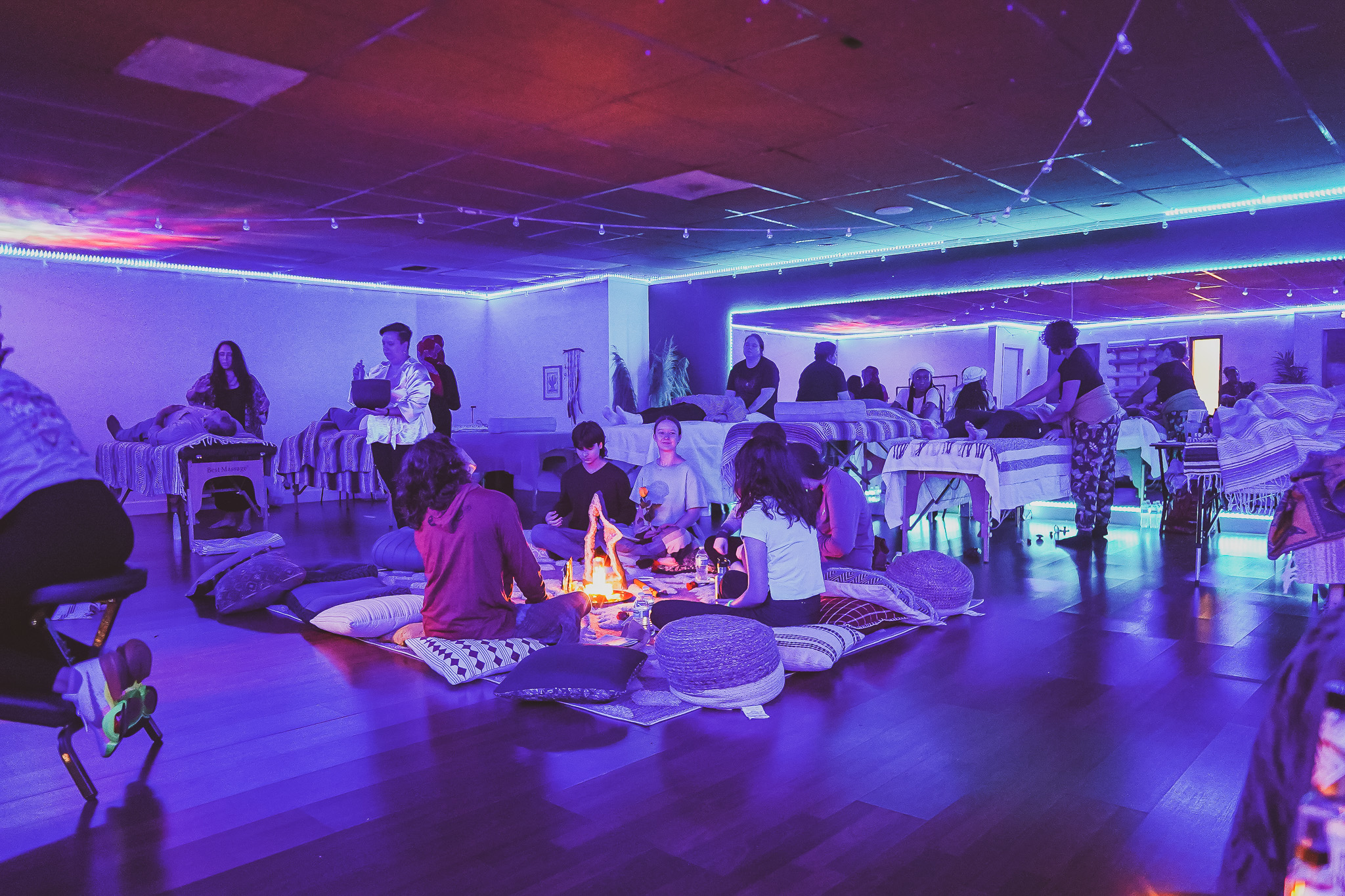
That might mean resting in a sound healing class where the room feels calm and contained.
Breathing in a guided class where the facilitator sets a steady pace.
Moving gently in a way that helps the body reconnect without pressure.
Simply being in a room where no one is demanding performance and the body is allowed to settle.
Sometimes the medicine is not only in the modality itself.
It is in the relational field around it.
The permission.
The pacing.
The safety.
The reminder that support can be shared.
Community-based regulation may help clients:
- Feel less alone in what they are carrying
- Practice regulation outside the therapy room
- Experience co-regulation through safe environments
- Build comfort with rest, stillness, and receiving
- Reconnect with their body gently
- Strengthen support between therapy sessions
Why isolation can keep clients stuck
Many clients are navigating stress, grief, burnout, trauma, shame, anxiety, or emotional overwhelm in isolation.
Even when they have insight, even when they are doing good therapy work, isolation itself can make regulation harder.
When a person feels like they are the only one struggling, the nervous system often stays more guarded.
When someone has no safe place to land between sessions, the body may remain braced.
When support only exists in one weekly appointment, the client may still feel unsupported the other six days.
This is one reason community-based support can be so meaningful.
It does not ask clients to heal by themselves all the time.
It helps create a broader field of care.
Clinical insight is powerful. But for many clients, healing deepens when they also have places where safety, support, and regulation can be felt in relationship.
How classes and shared practices support regulation
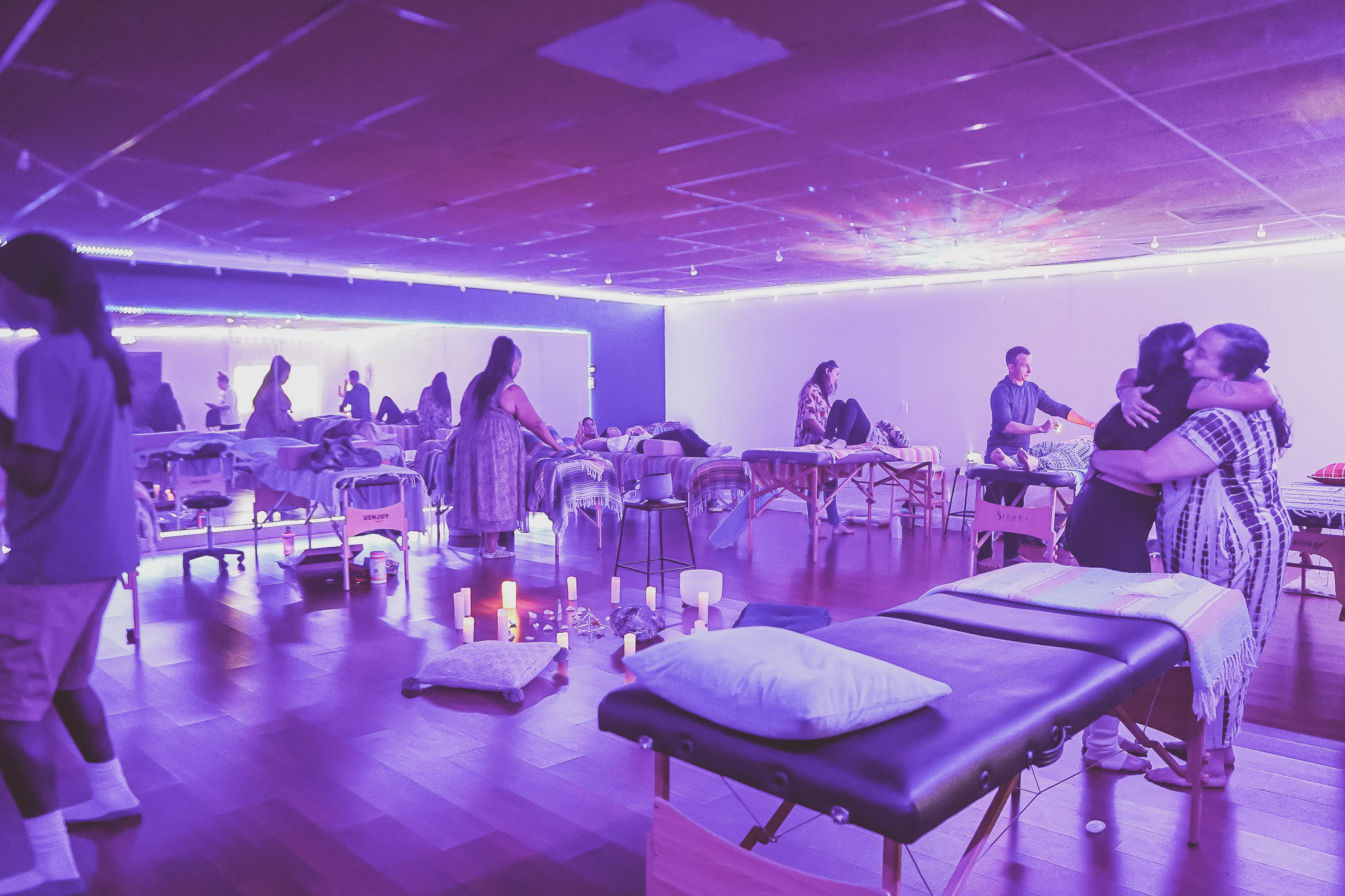
Structured, trauma-aware classes can be especially helpful because they create consistent containers for regulation.
A client does not have to figure everything out alone.
The room has a beginning, middle, and end.
The facilitator holds the pace.
The practice offers something to follow.
The environment supports slowing down.
Breathwork can help people reconnect with the body and breath.
Sound healing can help create mental quiet and rest.
Meditation can offer guided awareness and stillness.
Gentle movement can help reduce bracing and increase connection to sensation.
When these practices happen in a supportive communal space, they can become more accessible for clients who struggle to regulate alone.
Why this matters to therapists and clinicians
For therapists, counselors, psychotherapists, and social workers, community-based regulation can be an important part of a broader circle of care.
It gives clients an opportunity to engage in supportive, embodied practices between sessions without asking the therapy room to hold everything alone.
This does not mean every client needs group-based support.
But for many, carefully held community spaces can support integration, reduce isolation, and create more real-world access to regulation.
That is why clinicians need trusted referral partners who understand trauma-awareness, scope, pacing, and the relational nature of healing.
Not spaces that overstate what they do, but spaces that know how to support the body and the human experience with integrity.
Clinicians may look for community-based support that is:
- Trauma-aware and nervous-system–friendly
- Clear about scope and role
- Grounded and invitational rather than forceful
- Supportive of rest, regulation, and embodiment
- Accessible enough for clients to use consistently
- Trustworthy as part of a broader care ecosystem
How The Healing Tree Collective supports community-based regulation
The Healing Tree Collective was built as a mental health support partner because we saw a real need for trauma-aware, community-based support between therapy sessions.
We are not a therapy clinic.
We do not diagnose, assess, or provide psychotherapy.
We do not replace clinical care.
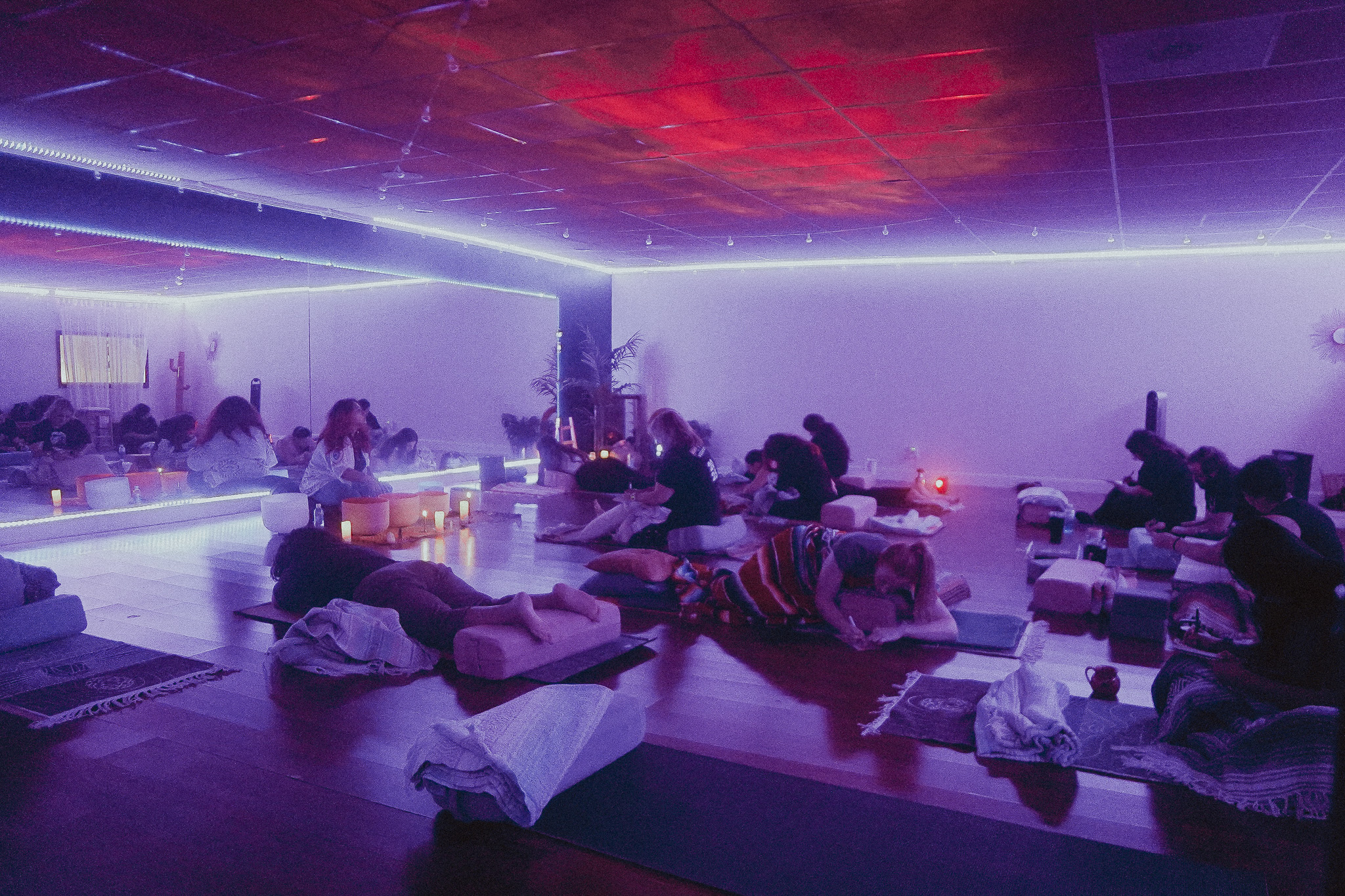
What we do offer is a supportive environment where people can access classes like breathwork, sound healing, meditation, Yoga Nidra, gentle movement, and other body-aware experiences that help them slow down, reconnect, and feel more supported in real time.
We also believe in partnership.
In helping therapists, counselors, social workers, and psychotherapists build stronger circles of care for clients through trusted, scope-respectful community support.
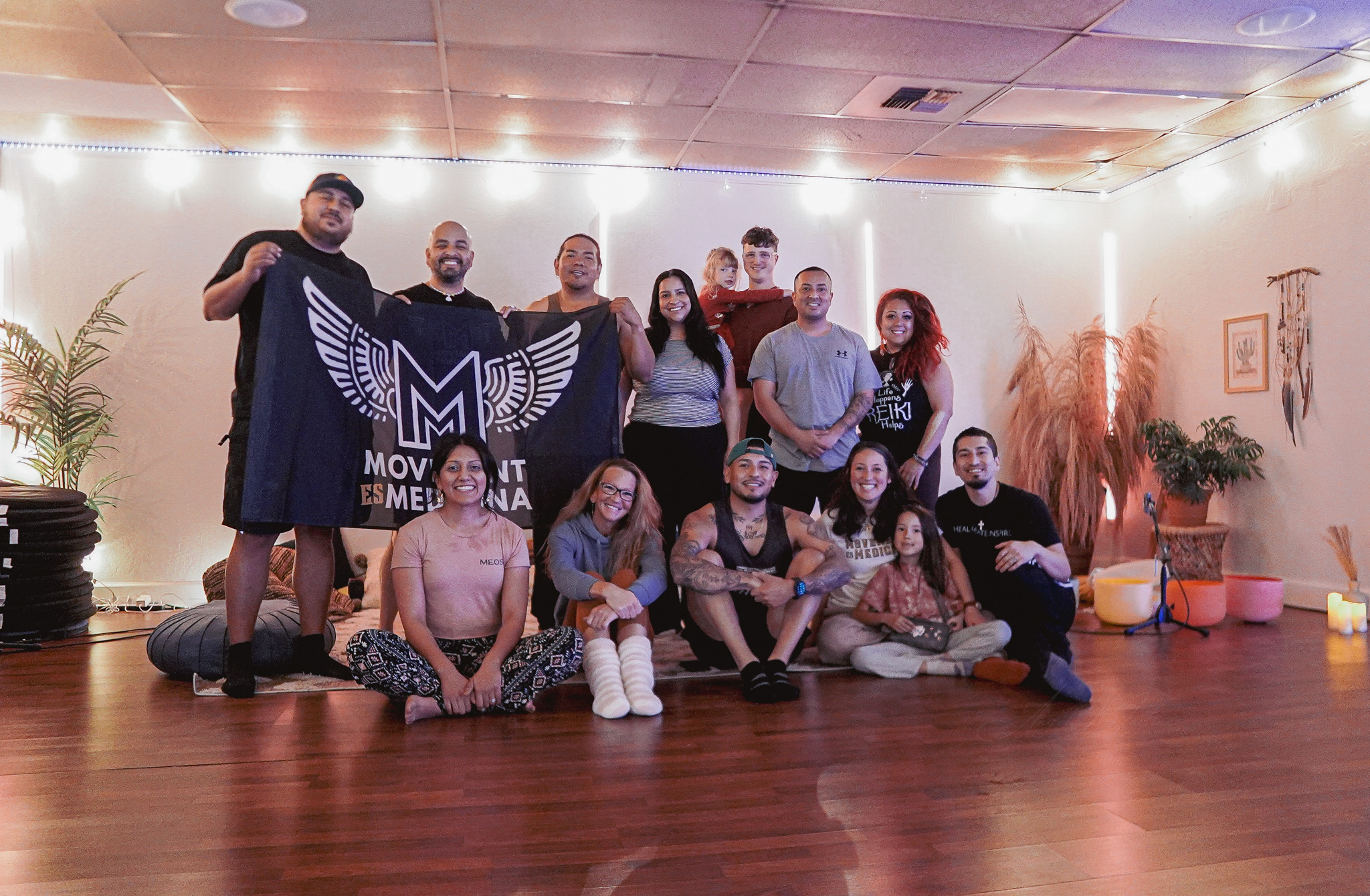
A stronger circle of care supports stronger clinical work
Therapy does not lose value when clients receive more support around it.
In many cases, it becomes more supported.
More integrated.
More sustainable.
Community-based regulation helps reinforce what clients are learning in therapy by giving them places to practice support in real time.
It helps them move from insight into embodiment.
From isolation into relational care.
From understanding regulation to actually feeling it more often.
Community-based regulation supports clinical work by helping clients experience care not only as something they talk about, but as something they can feel and practice in the spaces between.
Looking for community-based regulation support for your clients?
Explore the Mental Health Partnerships and weekly classes at The Healing Tree Collective in Tempe, Arizona. We would love to connect with therapists, counselors, psychotherapists, and social workers seeking trauma-aware, therapy-complementary support options for the people they serve.