10 July 2026
The Healing Tree Collective • Workplace Wellness
How Team Stress Affects Communication, Patience, and Morale
Team stress does not stay contained inside individual people. Over time, it begins to shape the way a group communicates, the amount of patience people have with one another, and the overall emotional tone of the workplace.
In many work environments, stress is treated like a private experience that each employee is supposed to manage on their own. However, that is rarely how stress behaves in real life. When several people are carrying too much at once, the strain begins to move outward. It shows up in shorter responses, quicker frustration, less grace in misunderstanding, less emotional room for nuance, and a noticeable drop in the kind of energy that allows a team to feel connected and collaborative.
This is one reason workplace wellness matters beyond individual stress relief. It can support the relational life of a team. When employees are given meaningful spaces to slow down, reconnect, and regulate, they are often better able to communicate clearly, respond with more steadiness, and engage with one another from a more human place. That shift can affect much more than mood. It can begin to influence culture.
At The Healing Tree Collective, we believe that when a team feels less internally strained, it often becomes more patient, more compassionate, and more capable of co-creating healthy work together. That is not because stress disappears, but because people are no longer being asked to carry so much of it in silence and isolation.

Team stress often shows up through:
- Shorter communication and quicker reactivity
- Lower patience and less emotional flexibility
- Increased misunderstandings and tension
- Disconnection, withdrawal, or emotional flatness
- Lower morale and a heavier workplace atmosphere
Stress changes how people communicate, even when they do not mean it to
One of the first places team stress tends to show up is in communication. When people feel stretched thin, mentally crowded, or emotionally overloaded, they usually have less internal room for thoughtful responses. They may become more abrupt than they intended, less curious when misunderstandings arise, or more likely to interpret neutral interactions through the lens of pressure and fatigue. Often, the issue is not that people have stopped caring. The issue is that stress has reduced the spaciousness they normally rely on to communicate well.
This is important because communication does not only reflect skill. It also reflects state. Even highly thoughtful and well-intentioned employees can begin communicating differently when their nervous systems are strained. They may skip nuance because they do not have energy for it. They may read things more defensively. They may reply from urgency rather than presence. Over time, those small shifts can change the feel of an entire team.
That is why addressing communication challenges at work sometimes requires going deeper than communication advice alone. If the underlying state of the team is one of chronic strain, then improving communication often begins with helping people feel less internally compressed in the first place.
Team communication is often a mirror of team stress. When people feel crowded inside, their words and reactions usually start to reflect it.

Patience becomes harder when people are already at capacity
Patience is not only a personality trait. In many ways, it is also a capacity issue. When people feel rested, regulated, and emotionally supported, they generally have more room to slow down, listen carefully, and respond with steadiness. When they feel drained, rushed, or overloaded, that capacity often narrows. Small inconveniences feel larger. Minor miscommunications feel sharper. Ordinary workplace friction becomes harder to hold without frustration.
This is one reason teams can begin to feel increasingly brittle when stress remains unaddressed. What might once have been met with grace begins to be met with irritation. What might once have been clarified through conversation begins to create distance. The underlying problem is not always the event itself. Often, it is that the people involved do not have enough internal room left to hold it well.
When workplaces overlook this, they may interpret lower patience as an attitude problem when it is also, very often, a strain problem. People who are carrying too much tend to have less access to the emotional flexibility that patience requires.
When employees are operating close to their edge, even small moments can ask more from them than they still have available.

Morale is deeply connected to how stress is carried inside the team
Morale is often discussed as though it rises and falls only because of recognition, incentives, or job satisfaction, but the emotional state of a team plays a major role as well. When employees feel consistently strained, disconnected, or unsupported, morale usually suffers. Work can begin to feel heavier than it needs to. People may become less engaged, less warm with each other, and less connected to any sense of shared purpose. The atmosphere starts to feel more mechanical and less human.
Low morale is not always loud. Sometimes it looks like emotional flatness. Sometimes it looks like disengagement, silence, withdrawal, or the quiet loss of energy that once made the team feel more alive. In these moments, workplace wellness can be supportive because it helps address something deeper than motivation. It helps create conditions where people feel more connected to themselves and, from there, more capable of reconnecting with the group.
That is part of why morale and well-being are so closely linked. A team that feels emotionally strained will usually have difficulty sustaining healthy morale, no matter how committed the people are to the work itself.
Morale is not only about how people feel about the work. It is also about how people feel inside themselves while doing the work together.
Stress affects culture because state affects relationship
Team culture is shaped by repeated interactions, and those interactions are always influenced by the internal state of the people involved. If employees are chronically tense, emotionally overloaded, or physically exhausted, that strain becomes part of the relational environment. State affects tone. State affects reaction speed. State affects how much room there is for empathy, reflection, humor, and care. This is why team stress is never only an individual issue. It is also a cultural one.
In the same way, when people feel more regulated and supported, they often have more capacity for healthy relationship. They can listen more clearly. They can respond more intentionally. They can recover from friction more gracefully. That does not mean conflict disappears. It means the team has more internal resources available for navigating it.
This is one reason we believe workplace wellness should be understood as part of company culture, not separate from it. Supporting employee well-being changes more than how one person feels. It can influence how the group functions together.
For communication
Breathwork, mindfulness, and reflective practices can help employees respond with more presence and less urgency.
For patience
Regulation support can help people access more emotional flexibility when tension or misunderstanding arises.
For morale
Shared wellness experiences can help restore connection, humanity, and a more supportive tone within the team.


What workplace wellness can offer a stressed team
Workplace wellness cannot remove every source of pressure from a team, and it should not be used to bypass larger structural issues that need attention. Even so, it can offer something meaningful and immediate. It can create a pause in the pace. It can give employees a place to exhale, reconnect with themselves, and remember what it feels like to exist in something other than urgency. When that happens, people often regain access to some of the steadiness that stress had narrowed.
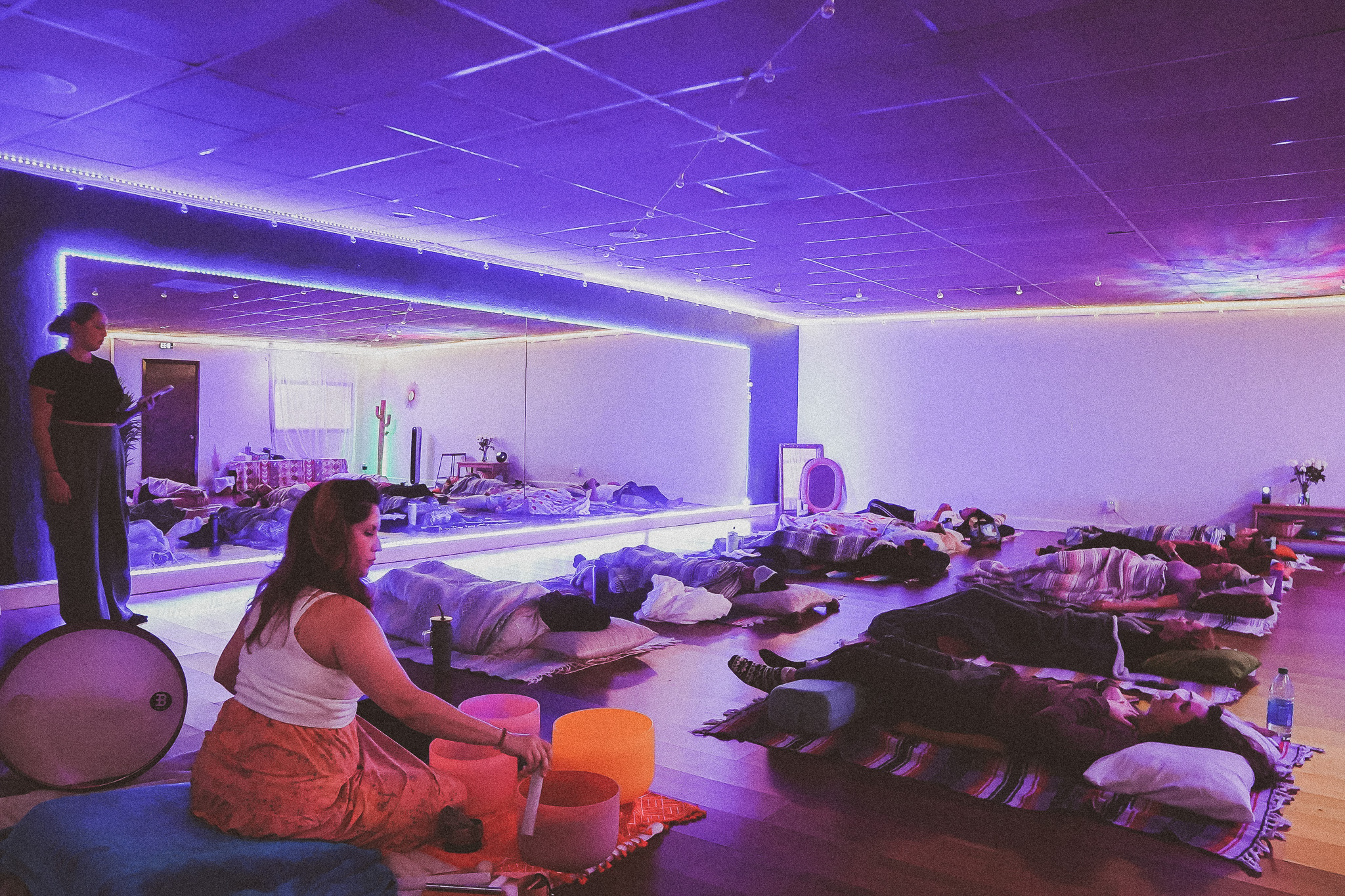
Practices such as breathwork, meditation, sound healing, gentle movement, mindfulness, and reflective team experiences can all help create that shift when they are offered in a grounded and thoughtful way. The goal is not to force positivity or create the appearance of calm. The goal is to offer real support that helps the body soften, the mind clear a bit, and the team reconnect from a place that feels more honest and human.
This is where real relief begins to matter. When people feel less internally strained, they are often more able to communicate with care, hold complexity with more patience, and contribute to a team environment that feels healthier to be inside of.
Team wellness matters because people usually relate to one another from the state they are in. When that state changes, the culture often begins to change with it.
So how does team stress affect communication, patience, and morale?
It affects all three more deeply than many workplaces realize. Stress changes communication by narrowing presence and increasing reactivity. It affects patience by reducing emotional capacity and making small moments feel heavier. It lowers morale by creating a workplace atmosphere that feels more strained, disconnected, and less human over time.
That is why meaningful workplace wellness matters. It supports more than individual stress relief. It helps teams feel more regulated, more connected, and more capable of relating to one another with clarity, steadiness, and care.
When employees are supported in that way, the quality of the workplace often begins to shift. Communication softens. Patience returns. Morale becomes more sustainable. And the culture starts to feel healthier from the inside out.