21 August 2026
The Healing Tree Collective • Self-Discovery, Reflection and Personal Growth
What Does It Mean to “Do the Work”? Questioning the Stories That Shape Who We Are
We hear the phrase all the time: “You have to do the work.” But what is the work? What exactly are we supposed to be doing?
Is the work attending a wellness class? Going to therapy? Journaling? Meditating? Setting boundaries? Learning how to communicate differently? Processing an experience from our past?
All of those things may be part of it. But underneath the practices themselves is something deeper: the willingness to become curious about the stories, beliefs, assumptions, and identities that have shaped the way we move through the world.
We all have stories about who we are. We have beliefs about relationships, success, family, money, love, conflict, rest, work, worth, strength, vulnerability, and what kind of person we are supposed to be.
Some of those beliefs may still support the life we want to create.
But what happens when they do not?
What happens when a story that once protected us begins limiting us? What happens when an identity we have carried for years no longer reflects the person we are becoming?
That is where “doing the work” can begin.

Pause and ask yourself:
- What stories do I repeatedly tell about who I am?
- Where did those stories come from?
- Did I consciously choose them?
- Are they still true?
- Who benefits when I continue believing them?
- Who might I become if I questioned them?
We all inherit stories before we are old enough to question them
Long before we consciously begin deciding who we want to be, we are learning what the world means.
We learn from our families. We learn from school, culture, religion, relationships, media, neighborhoods, workplaces, and the people whose approval once mattered deeply to us.
We may learn that being successful means always working harder. We may learn that strong people do not ask for help. We may learn that conflict is dangerous, that saying no is selfish, that rest has to be earned, or that being loved requires us to be useful.
We may never sit down and consciously choose these beliefs. They can simply become part of the way we understand ourselves.
And because they feel familiar, they can begin to feel like truth.
But familiarity and truth are not always the same thing.
Just because a belief has been with you for a long time does not mean it has to remain with you forever.
Think about one belief you rarely question.
Maybe it is something like, “I have to handle everything myself,” or, “I cannot disappoint people,” or, “If I slow down, I am falling behind.”
Where did you learn that?
Can you remember the first time that belief felt necessary?
And perhaps the more important question: Does the life you are living today still require that same belief?


What if the story once helped you?
This is where the conversation becomes more complicated.
Not every old pattern is simply bad. Sometimes the beliefs we now want to change were developed for understandable reasons.
Perhaps becoming extremely independent helped you navigate a period when dependable support was unavailable. Maybe staying quiet helped you avoid conflict in an unpredictable environment. Perhaps working constantly gave you financial stability when instability once felt frightening.
A behavior can make sense in one chapter of our lives and become restrictive in another.
So instead of asking only, “Why am I like this?” we can ask a more compassionate question:
What did this belief once help me survive, avoid, understand, or accomplish?
And then:
Do I still need it in the same way today?
Doing the work does not require us to hate the old version of ourselves. Sometimes it means thanking that version for getting us here while recognizing that we no longer need to live exactly the same way.
Are your beliefs serving the life you have now?
One of the central questions within personal growth is whether the stories we carry still support who we are becoming.
That question can become especially important as our lives expand.
Maybe you are now in a relationship. Maybe you are raising children. Perhaps you are leading a team, running a business, caring for aging parents, or entering a completely different stage of adulthood.
The beliefs that shaped you when you were younger do not exist only inside you anymore. They can influence the people around you.
How does your relationship with conflict affect your partner?
What are your children learning from the way you speak to yourself?
What does your team learn from the way you handle pressure?
If you believe rest is weakness, what kind of culture might you unintentionally create for other people?
If you believe emotions should always be hidden, what message might someone close to you receive when they begin expressing theirs?
Questions worth sitting with
Is this belief helping me become the person I actually want to be?
How does this belief influence the way I love, communicate, or respond to conflict?
What am I modeling for the people who learn from watching me?
Does this belief create the kind of workplace, business, or leadership culture I want to participate in?
Am I continuing this behavior because it reflects my values—or because I have always thought of myself this way?
What might become possible if I no longer needed to protect this story?
Sometimes the hardest story to question is the one we call our identity
Some stories are easy to recognize as beliefs. Others become woven so deeply into our identity that questioning them can feel like questioning who we are.
“I am the responsible one.”
“I am the strong one.”
“I am the person everyone can depend on.”
“I am bad at relationships.”
“I have always been anxious.”
“I am not creative.”
“I am not someone who speaks up.”
What happens when one of these sentences stops feeling true?
Or perhaps an even more unsettling question: what happens when we realize it may never have been completely true to begin with?
When an old identity begins changing, there can be excitement—but there can also be uncertainty.
If I am not the person who says yes to everything, who am I?
If I stop measuring my worth through productivity, what replaces that measurement?
If I no longer need everyone to approve of me, how do I decide whether I am making the right choice?
Sometimes we do not resist change because the new life is wrong. We resist because the old identity is familiar.
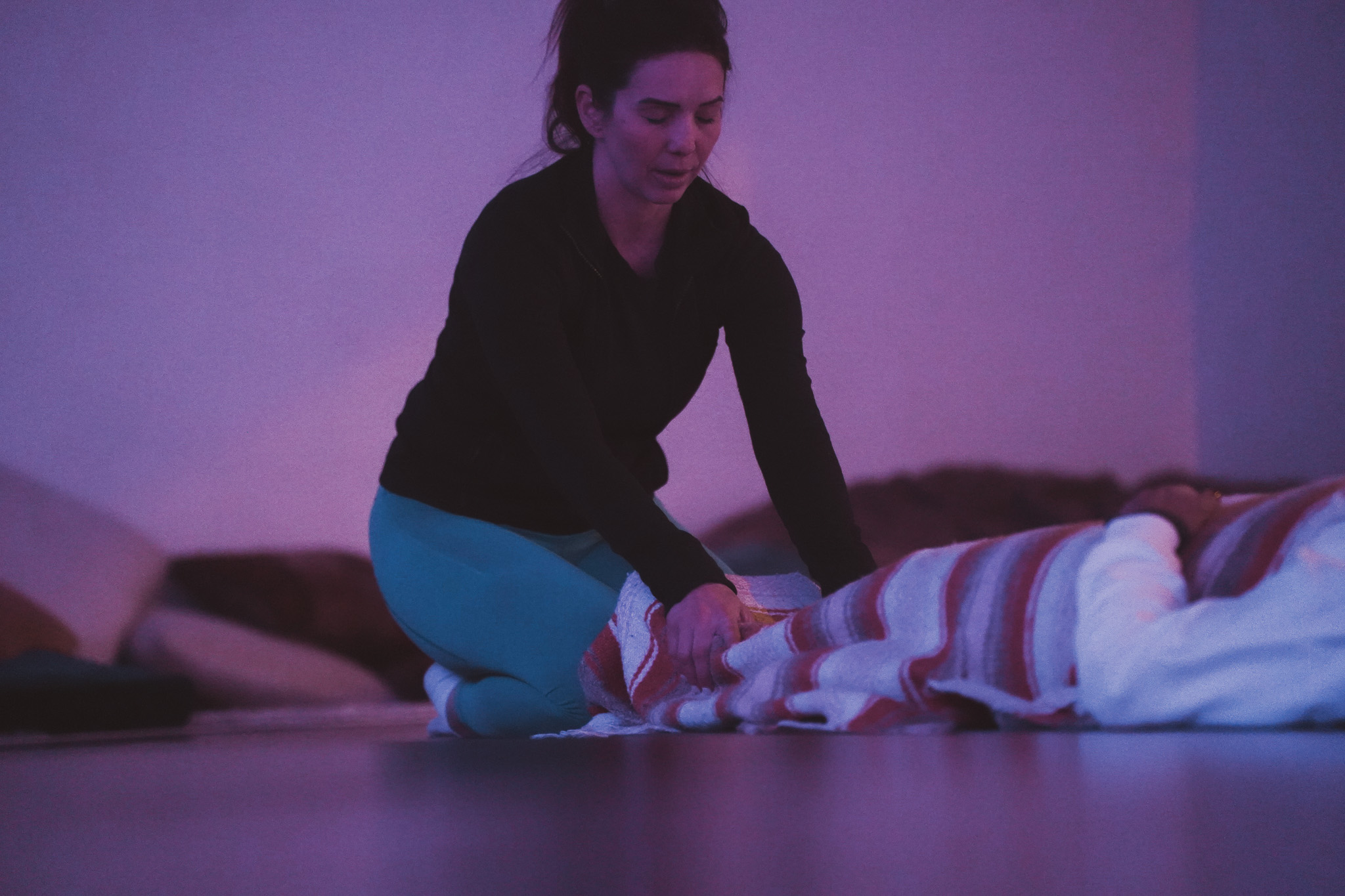
What people sometimes call “ego death” may feel more like letting go of an identity
The phrase “ego death” can sound dramatic, and people use it in different ways. In the context of this conversation, we can think about it more simply as the experience of recognizing that an identity, story, or belief we once considered essential may no longer fit.
Nothing literally has to die.
But something may need to be released.
Perhaps you spent twenty years believing that your value came from being the person who never needed anyone. If you begin learning to receive support, the independent identity that once defined you may start changing.
Maybe you built your entire career around one definition of success and eventually realize that you no longer want the life that definition created.
That realization can be freeing.
It can also hurt.
Because even when we consciously want the new version, there may still be grief for the person we used to be.
Growth can include grief because becoming someone new sometimes requires acknowledging that an old way of understanding ourselves can no longer come with us unchanged.
We can grieve versions of ourselves
Grief is often associated with death, but people can experience grief around many kinds of endings and transitions.
We may grieve a relationship that changed, a career we thought we would have, a version of our family, a future we imagined, a belief we once trusted, or an identity that no longer fits.
We may even grieve an old coping pattern.
That can seem strange. Why would we miss something we intentionally want to change?
Because familiarity can feel safe even when it is no longer supportive.
The old pattern may have provided predictability. It may have helped us understand our place in the family or relationship. It may have protected us from uncertainty.
Letting it go creates empty space.
And empty space asks a difficult question:
What will I put here instead?
What are you afraid you might lose if you change?
Approval?
Familiarity?
A relationship?
A sense of certainty?
The identity of being needed?
And what might you gain if you allowed that identity to evolve?
Letting go is only part of the work
Questioning an old story is important, but we cannot live indefinitely in the empty space left behind.
Eventually we begin creating something new.
Maybe the old story was, “I have to make everyone happy.”
What is the new story?
Perhaps it becomes, “I can care about other people without abandoning myself.”
Maybe the old story was, “Rest means I am lazy.”
Could the new belief become, “Rest helps me participate in my life with greater capacity”?
Perhaps the old story was, “I am not someone who speaks up.”
What happens when you begin experimenting with, “My voice deserves a place in the conversation”?
This is where personal growth becomes creative. We are not only removing something. We are participating in the creation of another way of living.
The work may move through four ongoing questions
1
Notice
What story, belief, pattern, or identity keeps appearing?
2
Question
Where did it come from, and does it still reflect what I believe?
3
Choose
What new belief or response feels more aligned with who I am becoming?
4
Practice
What does living by that new belief actually look like in everyday life?
The new story has to survive contact with real life
It is one thing to decide while journaling that you deserve stronger boundaries.
It is another thing when someone becomes disappointed because you finally say no.
It is one thing to decide that your worth is not determined by productivity.
It is another thing to rest while unfinished work is still sitting in front of you.
It is one thing to believe that your voice matters.
It is another thing to speak when the room is uncomfortable.
This is why insight alone is not the entire work.
Life keeps giving us opportunities to find out whether we are willing to act from the new belief.
And sometimes we will fall back into the old one.
That does not necessarily mean we failed. It may simply reveal where the old pattern still has influence.
A new belief becomes part of our life through repetition—not because we understood it once, but because we keep practicing it when the old story becomes available again.
What does your new belief ask you to do differently?
This question matters because personal growth can remain theoretical for a long time.
We can understand ourselves beautifully and still continue making the same choices.
So imagine one belief you are currently reconsidering.
What would it look like to live differently because of what you now understand?
What boundary might you need to communicate?
Where could you stop requiring exhaustion before giving yourself permission to pause?
What conversation have you been avoiding?
Who could you ask for help?
What have you been waiting for permission to begin?
What old description of yourself are you ready to question?

Doing the work on yourself can change more than yourself
Personal growth may begin internally, but we do not live in isolation.
The way we understand ourselves affects the way we communicate, parent, lead, love, work, create, respond to conflict, and participate in community.
When you begin questioning the belief that emotions should be hidden, your children may experience a different kind of emotional language.
When you learn to establish healthier boundaries, someone close to you may begin thinking differently about their own.
When you stop treating constant exhaustion as proof of commitment, perhaps the people working beside you feel greater permission to question that expectation too.
We cannot control whether another person changes because we changed.
But we can demonstrate another possibility.
Sometimes doing the work gives another person permission—not because we told them to change, but because they witnessed us choosing something different.
What are we teaching through the way we live?
This may be one of the most important questions in the entire conversation.
We teach through more than advice.
We teach through what we tolerate.
We teach through how we speak about ourselves.
We teach through the boundaries we honor and the ones we repeatedly abandon.
We teach through the way we respond when we are wrong, how we handle conflict, how we repair after hurting someone, and whether we remain willing to question ourselves.
So what are the people closest to you learning from the way you currently live?
What are your children learning about love, work, emotion, success, or self-worth?
What are your coworkers learning about leadership?
What are your relationships teaching you about yourself?
And are those lessons aligned with what you actually believe?
Try turning the question around.
Instead of asking only, “What do I want other people to learn?”
Ask:
“What are they already learning by watching the way I live?”
Is that the lesson you want to continue teaching?
You do not have to question everything at once
Once we begin examining our beliefs, it can feel like there is an endless amount to unpack.
There probably is.
That does not mean it all needs to happen today.
Self-discovery does not have to become another performance. There is no prize for identifying every pattern at once or completely reinventing yourself by the end of the year.
Sometimes one question is enough.
One story.
One belief.
One moment where you notice yourself doing what you have always done and become curious about whether you want to keep doing it.
Little by little, that curiosity can create space for another choice.
The work does not have to begin with changing your entire life. It can begin with becoming curious about one story you have never questioned before.
Creating space for self-discovery in Tempe, Arizona
At The Healing Tree Collective, our intention is not to tell people which beliefs they should hold or who they are supposed to become.
We create opportunities to slow down, reconnect with yourself, notice what has been asking for your attention, and explore practices that may support greater self-awareness.
Breathwork, meditation, sound, Reiki, yoga, Tai Chi, intentional movement, community reflection, and other practices can offer different ways of becoming curious about what is happening within us.
The practice itself does not decide what you need to change.
It creates room for you to listen.
Explore practices that create space for reflection
Our beginner-friendly community wellness studio in Tempe welcomes guests from Tempe, Phoenix, Mesa, Chandler, Scottsdale, the ASU community, and throughout the East Valley.
You do not need to arrive knowing exactly what needs to change. Sometimes we begin simply by noticing what has become loud enough that we can no longer ignore it.
So what does it really mean to do the work?
Maybe it means becoming willing to look at the stories you have carried for years and asking whether they still belong to you.
Maybe it means becoming curious about the identity you defend most strongly.
Maybe it means acknowledging that a pattern once protected you and still deciding that you are ready for another way.
Maybe it means grieving an old version of yourself without treating that version as something shameful.
Maybe it means creating a new belief and then letting real life test whether you are willing to practice it.
And maybe the deepest part of doing the work is understanding that none of this stops with us.
The way we change ourselves changes the way we show up. The way we show up influences relationships. Relationships influence families, workplaces, businesses, and communities.
That is where personal growth can begin creating a ripple.
What story are you ready to question?
Before trying to change anything, begin with curiosity. What belief keeps showing up? Where did it come from? What did it once do for you? What is it costing you now? And what might become possible if you allowed yourself to create another story?
At The Healing Tree Collective, we create opportunities to slow down, listen inward, explore supportive practices, and become more familiar with the stories influencing the way we live. The goal is not to tell you who to become. It is to create enough space for you to hear yourself more clearly.