9 August 2026
The Healing Tree Collective • Beginner-Friendly Wellness in Tempe
Why Letting Go of Expectations Can Deepen Your Wellness Practice
What do you believe is supposed to happen when you attend a wellness class?
Maybe you hope to feel completely relaxed during a sound bath. Perhaps you want a breathwork class to help you release an emotion, a meditation to give you clarity, or a Reiki experience to help you reconnect with yourself. It is completely understandable to arrive hoping that the time you have set aside will offer something meaningful.
The difficulty begins when that hope becomes a requirement. When we decide ahead of time that we must feel calm, receive an answer, have a breakthrough, or leave as a different person, we may spend the entire experience comparing what is actually happening with what we expected to happen.
One of the reminders we regularly share at The Healing Tree Collective is to arrive with as little pressure as possible. A class may feel profound, but it may also feel subtle, unfamiliar, restless, quiet, emotional, or difficult to describe. None of those responses automatically means that you did something wrong.
Your experience does not have to include:
- A dramatic emotional release
- Complete relaxation from beginning to end
- An immediate answer or breakthrough
- The same response another participant had
- Proof that you performed the practice correctly
The pressure to have a life-changing experience
Wellness practices are sometimes promoted with language that makes every class sound like it should create a dramatic transformation. People may be told that one session will release everything they have been carrying, eliminate emotional pain, completely regulate their nervous system, resolve past experiences, or permanently change their life.
Meaningful moments can absolutely happen. Someone may feel deeply rested, recognize an important emotion, experience greater clarity, or leave with a different perspective. The problem is not acknowledging that wellness experiences can be powerful. The problem is presenting one specific outcome as though it should happen for everyone.
Those promises can create pressure before a person even enters the room. Instead of listening to their actual experience, they may begin monitoring themselves. They wonder why their mind is still busy, why they are not emotional, or why the person beside them appears more relaxed. The class begins to feel like something they have to succeed at.
That pressure can be especially discouraging for beginners. Someone may assume the practice is not for them simply because their first experience did not match the language they saw online.
A wellness class is not a test. You do not need to perform calmness, produce a breakthrough, or prove that the practice worked.
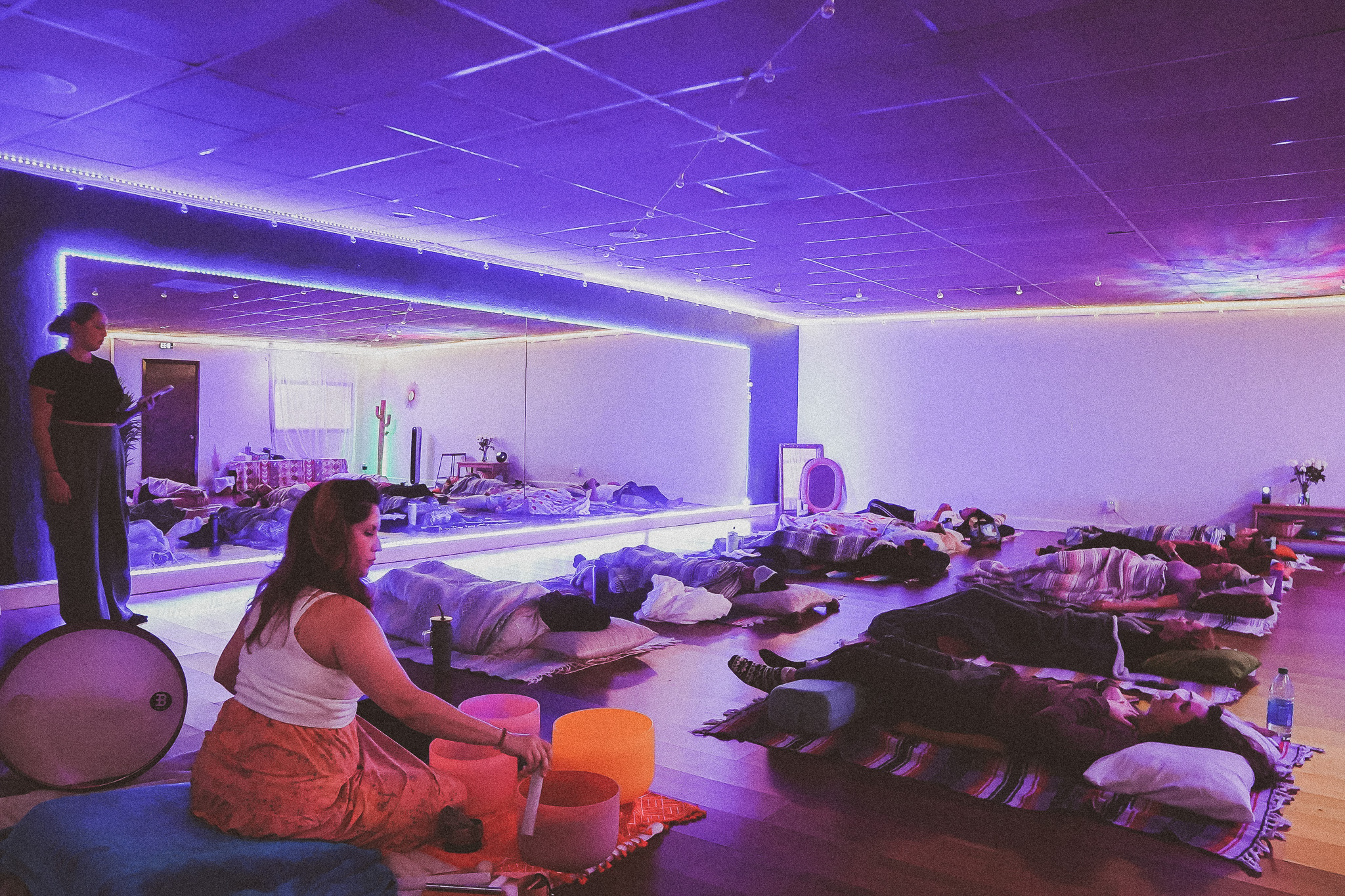
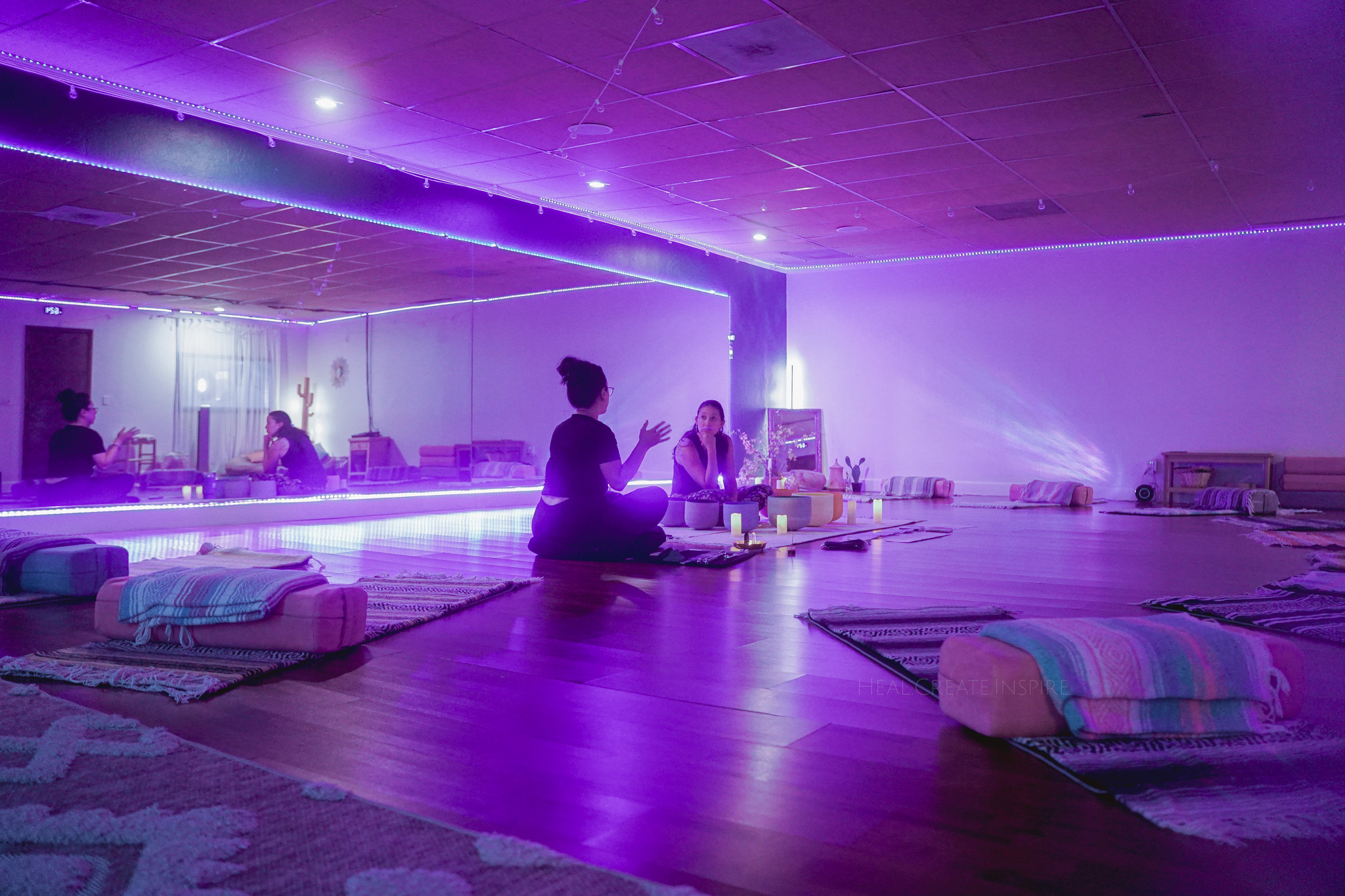
Expectations can pull us away from the present moment
When we decide what must happen before an experience begins, we can become less available to what is already happening. You may enter a class wanting to focus on one relationship or decision, only to notice that your mind keeps returning to work, family responsibilities, physical discomfort, or an unfinished conversation.
That does not necessarily mean the practice has gone off course. It may be showing you what is taking up the most space internally. A racing mind may reveal how much mental pressure you have been carrying. Difficulty resting may remind you that slowing down has not felt familiar lately. Feeling exhausted may show you that your body needs more consistent care rather than greater effort.
Even feeling nothing specific can be informative. Many people are so accustomed to moving quickly that identifying their emotional state takes practice. Not having an immediate answer does not make the experience empty. It may simply mean you are beginning to listen without forcing a conclusion.
When we stop demanding that the experience become something else, we create more room to understand what is already here.
Your response may be different every time
A wellness practice will not necessarily feel the same from one class to the next because you are not arriving in the same state every time. Your sleep, stress level, responsibilities, physical health, emotional capacity, and life circumstances may all be different.
You may feel settled
Some days, it may feel easier to follow your breath, receive sound, move slowly, rest, or stay present with a meditation.
You may feel restless
On another day, your thoughts may remain active or your body may have difficulty becoming still. That response can still provide useful information.
You may feel uncertain
Sometimes there is no clear insight or emotional reaction. You may simply notice that you gave yourself time to pause.
Meeting yourself where you are
One of the most supportive things we can learn is how to acknowledge our present experience without immediately demanding that we become someone else. This can be difficult because so much of everyday life is organized around progress, improvement, and visible results.
Meeting yourself where you are does not mean giving up on growth. It means beginning with honesty. Rather than pretending to feel calm, you may recognize that your mind is very active. Instead of forcing your body to relax, you may notice that it is holding tension and needs more time.
This kind of self-awareness helps change the relationship we have with the practice. We are no longer using our current state as evidence that we are failing. We are learning how to listen and respond with greater compassion.
Meeting yourself where you are may sound like:
- “My mind is busy today, and I can notice that without judging myself.”
- “My body is having difficulty settling, so I may need to adjust or slow down.”
- “I feel more emotional than I expected, and I do not need to understand it immediately.”
- “I do not know exactly what I am feeling yet.”
- “I think what I need most today is rest.”
- “I am here, and that is enough for this moment.”
Being present with yourself as you are can be more meaningful than pressuring yourself to arrive somewhere else.
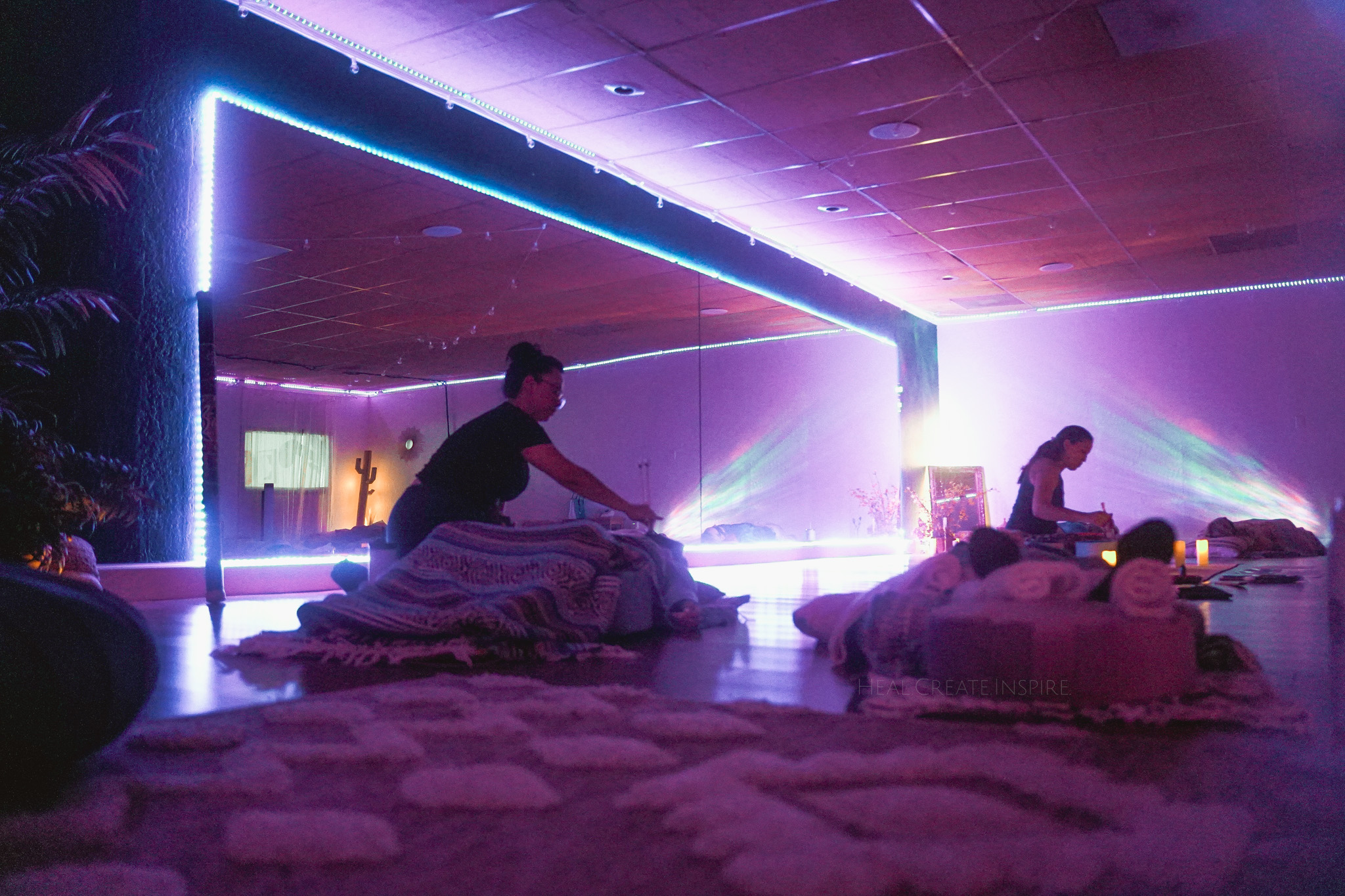
Personal growth is usually a practice, not a one-time event
We understand this more easily when talking about physical exercise. Most people would not expect to visit the gym once and immediately achieve every strength, mobility, or fitness goal. We understand that progress may involve returning, learning how the body responds, adjusting the practice, building confidence, and being patient with the process.
Emotional wellness, mindfulness, creativity, and nervous system care can also unfold gradually. One class may offer an important realization or a period of genuine rest. Returning consistently may help you notice patterns more clearly, recognize stress earlier, and learn which practices feel supportive and sustainable.
There may be layers. A practice that felt peaceful last week may feel difficult today because your energy, stress level, sleep, or emotional state has changed. That does not automatically mean that you are moving backward or that the practice has stopped being helpful.
It means you are human, and your needs are not fixed. Growth includes learning how to remain in relationship with yourself as those needs change.
The goal is not to recreate one perfect experience. It is to become more familiar with yourself over time.
Curiosity creates more room than judgment
Judgment tends to close the conversation quickly. Once we decide that a class was unsuccessful, that we failed to relax, or that we did something incorrectly, we leave very little room to understand the experience.
Curiosity keeps the conversation open. It allows us to ask questions without demanding immediate answers. Instead of asking why the experience was not better, we can ask what we noticed. Instead of comparing ourselves with someone else, we can become interested in how our own body and mind responded.
Questions that can support a more curious practice:
- What did I notice in my body today?
- What felt comfortable, and what felt difficult?
- What has been occupying most of my attention lately?
- Where am I holding tension or effort?
- What might I need more of right now?
- Am I comparing my experience with someone else’s?
- Can I allow this practice to unfold without forcing a conclusion?
The purpose is not to analyze every moment. It is to replace the question “Did I do this correctly?” with questions that help you understand yourself more honestly.
You can have an intention without controlling the outcome
Releasing expectations does not mean arriving without purpose. An intention can gently direct your attention toward something meaningful. You may enter a class wanting to explore rest, grounding, clarity, creativity, self-compassion, or emotional awareness.
The difference is how tightly you hold it. An intention creates direction while leaving room for the experience to unfold. An expectation can become a demand that the body, mind, or practice produce a result on command.
An expectation may sound like:
“I have to release this today. This class needs to make me calm. I need an answer before I leave.”
An intention may sound like:
“This is something I have been carrying, and I am open to noticing what is present. I am making space to listen.”
An intention is an invitation. An expectation can become a demand.

Beginner-friendly wellness classes in Tempe, Arizona
The Healing Tree Collective is a community wellness studio in Tempe, Arizona, offering accessible opportunities to slow down, reconnect with yourself, and explore supportive practices without pressure to perform.
Our classes are beginner-friendly because trying something new can already feel vulnerable. You do not need to know how to meditate, understand Reiki, have previous breathwork experience, or know what you are supposed to feel during a sound bath. You are invited to listen to your body, make choices that feel appropriate for you, and allow your experience to be your own.
Explore wellness practices at The Healing Tree Collective
Our Tempe wellness studio welcomes guests from Tempe, Phoenix, Mesa, Chandler, Scottsdale, the ASU community, and throughout the East Valley. You do not need to be flexible, spiritual, calm, or familiar with holistic wellness practices before joining us.
You can arrive with a busy mind. You can arrive uncertain, tired, emotional, or curious. The invitation is not to become a different person before entering the room. It is to begin by noticing who you are and what you may need today.
Why rob yourself of what is here by demanding something else?
Expectations often come from a sincere desire to feel better. There is nothing wrong with hoping that a practice supports you. The reminder is to hold that hope gently enough that it does not prevent you from noticing what is actually present.
A quiet experience can still be meaningful. Restlessness can still teach you something. A busy mind does not make meditation unsuccessful. Not crying does not mean that nothing happened, and feeling emotional does not mean that the experience went wrong.
The most powerful part of the practice may be learning how to stay present with yourself without immediately requiring a transformation. From that place, you can listen more carefully, respond more compassionately, and allow growth to unfold at a pace that respects the complexity of being human.
Come as you are, without pressure to force the experience
At The Healing Tree Collective, our intention is to create wellness experiences where you can explore breath, sound, movement, meditation, energy work, rest, and community without being told what you must feel or what the experience has to become.
Join us at our Tempe wellness studio and give yourself permission to begin with curiosity. You do not need to produce a breakthrough, arrive with the right mindset, or leave as a different person. You can simply spend time with yourself as you are today.