6 May 2026
The Healing Tree Collective • Tempe, Arizona
Why Therapists Need Regulation Support Too
Therapists spend a lot of time helping other people regulate.
They help clients slow down, make meaning, feel safely, reconnect with themselves, and navigate experiences that are often painful, complex, and deeply human.
But in the middle of offering that kind of care, it can be easy to forget something important:
therapists need regulation support too.
Mental health professionals are not outside the human experience.
They are inside it.
They have nervous systems too.
Bodies too.
Limits too.
Emotional load too.
And the work they do asks a great deal from all of it.
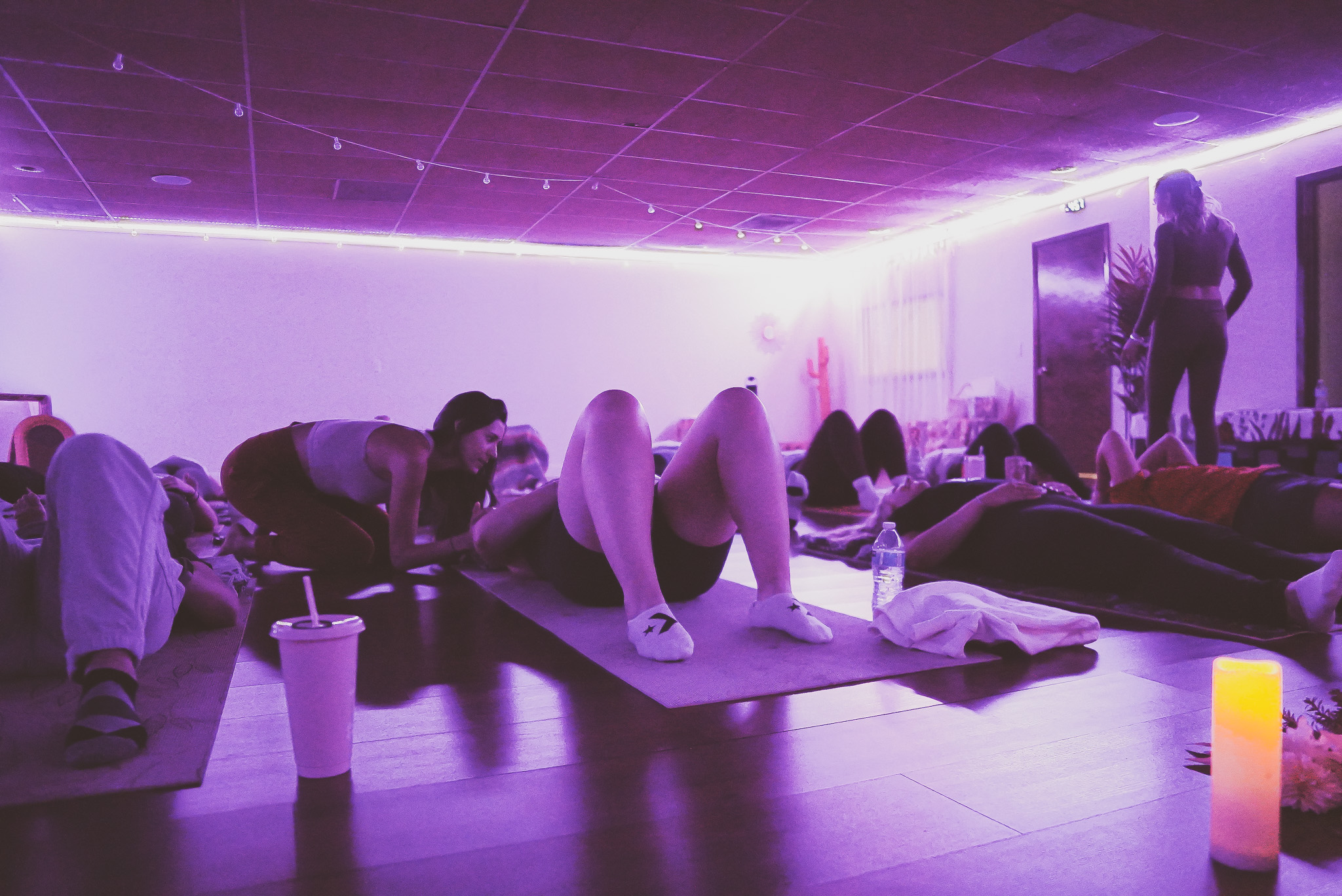
Helping others regulate can take a real toll
The work therapists do is powerful, meaningful, and demanding.
Session after session, they are listening carefully, tracking emotion, noticing patterns, holding complexity, making clinical judgments, staying attuned, and helping clients move through distress.
Even when this work is aligned and deeply purposeful, it can still impact the body and nervous system.
The mind stays on.
The body stays alert.
The emotional field stays active.
And over time, that constant output can become draining in quiet ways that are easy to normalize.
A lot of therapists become so skilled at functioning under pressure that they stop noticing how much tension, fatigue, and saturation they are actually carrying.
Supporting other people’s nervous systems does not make your own needs disappear. If anything, it makes attending to them even more important.
Regulation support is not weakness. It is part of sustainability.
There can be a quiet belief in helping professions that because you know the tools, you should always be able to use them perfectly.
That because you understand nervous systems, attachment, trauma, and coping, you should not struggle with your own regulation.
But knowledge does not cancel embodiment.
Understanding regulation and actually feeling regulated are not always the same thing.
Therapists can still feel depleted.
Still feel activated.
Still feel emotionally full.
Still have trouble unwinding after a long day.
Still need support in moving out of holding mode and back into their own body.
Needing regulation support does not mean a therapist is doing something wrong.
It means they are human and their work has weight.
Therapists may need regulation support when they notice:
- Difficulty turning work off after sessions
- Tension in the body that does not fully leave
- Compassion fatigue or emotional saturation
- Feeling mentally alert even when the day is over
- Trouble accessing real rest
- Feeling depleted, numb, or quietly overwhelmed
The body of the therapist is part of the work too
Therapy may happen through conversation, but the therapist’s body is still involved the whole time.
The body is tracking. Holding. Containing. Responding. Staying present.
Over time, that can create subtle accumulation.
Not always a dramatic burnout all at once, but a layering of strain, vigilance, and holding that can build if there is not enough space to release, rest, or reset.
This is why nervous system support for therapists matters.
Not only as recovery after burnout, but as ongoing support that helps care remain sustainable, grounded, and honest.


Why so many therapists struggle to receive support themselves
Many therapists are used to being the container.
The one who notices.
The one who holds.
The one who offers steadiness.
And because of that, receiving can feel unfamiliar.
Slowing down can feel uncomfortable.
Support can feel easier to offer than to accept.
There can also be a tendency to minimize their own needs.
To say, “I know what to do.”
Or, “Other people need it more.”
Or, “I just need to push through this week.”
But over time, that pattern can quietly deepen fatigue, disconnection, and burnout.
Not because the therapist is incapable, but because constant output without enough replenishment catches up to the body.
Being a helper does not mean you need less support. Often it means you need more intentional support because of how much you regularly hold.
What regulation support for therapists can actually look like
Regulation support does not have to be complicated.
It often starts with practices and environments that help the therapist step out of constant holding mode and reconnect with their own body.
That may look like deep rest.
Guided breathwork.
Sound healing.
Meditation.
Yoga Nidra.
Gentle movement.
Quiet time.
Community spaces where they do not have to lead, analyze, or caretake.
Supportive practices for therapists may include:
- Breathwork to shift out of chronic tension and alertness
- Sound healing to support mental quiet and deep rest
- Yoga Nidra for guided restoration
- Meditation for presence and internal spaciousness
- Somatic and movement practices for releasing held tension
- Supportive community spaces where they can simply receive
These kinds of practices are not about perfection.
They are about helping the therapist’s body remember what support actually feels like.
Why this matters for client care too
When therapists are more supported, it does not only affect them.
It affects the work.
It affects the room.
It affects their capacity to stay present, connected, and resourced with clients over time.
This is not about asking therapists to be perfectly regulated all the time.
It is about recognizing that sustainability matters.
Integrity matters.
Care for the caregiver matters.
A regulated or supported therapist is not a flawless therapist.
They are simply more likely to have access to the internal space needed to keep showing up in the work with steadiness and humanity.
How The Healing Tree Collective supports therapists and helpers
At The Healing Tree Collective, we believe the people holding care for others deserve spaces where they can be cared for too.
That includes therapists, counselors, social workers, psychotherapists, and other helping professionals who are looking for trauma-aware, body-aware, community-rooted support.
Through classes and practices like breathwork, sound healing, meditation, Yoga Nidra, and gentle movement, we aim to offer spaces where helpers can slow down, reconnect, and support their own nervous system in real time.
This is also part of why our Mental Health Partnerships matter.
We are interested in building a stronger circle of care.. one that supports clients, clinicians, and the broader human ecosystem around healing.


A reminder for the therapist reading this
You do not have to wait until you are completely burned out to deserve support.
You do not have to prove how much you can carry before you are allowed to rest.
You do not have to always be the one holding it together.
Regulation support is not a sign that you are less capable.
It is often a sign that you understand what it means to care for the system that does so much of the caring.
Your work matters.
And so does your body.
Your capacity.
Your breath.
Your rest.
Your ability to come back to yourself.
Therapists need regulation support too.. not because they are doing the work wrong, but because they are doing deeply human work that asks a lot from the body, mind, and heart.
Are you a therapist looking for nervous system support too?
Explore the classes and Mental Health Partnerships at The Healing Tree Collective in Tempe, Arizona. We would love to support the people who spend so much of their lives supporting everyone else.